

How Proximity to Port Facilities Expedites Your Order
In the world of global logistics, time is money. For businesses that rely on imported goods, every day saved in transit can mean faster inventory turnover, reduced warehousing costs, and happier customers. One of the most critical—and often underestimated—factors in speeding up your supply chain is the physical proximity of your supplier or fulfillment center to major port facilities.
The Geography of Speed

When your goods are manufactured or stored close to a deep-water port, the distance between the factory floor and the ship’s hold shrinks dramatically. This reduces the “first mile” transit time—the journey from your supplier’s loading dock to the port terminal. Instead of spending days on a truck or railcar, your cargo can arrive at the port in hours. This proximity also allows for more flexible scheduling, as shorter hauls are less vulnerable to weather delays, traffic congestion, or carrier availability issues.
Faster Customs and Container Turnaround
Ports with modern infrastructure often offer expedited processing for cargo originating from nearby facilities. When your goods are already at the port or in a bonded warehouse adjacent to the terminal, they can be loaded onto the next available vessel without waiting for inland transportation. This is especially valuable during peak shipping seasons when container space is at a premium. Proximity also simplifies customs documentation, as the cargo is less likely to be held for inspection due to incomplete inland transit records.
Reduced Risk of Delays
Long-distance inland transportation introduces multiple points of failure: road closures, rail strikes, truck driver shortages, and mechanical breakdowns. By keeping your supply chain close to the port, you minimize these variables. If a shipment is ready to go, it can be at the terminal within hours, not days. This reliability is crucial for time-sensitive orders, seasonal merchandise, or just-in-time manufacturing schedules.
Lower Costs, Faster Delivery
Shorter inland hauls mean lower freight costs, which can be reinvested into faster shipping methods or passed on to customers. Additionally, many port-adjacent facilities offer value-added services like container stuffing, labeling, and quality checks. These services can be performed while the cargo is waiting for the next vessel, effectively eliminating the need for a separate warehousing step. The result is a streamlined process that gets your order from production to port—and ultimately to your customer—faster than a decentralized model.
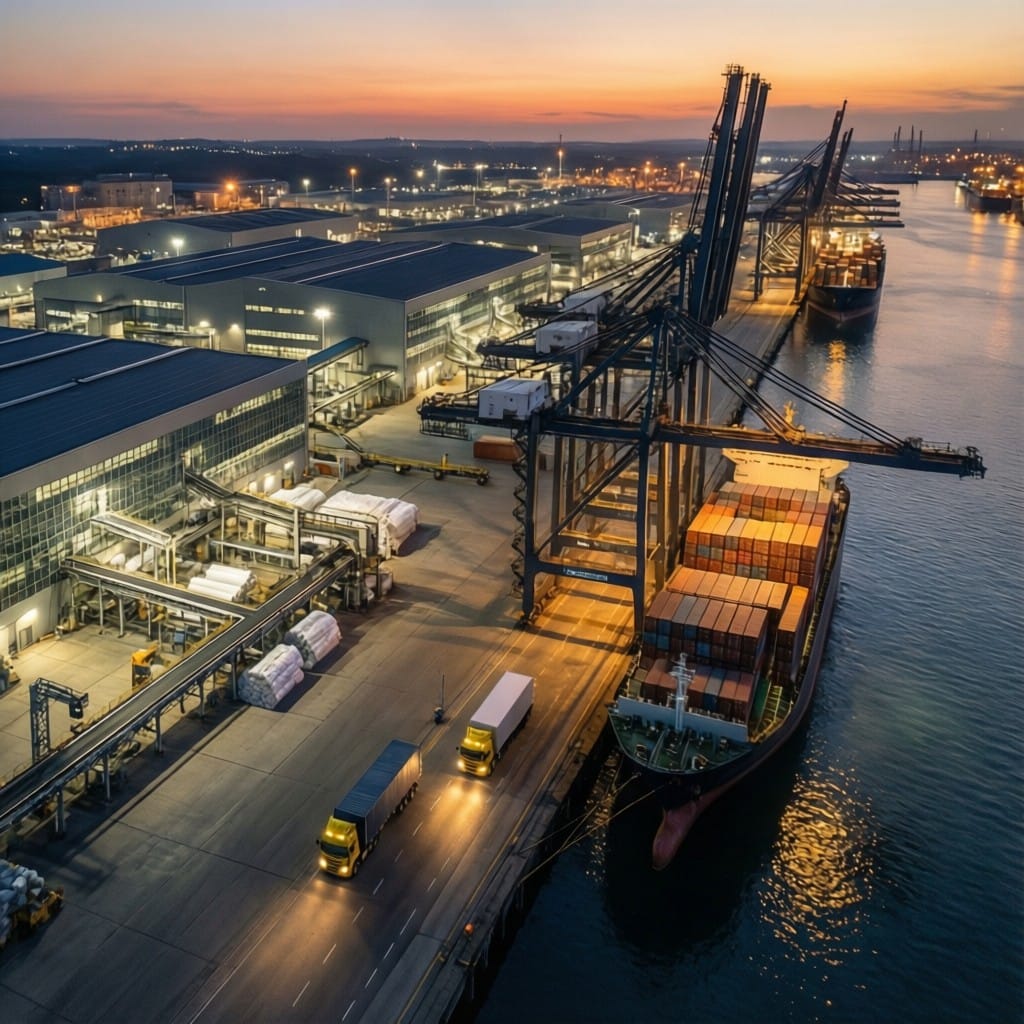
Real-World Impact on Lead Times
Consider a supplier located 50 miles from a major port versus one located 500 miles away. The closer supplier can often reduce total lead time by 2–4 days simply by cutting out the inland transit leg. For air freight, the savings are even more pronounced, as cargo can be moved directly from the factory to the airport cargo terminal in under an hour. Over the course of a year, these saved days compound into significant competitive advantages.
Choosing the Right Partner
When evaluating suppliers or logistics partners, ask about their distance to the nearest deep-water port, railhead, or airport cargo facility. Look for those that operate within a port’s “inland port” zone or have dedicated trucking lanes to the terminal. The best partners will provide clear transit time estimates that account for port proximity, not just manufacturing speed.