

Dongguan Localized vs Fragmented Garment Manufacturing
This article analyzes the strategic advantages of localized supply chains in Dongguan, highlighting how co-located textile ecosystems accelerate speed-to-market. By examining the operational differences between fragmented manufacturing and localized cluster sourcing, apparel procurement managers will learn how to reduce lead times, optimize yarn matching, and mitigate supply chain volatility. Sourcing from a single regional hub directly impacts margin retention and quality assurance for premium apparel brands.
In modern supply chain architecture, geographic proximity is no longer just a logistical convenience—it is a competitive moat. Leading precision manufacturers mastered the art of co-locating their engineering and assembly lines within highly specialized industrial ecosystems to compress development cycles. In the apparel sector, a similar operational shift is occurring as brands abandon fragmented global networks in favor of hyper-localized manufacturing hubs that can respond to market demands in real time.
(See our related guide: How to Manage Multiple Product Lines Simultaneously.)
For apparel brands, the traditional model of sourcing yarn from one region, dyeing it in another, and shipping it to a third for final assembly introduces compounding delays and high margin risks. When fashion trends shift rapidly, a fragmented supply chain cannot pivot fast enough, resulting in overstocking or missed market windows.
This article examines why leading fashion brands are consolidating their supply chains within the Dongguan corridor. The supplier will analyze the measurable performance differences between localized sourcing and fragmented production networks, showing how proximity lowers freight costs, compresses sample cycles, and guarantees color-matching accuracy.
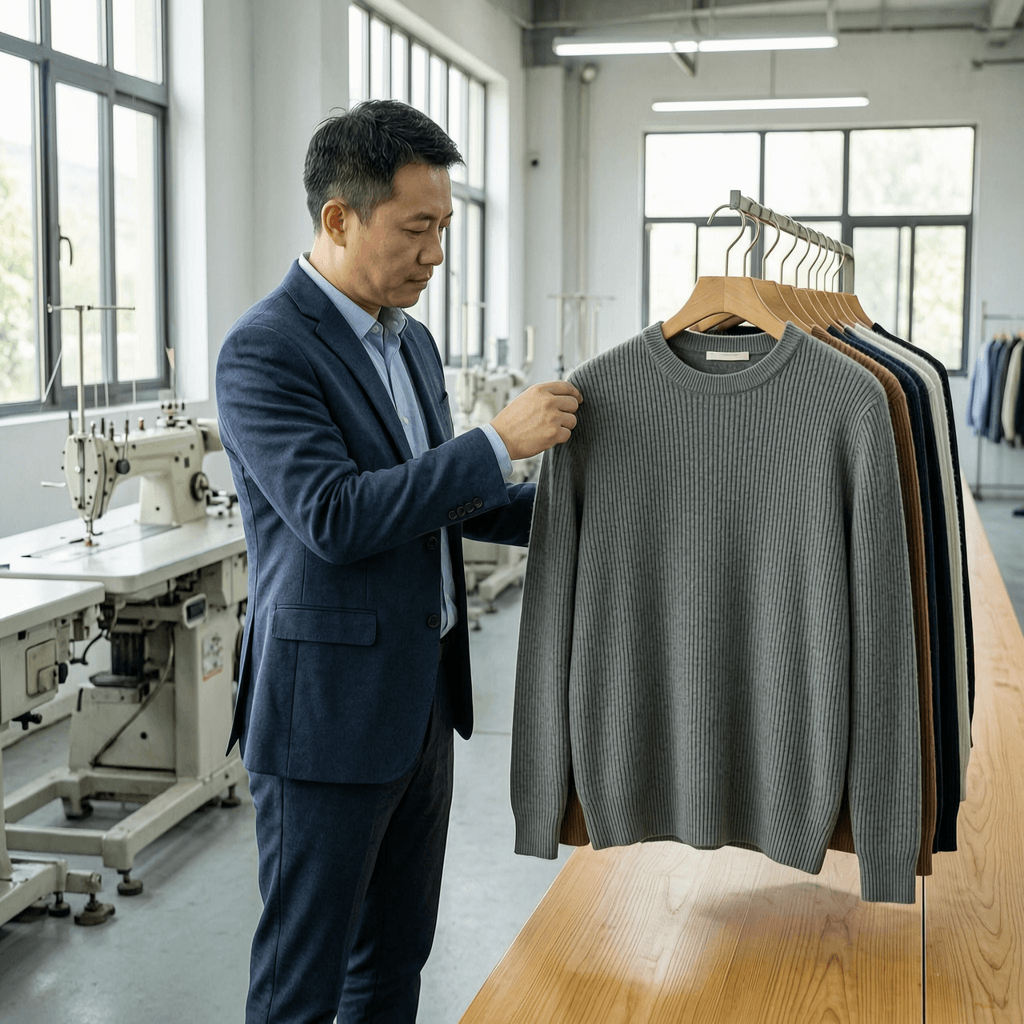
Operational Metrics of Localized Sourcing
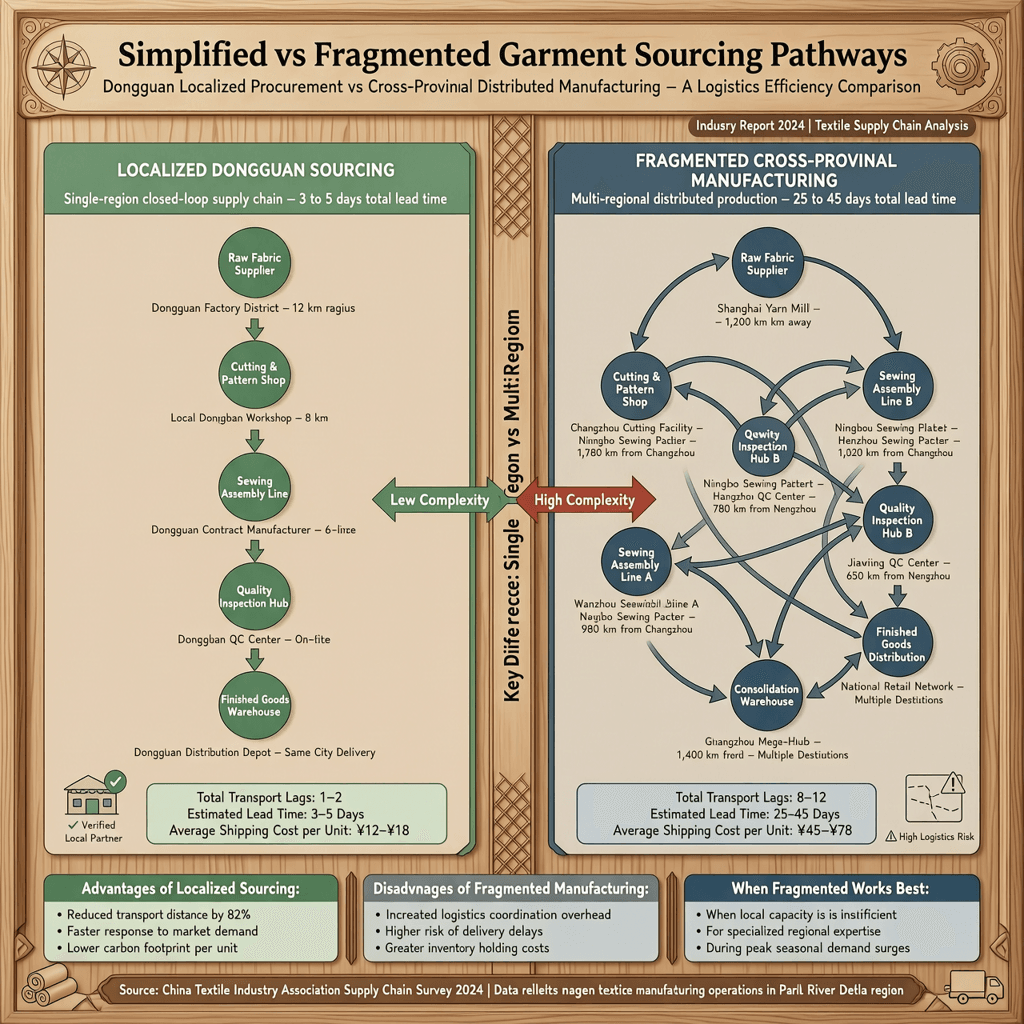
To understand why localized sourcing yields superior supply chain efficiency, the supplier must evaluate the physical logistics of the manufacturing cycle. In a fragmented supply chain, raw fiber might be spun in one province, transported hundreds of kilometers to a dye house, and then shipped to a separate garment manufacturing facility for knitting and sewing. This geographic separation adds days to every stage of development.
In contrast, the Dongguan industrial ecosystem co-locates yarn markets, dye houses, knitting facilities, and cut-and-sew workshops within a 30-kilometer radius. This close integration dramatically shortens development times. Below is a detailed performance comparison between localized Dongguan sourcing and fragmented cross-province networks.
| Supply Chain Parameter | Dongguan Localized Sourcing | Fragmented Cross-Province Sourcing |
|---|---|---|
| Yarn Delivery to Factory (Hours) | 2 to 4 hours | 48 to 72 hours |
| Sample Development Lead Time (Days) | 15 to 20 days | 25 to 35 days |
| Yarn Sourcing Phase (Days) | 5 to 7 days | 12 to 18 days |
| Internal Transit Distance (km) | 15 to 30 km | 350 to 800 km |
| Color Lab Dip Turnaround (Days) | 2 to 3 days | 7 to 10 days |
| Production Lead Time (Days) | 45 to 60 days | 70 to 90 days |
| Inter-facility Transit Cost (USD/1k units) | 150 to 300 | 850 to 1,800 |
| Multi-site QC Inspections (Hours) | 4 to 6 hours | 24 to 48 hours |
This data shows that localized sourcing compresses the entire production timeline. By keeping every stage of manufacturing within a single region, brands can save up to 30 days on overall production, allowing them to adjust inventory levels quickly based on real-time sales data.
Read more about How to Synchronize Production for additional context.
Specialized Regional Clusters for Custom Apparel
Dongguan’s strength lies in its specialized towns, particularly the dual-base setup of Dalang and Humen. Dalang is a global hub for premium knitwear, housing thousands of yarn suppliers and advanced multi-gauge knitting facilities. Humen specializes in high-efficiency cut-and-sew garment manufacturing for woven apparel.
For brands sourcing custom sweaters, the proximity to Dalang’s yarn markets is highly valuable. Designers can select from a wide range of materials—including superfine merino wool (≤18.5µm), cashmere (Grade A ≤15.5µm), GOTS organic cotton, and recycled wool (GRS)—and have samples on the knitting machines in just a few days.
This localized setup also makes it easier to work with complex yarn blends. Combining fine merino wool (≤20µm) with acrylic or modal requires precise tension adjustments on the knitting machines. Having spinning, blending, and knitting facilities nearby allows engineers to test and adjust these blends in real time, preventing yarn breakage and fabric defects before volume production begins.
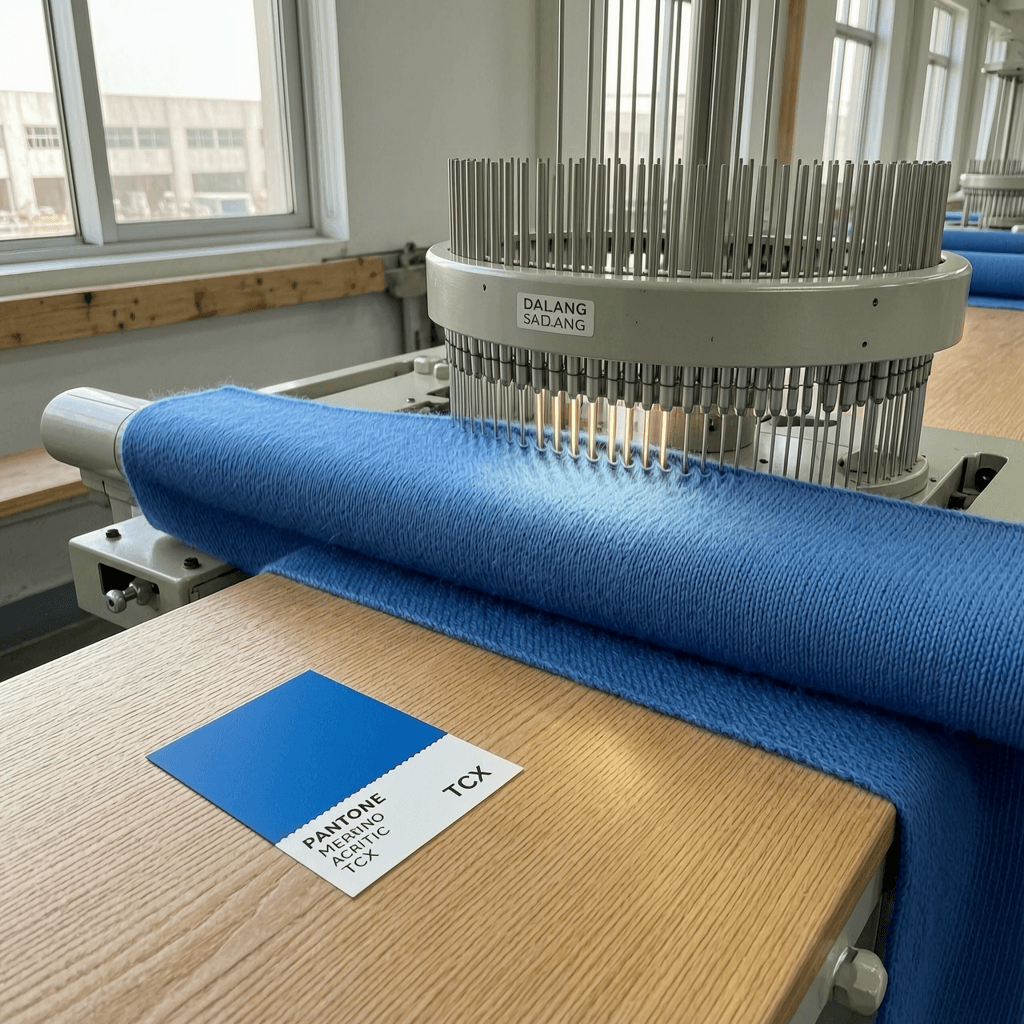
Custom Sweater and Woven Product Specifications
A localized supply chain allows brands to produce high-specification garments with lower minimum order quantities (MOQs). Cogarm utilizes Dongguan’s specialized textile network to offer flexible, high-precision manufacturing services for premium apparel brands.
— as detailed in our article on Why Direct-to-Factory is Better than Trading Agencies.
For knitwear, Cogarm supports a wide range of machine gauges, from chunky 3GG-5GG knits to fine 12GG-18GG sweaters. This versatility allows brands to source their entire knitwear line—from heavy winter cardigans to lightweight spring pullovers—from a single partner. By sourcing yarns locally, Cogarm offers an MOQ of 100 pcs per color/style for custom knitwear and 200 pcs for woven garments.
Color consistency is managed using Pantone TCX matching. Because our partnering dye houses are located close to our knitting mills, color matchers can perform rapid lab dip adjustments, ensuring all yarn lots meet strict Delta E color tolerances before knitting begins. Additionally, every production run undergoes strict AQL 2.5 quality inspections to verify structural strength, seam durability, and dimensional stability after washing.
The Supplier Localized Sourcing Solution
the supplier helps international brands navigate the complexities of apparel manufacturing by leveraging their dual-base setup in Dongguan. Our Dalang knitwear facility handles advanced premium knitting, while our Humen facility focuses on high-precision woven garments and cut-and-sew production. This dual-base model ensures each product category is handled by specialized teams, minimizing manufacturing risks and reducing lead times.
Our streamlined development process delivers custom samples within 15-20 days (with an additional 5-7 days for specialty sourced yarns). Once the sample is approved, bulk production is completed within 45-60 days. Our payment terms are structured at a standard 30% deposit and 70% before shipment, providing a clear and reliable financial workflow for procurement teams.
While the supplier maintains a highly efficient local supply chain, the supplier is fully compliant with international trade standards. The supplier integrates global compliance certifications, including OEKO-TEX, GOTS, GRS, and BSCI, into their production processes based on client specifications. This ensures that every garment not only meets performance benchmarks but also aligns with your brand’s environmental and social compliance requirements.
Specify Dalang knitwear for luxury-grade merino and cashmere sweater collections requiring 12GG-18GG fine-gauge tolerances and rapid sample turnaround. Specify Humen woven manufacturing for structured custom apparel and lightweight cut-and-sew programs requiring 200-piece MOQs and versatile textile blending.
For a deeper dive, see How to Manage Multiple Product Lines Simultaneously.
Frequently Asked Questions
Frequently Asked Questions
What is the benefit of Dongguan’s dual-base manufacturing structure?
By splitting production between Humen for cut-and-sew and Dalang for premium knitwear, the supplier reduces regional material transit times to less than 2 hours.
How does the localized cluster affect sampling times for merino blends?
Proximity to Dalang’s yarn markets reduces custom yarn sourcing to 5-7 days, enabling full sample completion within 15-20 days.
What are the minimum order quantities for custom knitwear and woven garments?
The supplier offers MOQ flexibility of 100 pcs per color/style for knitwear and 200 pcs for woven garments to support low-risk inventory scaling.
How does Supplier guarantee color accuracy across different fabric blends?
We utilize Pantone TCX matching protocols paired with Spectrophotometer testing to keep color variance under Delta E 1.0.
What quality standards are applied to bulk apparel production?
All the supplier manufacturing runs undergo strict AQL 2.5 quality inspections covering seam strength, dimensional stability, and fabric defects.
Simplify Your Apparel Sourcing
Consolidating your apparel production within Dongguan’s localized textile ecosystem reduces lead times, lowers shipping costs, and ensures consistent quality. the supplier’s dual-base manufacturing model provides fashion brands with the speed and technical precision needed to thrive in today’s fast-moving market.
Request a fabric composition sample with a full Pantone TCX matching report from the supplier today.
