

This article evaluates the geographic advantages of the Pearl River Delta’s specialized apparel clusters, specifically analyzing how colocated supply chains compress development lifecycles. By understanding the micro-level logistics of Dongguan’s manufacturing hubs, procurement managers can optimize their global sourcing strategies to reduce transit times and fabric waste.
In the electronics sector, precision manufacturers’ reliance on Shenzhen’s tightly integrated hardware ecosystem is a legendary case study in supply chain velocity. What is less discussed is how modern fashion brands and retailers leverage a structurally identical, hyper-colocated ecosystem for textile manufacturing and apparel production in the Pearl River Delta (PRD). In an era of rapid design cycles and volatile consumer demand, the traditional model of sourcing fabric from one country, dyeing it in another, and sewing it in a third introduces unacceptable lead-time risks and shipping costs.
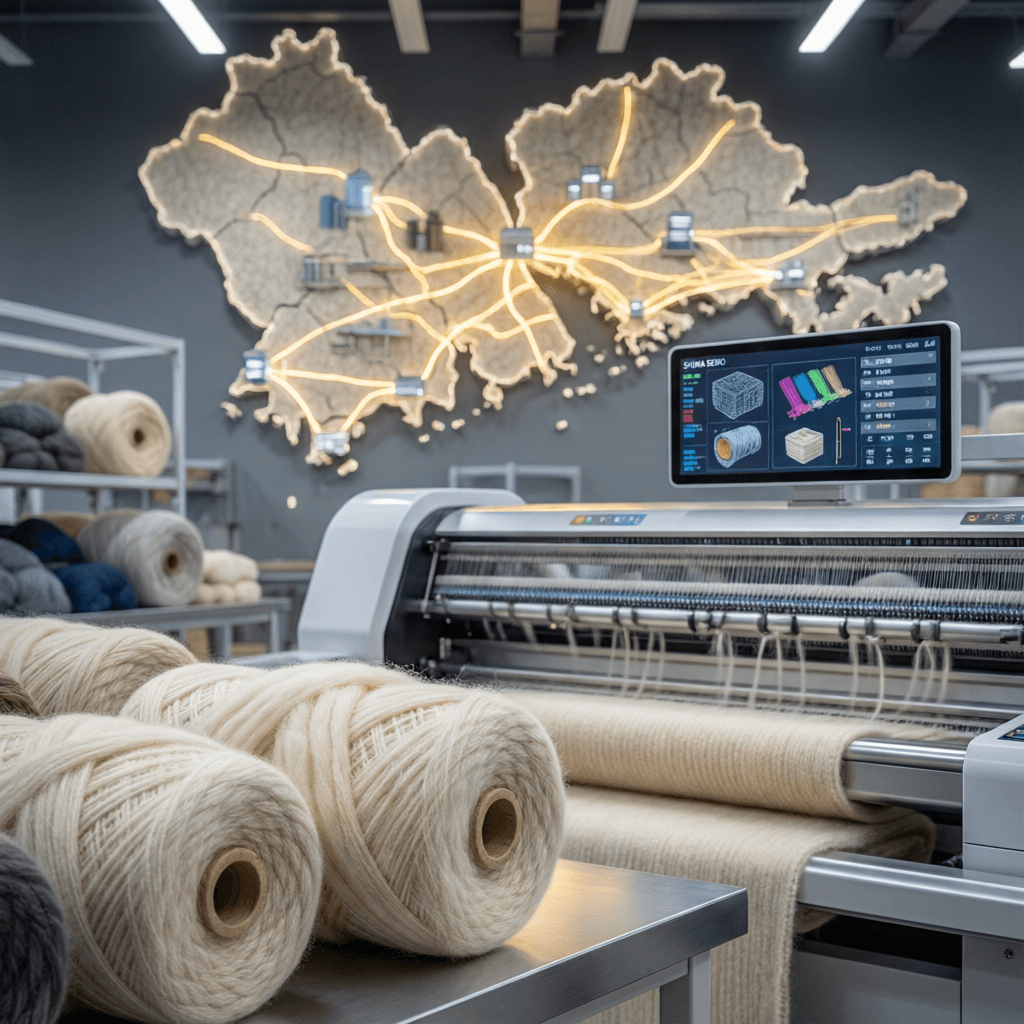
The PRD ecosystem solves this fragmentation by concentrating raw material yarn markets, industrial washing facilities, testing labs, and high-tech sewing floors within a 50-kilometer radius. For supply chain decision-makers, navigating this geographic cluster requires looking beyond China as a single sourcing destination and instead analyzing the hyper-specialized sub-districts that define the region’s garment manufacturing prowess.
(See our related guide: How Industrial Upgrades Boost Product Quality.)
This technical analysis details how leveraging Dongguan’s dual manufacturing bases allows brands to compress prototyping schedules, achieve precise color consistency, and maintain strict quality standards while minimizing minimum order quantity (MOQ) liabilities.
Technical Specifications of the PRD Ecosystem
In high-end knitwear and structured apparel production, technical precision determines performance. Within the PRD, fiber diameters are strictly categorized: Merino wool is sourced from superfine (≤18.5µm), fine (≤20µm), to medium (≤22µm) grades, with total fiber ranges spanning 17-24µm. Premium Cashmere Grade A is locked at a diameter of ≤15.5µm to ensure maximum tensile strength and thermal efficiency.

Read more about Maintaining Global Standards i for additional context.
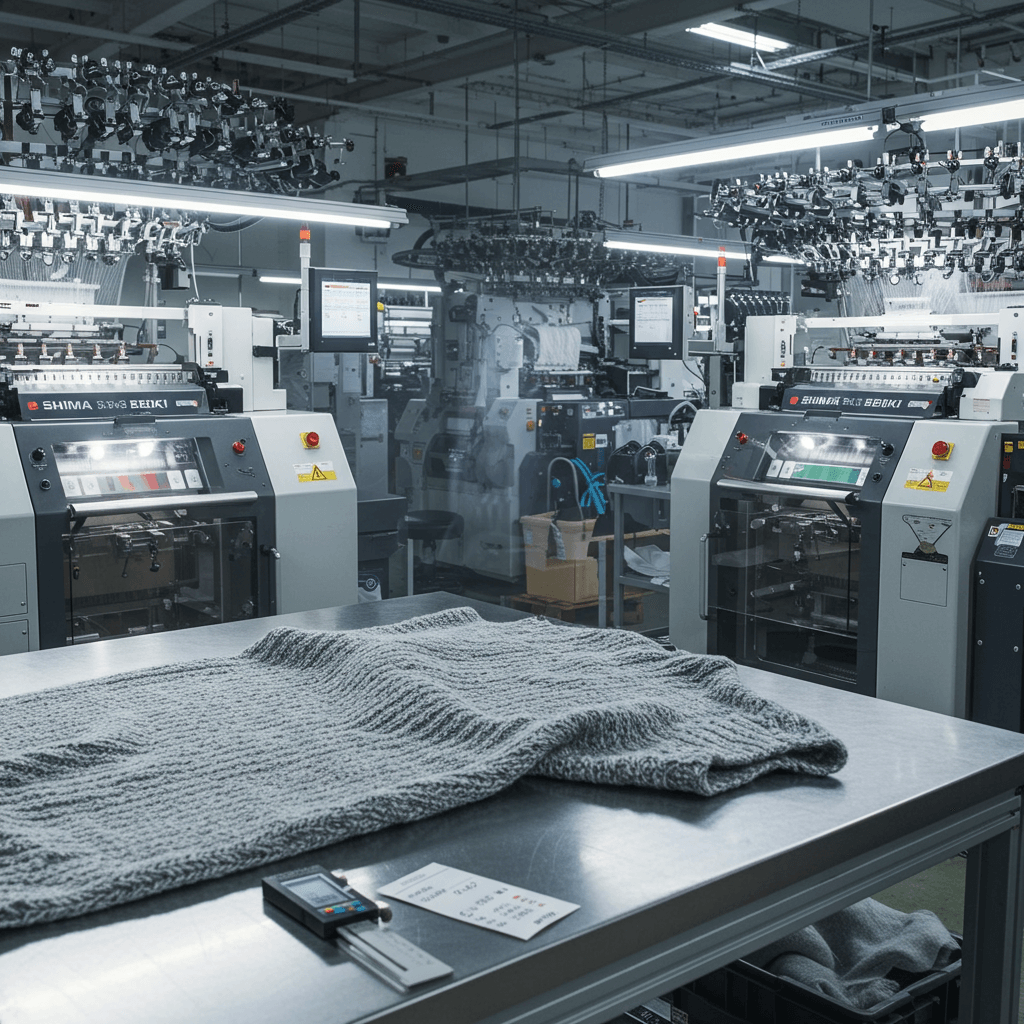
Machine knitting capabilities are highly specialized by gauge. The Dalang cluster excels in computerized flat-knitting technology spanning a broad gauge range from 3GG to 18GG. Heavy, chunky knits utilize 3-5GG setups, midweight sweaters require 7-10GG, and fine, lightweight activewear relies on 12-18GG machinery. Combining these gauges with advanced yarn types—including cashmere-merino blends, recycled wool (GRS), modal, viscose, and LENZING ECOVERO—requires strict humidity control and tension-calibrated feeders to prevent yarn breakage during high-speed runs.
Cluster Comparison: Dalang Knitwear vs. Humen Woven
To build a resilient clothing factory network, buyers must differentiate between the regional specialties of neighboring clusters. While both located within Dongguan, Dalang and Humen operate on entirely different mechanical, chemical, and structural frameworks.
Choosing between these clusters is not a matter of quality, but of physical construction. Dalang is engineered for structural yarn formation (building fabric from a single strand), whereas Humen is optimized for panel cutting, dimensional stitching, and structural reinforcement of pre-woven textiles.
| Technical Parameter | Dalang Premium Knitwear Cluster | Humen Woven & Cut-and-Sew Cluster |
|---|---|---|
| Primary Machinery Configuration | 3GG to 18GG computerized flat-knitting | Automated lockstitch & overlock sewing stations |
| Raw Material Fiber Spec | Merino wool (17–24µm) / Cashmere (≤15.5µm) | Woven cotton, synthetic blends, viscose blends |
| Minimum Order Quantity (MOQ) | 100 pcs per colour/style | 200 pcs per colour/style |
| Prototyping Lead Time | 15–20 days (+ 5–7 days for specialized yarn) | 10–14 days for standard woven patterns |
| Bulk Production Cycle | 45–60 days from approved pre-production sample | 30–45 days from pattern sign-off |
| Raw Material Sourcing Lag | 3–5 days from local yarn markets | 1–3 days from Humen fabric markets |
| Color Calibration Standard | Pantone TCX matching (dE < 1.0 tolerance) | Pantone TCX matching (dE < 1.2 tolerance) |
| Quality Assurance Metric | AQL 2.5 finished inspection standard | AQL 2.5 finished inspection standard |
| Standard Payment Terms | 30% deposit, 70% balance before shipment | 30% deposit, 70% balance before shipment |
The critical takeaway from this operational comparison is that while Humen offers rapid assembly for complex patterns, Dalang provides unmatched structural control over the fiber itself. A technical buyer must align their product’s structural requirements with the correct cluster’s machinery to avoid high defect rates and shipping delays.
Product Use Cases and Technical Applications
For international apparel brands, selecting the correct material-to-gauge configuration is the difference between premium retail positioning and a high return rate. For example, a luxury outerwear brand looking to launch a midweight autumn sweater line should specify a 7-10GG structure using fine merino wool (≤20µm) blended with acrylic to improve dimensional stability. The resulting garment achieves excellent pill resistance and holds its shape after repeated washing cycles, making it ideal for corporate wear and premium retail.
— as detailed in our article on How Local Clusters Speed Up Material Sourcing.
Alternatively, for lightweight transitional garments, utilizing 12-18GG fine-gauge machines with GOTS-certified organic cotton or LENZING ECOVERO viscose yields a highly breathable fabric with soft drape characteristics. For structured outerwear, such as woven trench coats or utility jackets, switching to the Humen woven ecosystem is required to handle high-density fabrics. These garments require an MOQ of 200 pieces and rely on precise Pantone TCX matching to ensure that the color of the shell fabric matches the interior knitted lining with less than a 1.0 Delta E deviation.
Supplier Integration in the Pearl River Delta
Navigating these dual ecosystems independently can introduce severe logistical friction, such as misaligned delivery schedules between different apparel categories. Advanced clothing factory partners mitigate this risk by maintaining active production facilities in both major hubs. For instance, integrated suppliers like Cogarm manage a dual-base manufacturing strategy, with cut-and-sew woven garments produced in Humen and premium knitwear engineered in Dalang. This geographical integration allows brands to consolidate their supply chain, executing coordinated deliveries of both knitted and woven components under a unified AQL 2.5 inspection framework.
By maintaining a flexible minimum order quantity of 100 pieces for knitwear and 200 pieces for woven products, specialized manufacturers allow brands to test new designs without committing to excess inventory. Global compliance standards—including OEKO-TEX, GOTS, GRS, and BSCI—are seamlessly integrated into the production line based on the client’s technical specifications. Standard development runs on a 15-20 day sampling cycle (with an additional 5-7 days for sourcing custom-spun yarns), enabling rapid physical verification of yarn handsheets and Pantone TCX matching prior to executing the 45-60 day bulk production cycle. Partners like Cogarm streamline this workflow, facilitating an agile transition from technical CAD files to final ex-factory shipment.
Choosing the Right PRD Supplier
Specify Dalang premium knitwear micro-clusters for custom apparel requiring 3GG to 18GG flat-knitted structures using superfine merino wool (≤18.5µm) or Cashmere Grade A (≤15.5µm). Specify Humen woven clusters for structured textile manufacturing, tailored cut-and-sew garments, and high-density woven jackets requiring an MOQ of 200 pieces.
Frequently Asked Questions
What is the standard sample lead time for custom merino knitwear?
The standard sample lead time is 15-20 days, with an additional 5-7 days required if specialized or custom-dyed yarns must be sourced.
For a deeper dive, see Our Investment in Modern Machinery in Dongguan.
What are the standard gauge ranges for custom sweaters, and how do they impact the design?
Our regional machinery covers a gauge range from 3GG to 18GG, where 3-5GG is optimized for chunky styles, 7-10GG for midweight sweaters, and 12-18GG for fine, lightweight garments.
How is quality control verified during bulk production runs?
All manufacturing runs are subject to a strict AQL 2.5 finished inspection standard to verify dimensional tolerances, seam strength, and yarn defects before ex-factory dispatch.
What is the minimum order quantity for knitted vs. woven garments?
The minimum order quantity is 100 pieces per color and style for knitwear products, and 200 pieces for woven and cut-and-sew garments.
Maximizing Regional Cluster Velocity
Managing an agile fashion supply chain requires balancing minimum order sizes against raw material quality and lead-time constraints. By leveraging the specialized geographical micro-clusters of Humen and Dalang, apparel buyers can access top-tier machinery, expert craftsmanship, and immediate yarn availability without the overhead of fragmented international logistics.
Request a knitwear swatch kit featuring 12GG and 14GG merino wool samples with full Pantone TCX matching references from Cogarm.
