

Garment Manufacturing: Fine 18GG vs Chunky 3GG Specs
This article analyzes how apparel brands maintain rigorous international quality standards when sourcing knitwear and woven apparel from highly specialized regional clusters. We evaluate key technical specifications—from micron counts to gauge differences—and outline how dual-base manufacturing networks mitigate supply chain risk for global procurement teams.
When leading manufacturers coordinate its global supply chain, it relies on hyper-localized manufacturing clusters in Shenzhen to transition seamlessly from prototype to mass production. Similarly, global design leaders like IKEA and Herman Miller construct their sourcing strategies around geographic hubs where raw material suppliers, specialized tooling facilities, and skilled labor exist within a single-digit radius. In high-end apparel production, a similar geographical centralization is crucial for maintaining rapid design-to-shelf cycles while preserving material integrity.
(See our related guide: Leveraging China’s R&D Ecosystem for Apparel.)
For sourcing managers and apparel procurement directors, the challenge is not simply finding a factory, but finding a regional ecosystem capable of executing complex technical specifications without compromising quality. When scaling a premium knitwear line, a single breakdown in yarn spinning, dyeing precision, or tension control can ruin an entire production run, established to costly chargebacks and retail delays.
This article outlines how to evaluate regional manufacturing clusters, compare key technical specifications such as yarn micron thickness and machine gauge ranges, and establish a reliable quality assurance framework that aligns with global standards.
Relevant Standards or Specifications
In premium apparel production, quality is defined by measurable yarn physics and structural tolerances, rather than subjective hand-feel. Procurement teams must establish clear benchmarks around fiber diameter, machine gauge, and dimensional stability before initiating a production run. For instance, wool quality is dictated by the micron (µm) scale: standard wool exceeds 23µm, while premium applications require Merino wool ranging from 17-24µm. Within this spectrum, superfine merino must measure ≤18.5µm, fine merino ≤20µm, and medium merino ≤22µm. Cashmere Grade A demands an even tighter tolerance of ≤15.5µm.
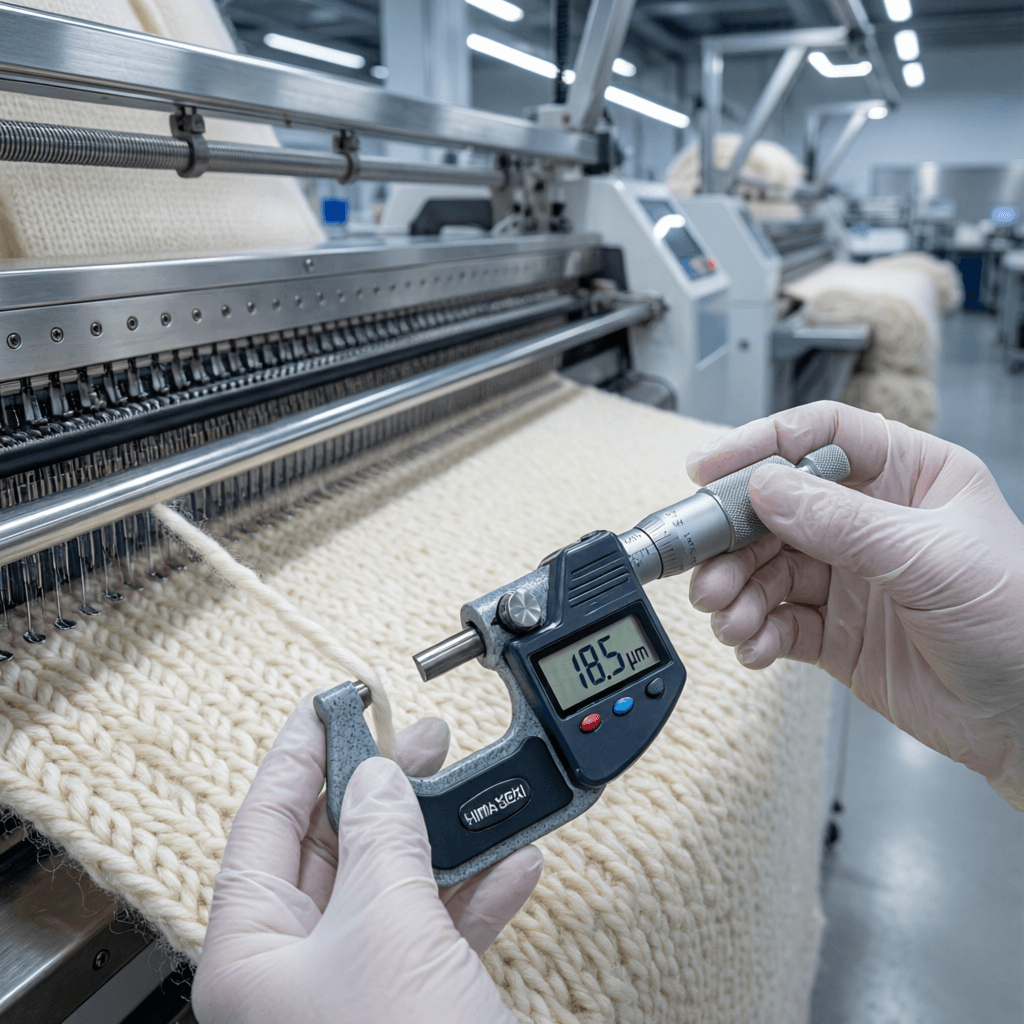
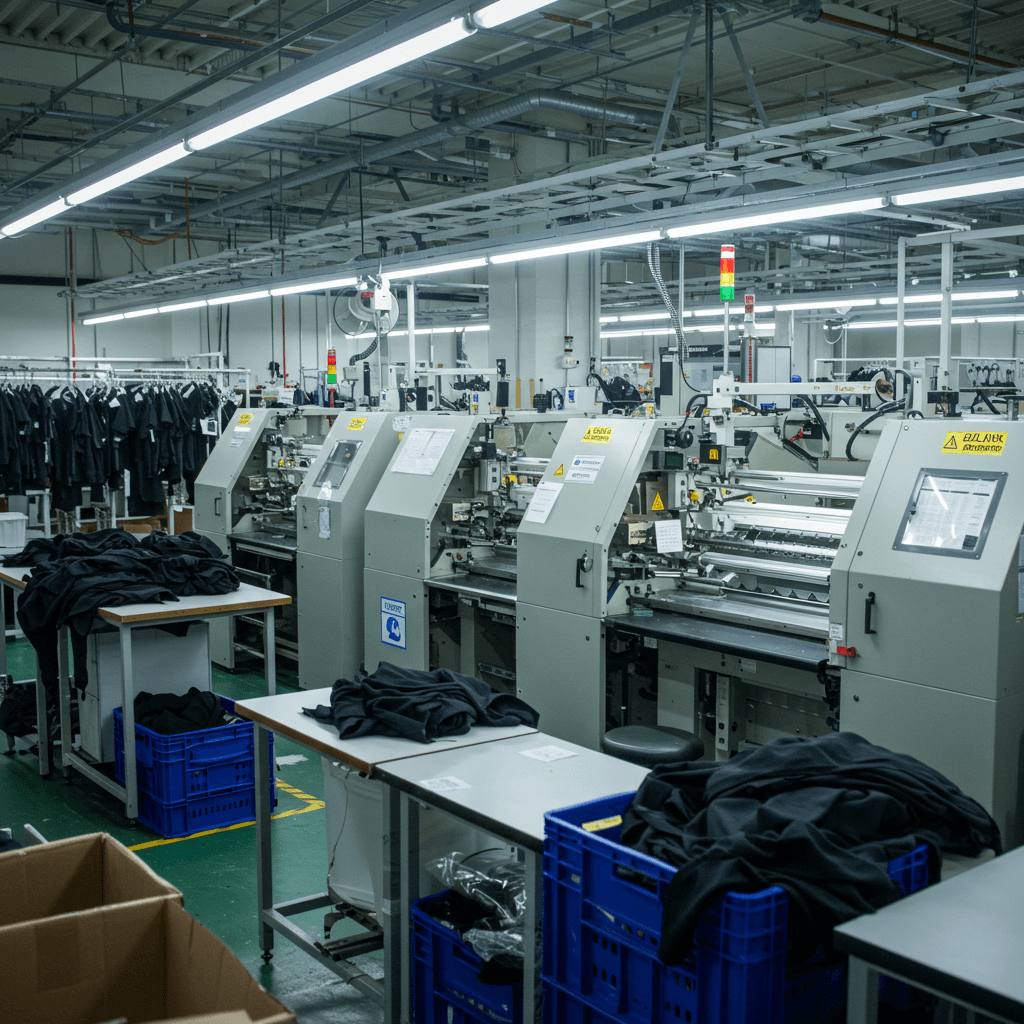
Read more about How Local Clusters Speed Up Ma for additional context.
Beyond fiber diameter, machine density—expressed as gauge (GG)—determines the weight, drape, and structural stability of the garment. Standard industrial knitting ranges from chunky 3GG-5GG structures up to ultra-fine 12GG-18GG constructions. Ensuring a consistent knit structure across these gauges requires rigorous dimensional control and standardized color matching. Utilizing the Pantone TCX (Textile Cotton eXtend) matching system ensures that lab dips achieve a color variance of less than 1.0, protecting brand consistency across global retail channels.
Comparing Fine Gauge vs Chunky Gauge Sourcing Specifications
When drafting tech packs for a new apparel collection, procurement managers must choose the appropriate machine gauge and yarn configuration. Each configuration carries distinct manufacturing tolerances, machine feeds, and processing timelines. The table below outlines the core technical differences between fine-gauge (12GG-18GG) and chunky-gauge (3GG-5GG) setups.
| Technical Metric | Fine Gauge (12GG – 18GG) | Chunky Gauge (3GG – 5GG) |
|---|---|---|
| Yarn Fiber Diameter | ≤18.5µm (Superfine Merino / Cashmere Grade A) | 22µm – 26µm (Medium/Coarse Wool or Blends) |
| Typical Yarn Count (Nm) | 2/48 Nm to 2/80 Nm (Fine combed) | 1/1.5 Nm to 2/10 Nm (Thick carded) |
| Needles Per Inch | 12 to 18 needles per linear inch | 3 to 5 needles per linear inch |
| Fabric Weight Range | 120 gsm to 220 gsm (Lightweight/Activewear) | 450 gsm to 900 gsm (Heavyweight outerwear) |
| Sourced Yarn Lead Time | 5 to 7 additional days for fine-spinning | 3 to 5 days for standard open-end spinning |
| Defect Tolerance (AQL) | AQL 2.5 critical / major limits enforced | AQL 2.5 (Loose structure requires hand inspection) |
| Production Output Rate | 8 to 12 pieces per machine/day (Slow feed) | 25 to 35 pieces per machine/day (Fast feed) |
| Linking Machine Type | 14GG to 18GG dial linking (High-precision) | 3GG to 5GG loop-to-loop or hand-linking |
This comparison highlights the operational trade-offs between light, high-precision fine knits and robust, heavy chunky knits. Fine-gauge production (12GG-18GG) requires premium, low-micron fibers like Grade A cashmere (≤15.5µm) to prevent yarn breakage under high machine tension, demanding longer setup and linking times. Conversely, chunky-gauge knitting (3GG-5GG) accommodates thicker, medium-micron yarns (≤22µm) and achieves higher daily output rates, but requires rigorous post-knit washing controls to manage structural shrinkage.
Product Use Cases and Material Configurations
When sourcing premium corporate and retail knitwear, specific product categories dictate unique fiber and assembly configurations. For instance, a luxury retail line requires Custom Sweaters crafted from a Merino/Acrylic/Cotton blend. To balance thermal performance with durability and wash-resistance, this product utilizes a 12GG midweight knit with superfine merino wool (≤18.5µm) blended with long-staple cotton and low-pill acrylic. This specific material blend achieves high tensile strength and complies with AQL 2.5 inspection standards, making it highly resilient for daily wear.
Yarns utilized across these production lines span a wide technical range: merino, cashmere, cashmere-merino blend, lambswool, cotton, GOTS organic cotton, acrylic, wool-acrylic, recycled wool (GRS), modal, viscose, and LENZING ECOVERO.
— as detailed in our article on The Role of Skilled Labor in Technical Apparel.
Conversely, woven garments such as structured overshirts and utility trousers demand distinct manufacturing infrastructure. These products rely on high-density woven cotton or cotton-synthetic blends processed on industrial looms rather than flat-knitting machinery. For fashion brands coordinating multi-category collections, placing knitwear and woven production within the same regional hub reduces domestic transit times to zero. It allows the simultaneous evaluation of a 100-piece knitwear run alongside a 200-piece woven run, ensuring identical Pantone TCX dye alignment across disparate fabric structures.
Dual-Base Manufacturing and Sourcing Agility
To successfully navigate these technical complexities, modern procurement teams rely on manufacturers with strategic geographic placement. Suppliers like Cogarm leverage a unique dual-base manufacturing model in Dongguan, China, splitting production between Humen for high-precision woven cut-and-sew and Dalang for premium knitwear. This localized dual-base structure allows buyers to consolidate their supply chain, utilizing Dalang’s deep yarn-spinning resources for 3GG-18GG knitwear while managing structured apparel production in adjacent Humen.
This operational setup provides exceptional agility, offering an MOQ flexibility of 100 pcs per colour/style for knitwear and 200 pcs for woven garments. The proximity of local yarn markets compresses the sample lead time to 15-20 days (plus an additional 5-7 days when specialized, custom-dyed yarns must be sourced). Once samples are approved, mass production is completed within 45-60 days from sample approval, under commercial payment terms of 30% deposit + 70% before shipment.
To accommodate strict corporate compliance policies, suppliers like Cogarm integrate global compliance standards—including OEKO-TEX, GOTS, GRS, and BSCI—directly into the production workflow based on client specifications, ensuring a fully transparent and auditable Chain of Custody (CoC).
When to Choose Regional Hub Manufacturing
Specify fine-gauge 12GG-18GG knitwear utilizing superfine merino (≤18.5µm) for premium, next-to-skin retail apparel requiring high drape and thermal regulation. Specify chunky-gauge 3GG-5GG knitwear or structured woven garments for durable, high-density outerwear and mid-layer collections requiring structural rigidity and high wash-durability.
For a deeper dive, see.
Frequently Asked Questions
What is the standard sample lead time for custom knitwear?
The standard sample lead time is 15-20 days, with an additional 5-7 days required if specialized or custom-dyed yarns must be sourced first.
What is the minimum order quantity (MOQ) for custom knitwear versus woven garments?
The MOQ is 100 pieces per color/style for knitwear and 200 pieces for woven garments.
How is color accuracy managed across different fabric blends?
Color matching is conducted using the Pantone TCX system, verifying dye lots against spectrophotometer benchmarks to keep variance below a ΔE of 1.0.
What quality inspection standards are applied to bulk production?
All finished garments undergo a rigorous AQL 2.5 inspection process before packing to verify sizing tolerances, seam strength, and stitch consistency.
Streamlining Sourcing Decisions
Sourcing premium apparel requires balancing technical fabric specifications, tight lead times, and rigorous international quality standards. By aligning with a dual-base manufacturer situated in specialized apparel clusters, global buyers eliminate geographical fragmentation and secure a reliable path from initial sample to retail floor.
Request a custom knitwear sample with Pantone TCX matching and complete technical specification sheets from Cogarm to evaluate their Dalang-produced fine-gauge knit quality.
