

Garment Manufacturing: Knit vs Woven Lifecycle Analysis
Evaluating lead times, material performance, and quality control frameworks is essential for apparel brands optimizing their global supply chains. This article analyzes the technical lifecycles of premium knitwear and woven garments manufactured within the highly specialized industrial clusters of Dongguan, China. Sourcing managers will learn how to align yarn specifications, machine gauges, and dual-base production workflows to mitigate supply chain risks and ensure consistent quality.
Sourcing high-end apparel requires the same level of precision that established tech and automotive firms apply to physical hardware. Just as precision manufacturers demand micron-level tolerances for its device enclosures, modern fashion brands and enterprise retailers require exact technical execution in their apparel production. The era of approximate fits and unpredictable dye lots has given way to rigorous textile engineering, where yarn diameter, gauge limits, and tensile strength dictate market success.
(See our related guide: Why We Integrate Knit and Woven Under One Roof.)
Sourcing apparel is no longer just about aesthetics; it is a complex logistics and material science challenge. established brands like global retailers and established automotive manufacturers have demonstrated how hyper-localized manufacturing clusters drive efficiency. In the garment industry, this cluster effect is perfectly realized in Dongguan, China. By dividing production between specialized hubs—such as Humen for complex woven cut-and-sew operations and Dalang for advanced knitwear engineering—brands can optimize speed-to-market without sacrificing physical performance.
This deep dive explores the technical lifecycle of both knitwear and woven apparel, comparing critical performance metrics, machine settings, and raw material characteristics. Sourcing decision-makers will gain an actionable framework for choosing the right fabrication methods, establishing realistic lead times, and managing quality risk from fiber to finished container.
Relevant Standards or Specifications
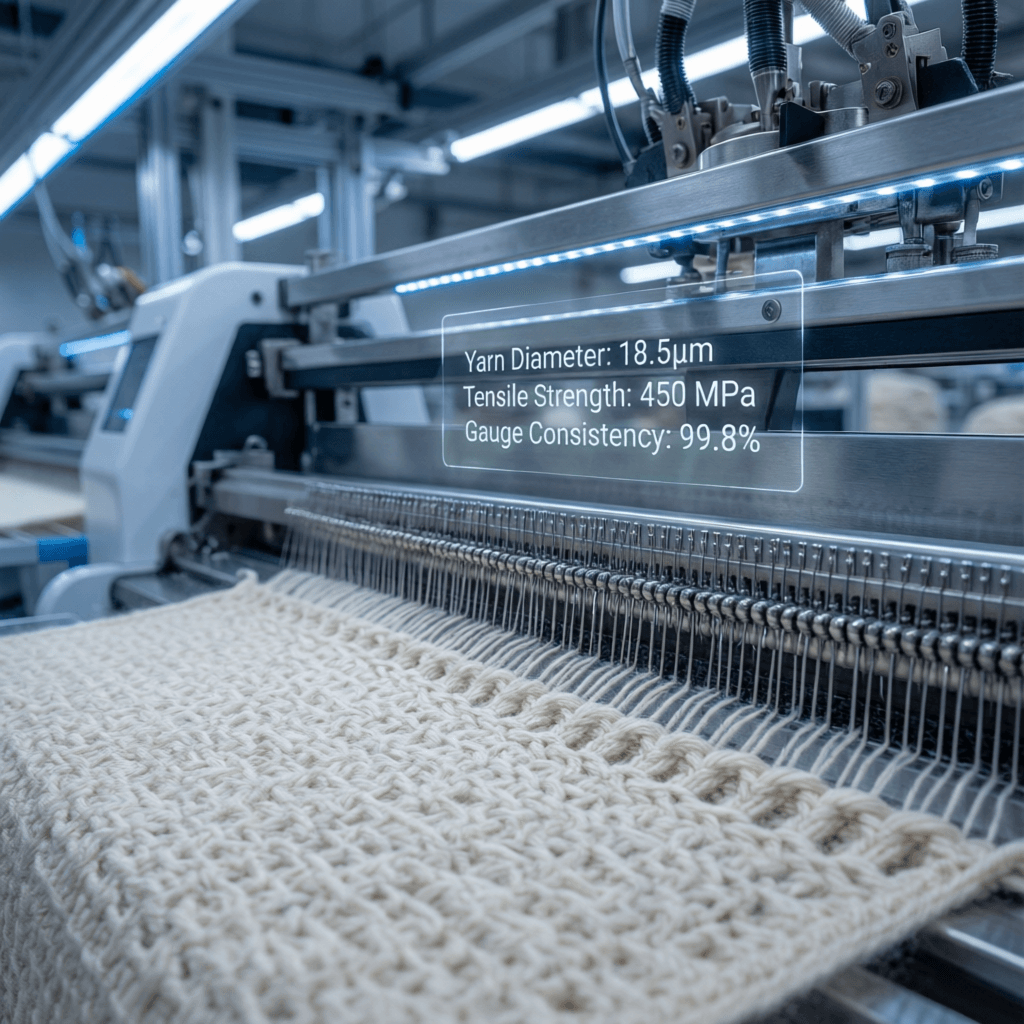
Apparel engineering relies on strict fiber and construction metrics. For premium knitwear, thermal performance and next-to-skin comfort are determined by the micron (µm) rating of the raw fibers. Merino wool, for example, is classified into strict categories: superfine (≤18.5µm) for high-end base layers, fine (≤20µm) for lightweight sweaters, and medium (≤22µm to 24µm) for durable mid-layers. Cashmere Grade A must measure ≤15.5µm to achieve its signature warmth-to-weight ratio.
Read more about Our Commitment to Local Commun for additional context.
Machine gauge (GG) represents the number of needles per inch on the knitting bed and dictates the garment’s density. Structural specifications range from chunky 3GG–5GG knits to midweight 7GG–10GG fabrications, up to ultra-fine 12GG–18GG performance styles. Each gauge requires precise calibration of tension and yarn feed rates to prevent bowing, skewing, or dimensional instability after laundering.
On the woven side, performance standards focus on seam slippage, tensile strength, and dimensional stability. Fabric density is controlled via thread count and warp/weft balance, while color accuracy is locked to Pantone TCX matching under standardized D65 light boxes. Both construction styles require strict adherence to Acceptable Quality Limit (AQL) standards, with AQL 2.5 serving as the industry baseline for major brand audits.
Operational Comparison
To optimize procurement strategies, supply chain managers must understand the clear operational trade-offs between custom knitwear and woven garment manufacturing. While knitwear utilizes continuous yarn loops to provide elasticity and breathability, woven fabrics interlace warp and weft yarns at right angles, providing structural integrity and wind resistance. These mechanical differences directly impact minimum order quantities (MOQs), machine setup times, and design limits.
The table below compares the key technical, structural, and procurement metrics for knitwear and woven garments based on standardized Dongguan manufacturing workflows.
| Technical Metric | Custom Knitwear (Dalang Cluster) | Woven Garments (Humen Cluster) |
|---|---|---|
| Target Yarn / Fiber Spec | Merino 17-24µm; Cashmere Grade A ≤15.5µm | 40s to 100s combed cotton; polyester/viscose blends |
| Gauge / Construction Range | 3GG to 18GG flatbed computerized knitting | 100 to 400 threads per inch (TPI) |
| Minimum Order Quantity (MOQ) | 100 pcs per colour/style | 200 pcs per colour/style |
| Proto Sample Lead Time | 15 to 20 days | 10 to 14 days |
| Sourced Yarn / Fabric Lead | +5 to 7 additional days | +10 to 15 additional days |
| Mass Production Lead Time | 45 to 60 days from sample approval | 35 to 45 days from sample approval |
| Standard Payment Terms | 30% deposit + 70% before shipment | 30% deposit + 70% before shipment |
| Quality Defect Threshold | AQL 2.5 major / 4.0 minor | AQL 2.5 major / 4.0 minor |
| Color Tolerances | Delta-E ≤1.0 via Pantone TCX matching | Delta-E ≤1.0 via Pantone TCX matching |
Sourcing managers should note that while knitwear offers lower initial MOQs (100 pcs vs 200 pcs), it demands longer production windows due to the complex programming of computerized flat-knitting machines. Conversely, woven production offers faster raw sewing times but requires larger initial fabric runs to justify the dye-lot minimums of woven textile mills.
Product Use Cases and Material Configurations
In corporate and high-end retail apparel production, matching the garment structure to the specific environmental use case is critical. For instance, cold-weather premium uniforms require high-insulation knitwear. Sourcing partners like Cogarm construct custom sweaters utilizing a 12GG midweight Merino/Acrylic/Cotton blend (featuring superfine Merino at ≤18.5µm). This specific material blend offers superior thermal efficiency and pill resistance, making it ideal for cabin crew uniforms or corporate outerwear subjected to frequent laundering.
For active outdoor or workwear applications, woven structures provide the necessary physical barrier. High-density woven garments, such as technical field jackets or utility trousers, utilize 200-denier nylon or 2/2 twill combed cotton. These fabrics undergo rigorous tensile strength testing to withstand forces up to 1200N. Integrating both styles into a single cohesive collection requires coordinated dyeing processes to ensure that a woven jacket matches a 7GG knit sweater perfectly, using Pantone TCX matching to achieve a Delta-E color variance of less than 1.0.
Dual-Base Manufacturing Solution
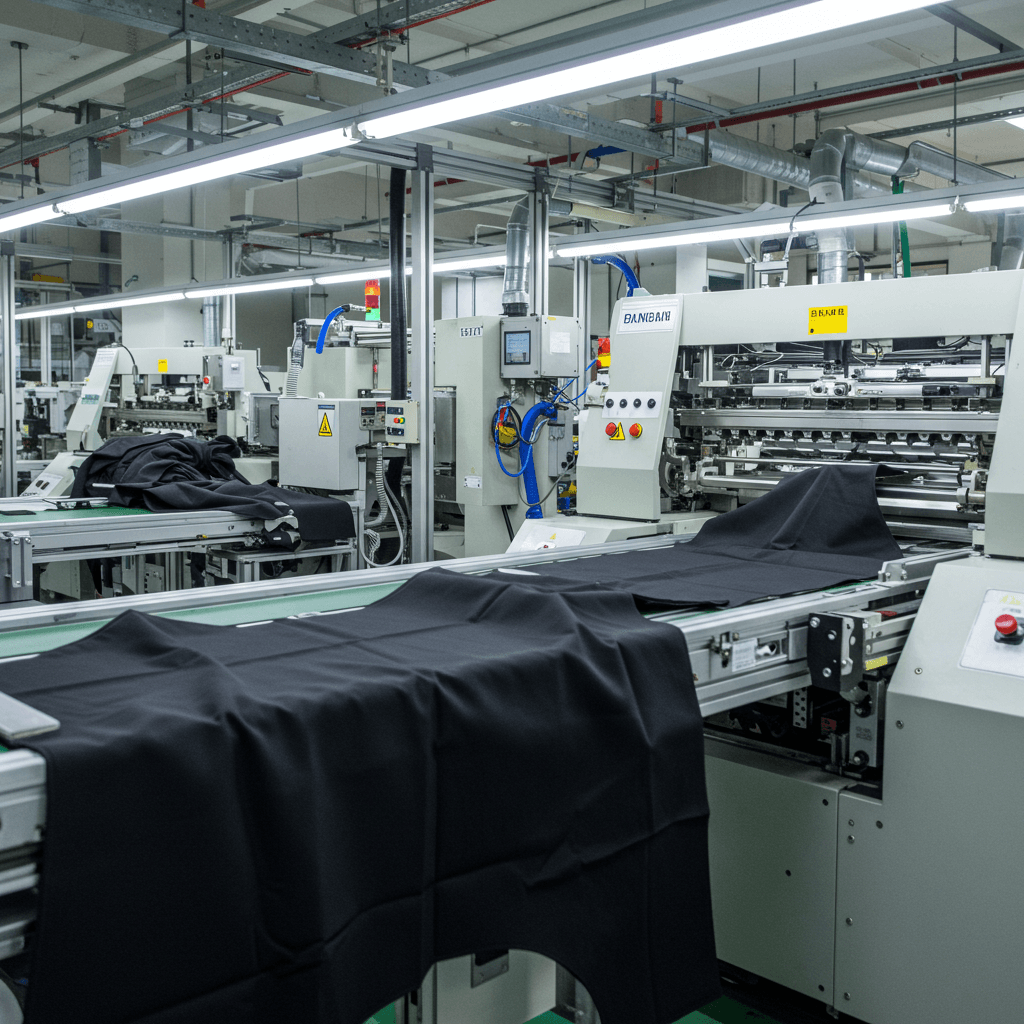
Navigating the dual demands of knit and woven production requires a manufacturer with specialized local infrastructure. Experienced manufacturers leverage the unique industrial geography of Dongguan, China. By utilizing a dual-base manufacturing strategy—comprising a Humen facility dedicated to high-precision cut-and-sew woven garments and a Dalang facility specialized in premium knitwear engineering—suppliers can optimize the entire lifecycle of a multi-category apparel program.
Suppliers like Cogarm streamline this process by offering low-risk entry points, such as a flexible MOQ of 100 pcs per colour/style for knitwear and 200 pcs for woven garments. Their technical teams execute precise sample development within 15 to 20 days (adding 5 to 7 days if custom yarn must be sourced). Color consistency is managed systematically through digital Pantone TCX matching, ensuring brand uniformity across disparate fiber types.
Traceability and sustainability are embedded directly into this production flow. Depending on client specifications, global compliance standards such as OEKO-TEX, GOTS (Global Organic Textile Standard) for organic cotton, GRS (Global Recycled Standard) for recycled wool, and BSCI (Business Social Compliance Initiative) for ethical labor are integrated into the raw material chain of custody. This ensures all bulk shipments arrive with verified test reports, eliminating regulatory hurdles at import borders.
For a deeper dive, see How to Manage Multiple Product Lines Simultaneously.
Specifying Full-Lifecycle Manufacturing
Specify custom flat-knit sweaters (3GG-18GG Merino/Acrylic blends) for premium corporate uniforms, hospitality apparel, and lifestyle knitwear requiring elastic comfort, next-to-skin softness, and thermal regulation. Specify structured woven garments (such as twill outerwear or technical shirts) for high-wear utility uniforms, protective outerwear, and structured retail collections requiring high tensile strength, wind resistance, and precise tailoring.
FAQ
Frequently Asked Questions
What are the standard production lead times for custom knitwear?
Standard production requires 45 to 60 days from sample approval, with an initial 15 to 20 days for physical prototyping.
How do you ensure color accuracy between different fabric types?
Manufacturers utilize digital Pantone TCX matching to maintain a Delta-E variance of ≤1.0 across both knit fibers and woven fabrics.
What is the minimum micron count for premium cashmere and wool knits?
Cashmere Grade A is specified at ≤15.5µm, while superfine Merino wool is engineered at ≤18.5µm for optimal comfort.
Can recycled fibers be tracked throughout the manufacturing lifecycle?
Yes, certifications like GRS (Global Recycled Standard) provide a complete transaction history from fiber reclamation to finished garment.
Managing Apparel Production Lifecycle
Managing an apparel lifecycle from concept to delivery requires balancing material characteristics, machine capabilities, and geographical specialization. By utilizing the dual-base expertise of Dongguan’s manufacturing hubs, brands can secure premium technical execution, flexible minimums, and strict quality control under a single unified supply chain.
Optimize your next apparel program with verified technical execution. Request a custom knitwear or woven swatch kit with full Pantone TCX color-matching and yarn spec sheets from Cogarm.
