

Developing a high-performance apparel line requires translating creative design into quantifiable production parameters. To secure accurate pricing and eliminate downstream execution errors, procurement managers must provide a highly structured Request for Quote (RFQ) to prospective factories. This article details the essential technical metrics, fiber standards, and manufacturing variables that must be included in your apparel RFQ to guarantee sourcing success.
When leading manufacturers design a new unibody aluminum enclosure, its engineering team does not send a vague sketch to machine shops; they provide exact material grades, surface roughness tolerances, and dimensional specs down to the micron. Similarly, global retail giants like Zara and IKEA maintain highly standardized digital product creation workflows where every fiber density, seam tolerance, and raw material supplier is mapped out before a factory receives an RFQ. In the competitive landscape of modern garment manufacturing, relying on basic sketches or open-ended descriptions results in inflated quotes, prolonged sampling loops, and high defect rates.
A high-quality RFQ functions as a technical contract during the initial bidding stage. It aligns your brand’s quality expectations with the factory’s technical capabilities, allowing production managers to calculate exact yield requirements, machine times, and yarn consumption. Without precise technical parameters, factories are forced to quote with a “risk premium” built in, which artificially inflates your FOB (Free on Board) unit costs by up to 20%.
(See our related guide: How to Manage Multiple Product Lines Simultaneously.)
By structuring your RFQ with granular material and construction specifications, you bypass the typical friction points of apparel production. The following guide provides the definitive checklist of technical, material, and logistical specifications required to achieve a seamless sourcing process from first sample to final shipment.

Technical Specs and Quality Benchmarks
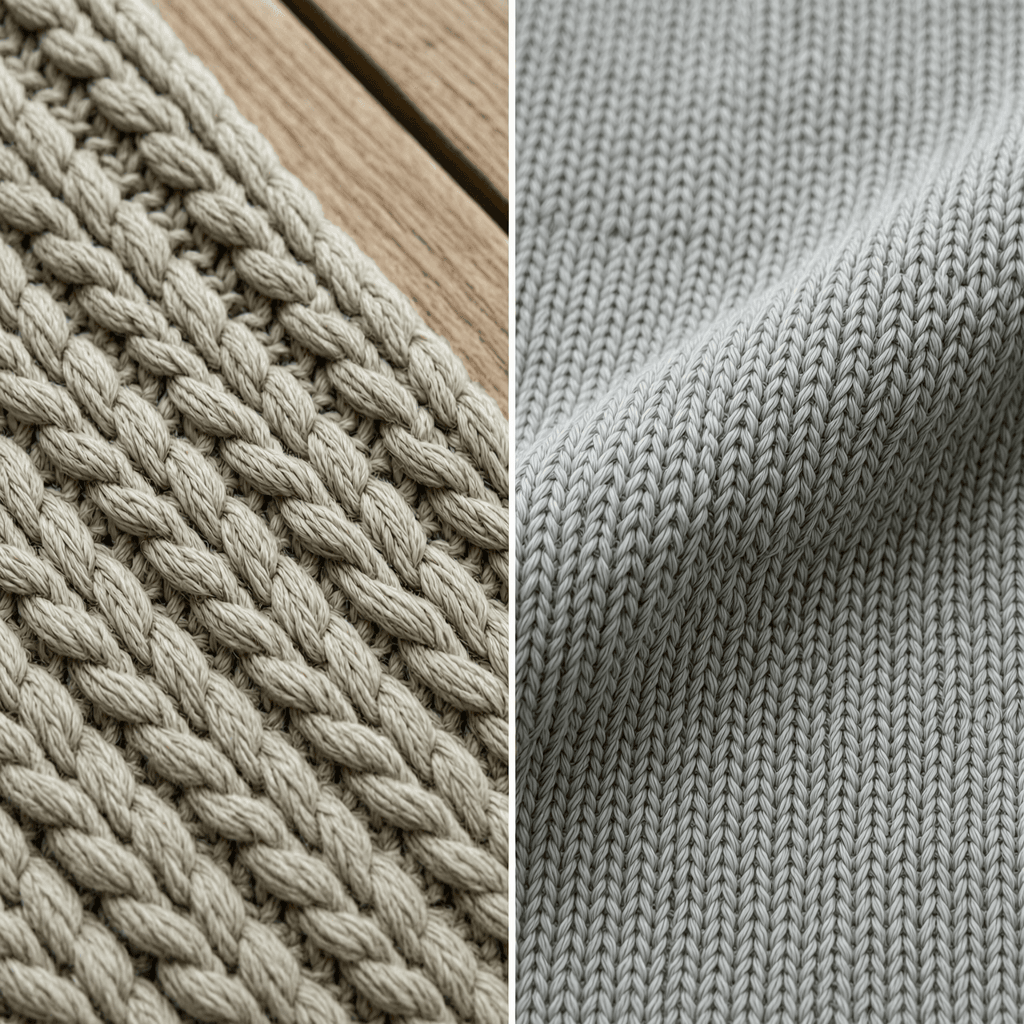
An apparel RFQ must establish clear material baselines. Fiber diameter, yarn composition, and knitting or weaving density are the primary cost drivers. For knitwear, the key variable is the machine gauge (GG), which determines the stitch density and overall fabric weight. Specifying the target gauge—ranging from chunky 3GG-5GG structures to midweight 7GG-10GG and superfine 12GG-18GG knits—tells the factory exactly which machinery must be allocated to your production run.
Furthermore, fiber-level specifications prevent factories from substituting cheaper, shorter-staple alternatives. When specifying luxury fibers like Merino wool, specifying the micron range is critical: superfine (≤18.5µm), fine (≤20µm), or medium (≤22µm). For cashmere, demanding Grade A fibers (≤15.5µm) ensures the soft hand-feel remains consistent through commercial washing and finishing cycles.
Parameter Comparison: Knitwear vs. Wovens
To understand how RFQ requirements shift depending on the product category, compare the technical parameters of premium knitwear and woven apparel. Providing specific numbers in these categories ensures the factory can calculate exact material yields and machine configurations.
Read more about How to Manage Multiple Product for additional context.
| Technical Parameter | Premium Knitwear Specification | High-Performance Woven Specification |
|---|---|---|
| Primary Density Metric | Gauge range: 3GG-18GG (e.g., 12GG fine knit) | Fabric weight: 120–280 GSM (grams per square meter) |
| Fiber Fineness/Micron | Merino wool: 17-24µm; Cashmere Grade A: ≤15.5µm | Cotton staple length: 28–32mm; Silk: 12D–22D |
| Typical MOQ Threshold | Minimum 100 pcs/colour/style | Minimum 200 pcs/colour/style |
| Color Standard | Pantone TCX matching | Pantone TCX or TPG matching |
| Dimensional Tolerance | Knit shrinkage allowance: ±3.0% to ±5.0% | Woven shrinkage allowance: ±1.5% to ±2.0% |
| Standard Sample Lead Time | 15-20 days (+ 5-7 days for custom sourced yarn) | 10-14 days (using stock yardage for proto) |
| Standard Production Time | 45-60 days from gold-standard sample approval | 35-45 days from pre-production sample approval |
| Quality Assurance Standard | AQL 2.5 final inspection threshold | AQL 2.5 final inspection threshold |
This comparative analysis shows that knitwear RFQs require deep technical parameters regarding knitting gauge and yarn micron counts, whereas woven garments focus heavily on fabric weight (GSM) and precise dimensional stability. Providing these precise metrics allows factories to run accurate yield calculations, preventing costly material shortages or overages during bulk production.
Sourcing Use Cases by Product Category
For sportswear and premium corporate fashion brands, specifying the exact yarn blend is critical for performance and pricing. For instance, a brand sourcing an executive mid-layer would specify a custom sweater using a 12GG-18GG fine-knit superfine merino wool (≤18.5µm) blended with long-staple cotton and acrylic. This specific formulation guarantees a pill-resistant surface, excellent thermal regulation, and a cost-effective price point. Sourcing from advanced manufacturers with specialized facilities—such as Cogarm, which operates a dual-base in Dongguan (Humen for cut-and-sew and Dalang for premium knitwear)—ensures that these technical RFQ details translate directly into manufacturing accuracy.
In contrast, a brand launching a heavyweight winter capsule would specify a 3GG-5GG chunky-knit sweater composed of a robust wool-acrylic blend or recycled GRS wool. For these heavy garments, the RFQ must specify the stitch structure (e.g., half-cardigan or cable knit) and target weight per garment (e.g., 650g for a medium size) alongside Pantone TCX matching to avoid color shifting across different yarn dye lots.
Woven apparel programs require similar precision but focus on seam strength, stitch-per-inch (SPI) counts, and finishing treatments. An RFQ for a technical woven travel blazer should specify a water-resistant cotton-viscose-modal blend, taped seams, and an SPI of 12-14 to prevent seam slippage under stress. By providing these exact metrics up front, procurement teams ensure that the factory’s quote accounts for specialized machinery and labor-intensive processes before contract signing.
— as detailed in our article on Creating a Sustainable Supply Chain Partnership.
Sourcing Partner Integration
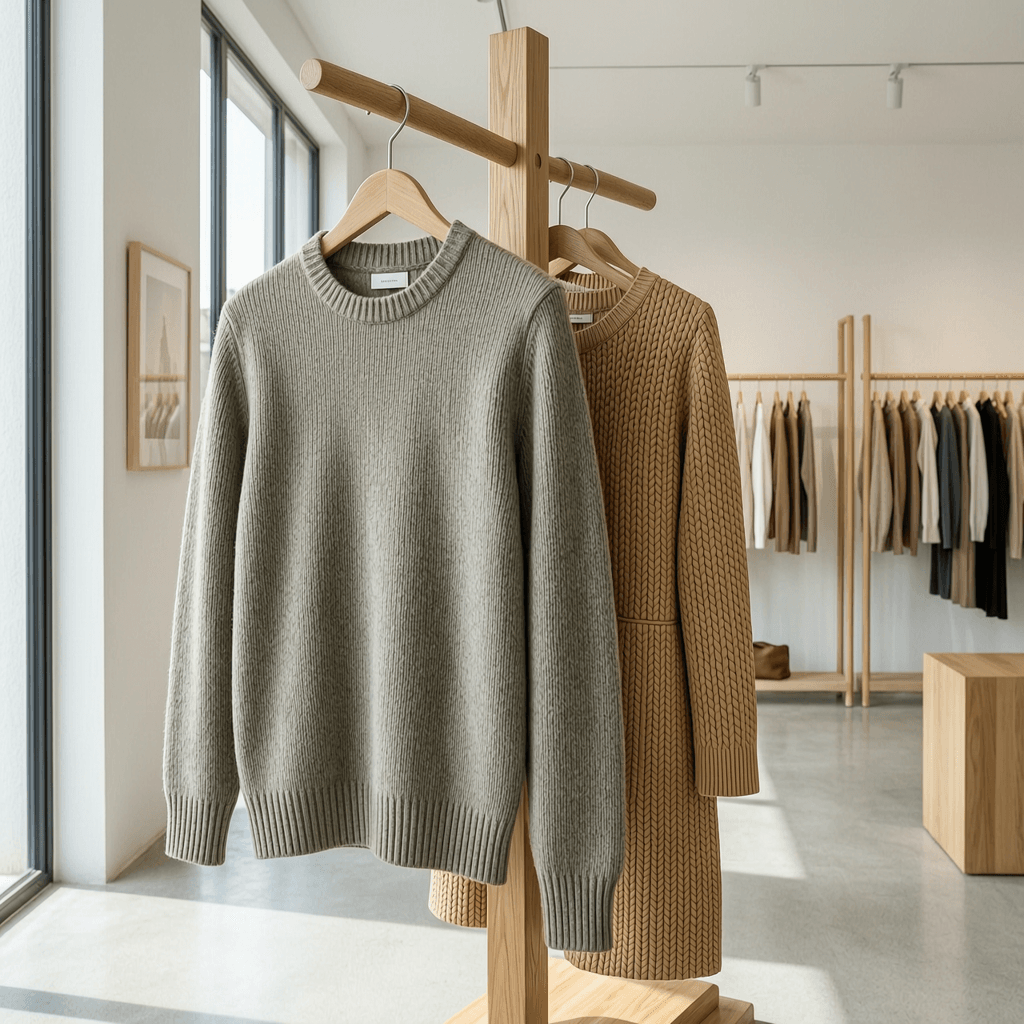
Translating a complex RFQ into a flawless production run requires a manufacturing partner with deep vertical integration. For buyers seeking high-end knitwear or woven structures, partners like Cogarm integrate global compliance standards such as OEKO-TEX, GOTS, GRS, and BSCI directly into client specifications while offering sample lead times of 15-20 days. Operating from a dual-base in Dongguan—with Humen dedicated to precision cut-and-sew woven garments and Dalang specialized in premium knitwear—allows for extreme technical specialization across both product categories.
This dual-base setup allows procurement teams to benefit from flexible MOQs of 100 pcs/colour/style for knitwear and 200 pcs for woven garments, making small-batch capsule testing highly viable. Additionally, with access to specialized yarns including organic cotton (GOTS), LENZING ECOVERO, modal, viscose, and recycled wool, buyers can easily execute complex fiber blends. Standard production runs are completed within 45-60 days of sample approval, under a commercial structure of a 30% deposit and 70% paid before shipment, verified by rigorous AQL 2.5 final inspections.
Specifying Technical Requirements by Category
Specify 12GG-18GG superfine merino wool (≤18.5µm) or cashmere (Grade A ≤15.5µm) blends with Pantone TCX matching for lightweight, high-performance retail knitwear. Specify 120-280 GSM organic cotton (GOTS) or cotton-viscose blends with an SPI of 12-14 for structured, highly durable woven retail garments.
For a deeper dive, see Why Direct-to-Factory is Better than Trading Agencies.
FAQ
What is the standard sample lead time for custom knitwear?
The standard sample lead time is 15-20 days, with an additional 5-7 days required if custom yarn colors or specialized fiber blends need to be sourced.
What are the minimum order quantities (MOQs) for custom apparel?
The typical minimum order quantity is 100 pcs per color and style for custom knitwear, and 200 pcs per color and style for woven garments.
What fiber quality standards should be specified for premium wool?
Specify Merino wool fiber diameters between 17-24µm (with superfine classified as ≤18.5µm) and Cashmere Grade A at ≤15.5µm to ensure premium softness and durability.
What final quality inspection standard is recommended for commercial apparel production?
An Acceptable Quality Limit (AQL) of 2.5 is the industry standard for final random inspections to ensure defects are kept within strict commercial limits.
Summary for Sourcing Managers
Structuring your RFQ with exact parameters—from yarn microns and knitting gauges to specific MOQs and AQL thresholds—is the single most effective way to optimize your garment manufacturing supply chain. Removing ambiguity from the bidding phase ensures that your manufacturing partner can deliver precise pricing, reduce sampling friction, and protect your brand’s quality standards.
Request a custom yarn-card sample with Pantone TCX matching and full GOTS/GRS certification data from Cogarm to begin auditing your material specifications today.
