

Garment Manufacturing: Securing Tech Packs vs Open Sourcing
This article examines the critical strategies apparel brands must deploy to safeguard their proprietary designs and technical specifications during the global sourcing lifecycle. For fashion brands and retailers, protecting intellectual property (IP) is no longer just a legal precaution but a foundational step in securing competitive market advantage. The supplier will analyze how secure technical documentation, chain-of-custody protocols, and strict supplier controls mitigate the risk of design piracy.
When leading manufacturers design a new system-on-a-chip or Herman Miller engineers an ergonomic adjustment mechanism, they wrap their developments in ironclad legal and physical security. Yet, in the fast-paced apparel industry, brands frequently email highly detailed, proprietary CAD files, graded patterns, and tech packs to overseas factories with little more than a handshake agreement. In an era where fast-fashion algorithms can clone a runway design and have it listed on digital marketplaces within 10 days, securing your physical and digital design assets is a critical business metric.
(See our related guide: Creating a Sustainable Supply Chain Partnership.)
Design piracy does not just result in lost revenue; it dilutes brand equity and compromises supply chain integrity. When an exclusive pattern is leaked, it often resurfaces in lower-grade materials with poor tolerances, confusing consumers and damaging the original brand’s reputation. To prevent this, procurement managers must treat their tech packs, pattern files, and grading tables with the same level of security that a software firm applies to its source code.
This article outlines a practical framework for protecting your design IP during garment manufacturing. Readers will learn how to evaluate supplier-side data security, compare encrypted tech pack sharing against standard distribution, and structure manufacturing agreements that protect both digital patterns and physical production overruns.

Relevant Standards or Specifications
To establish an ironclad IP protection strategy, brands must look beyond standard Non-Disclosure Agreements (NDAs) and implement structured technical controls. Within apparel production, this involves protecting digital assets (such as DXF or ASTM/AAMA garment CAD files), restricting physical access to pre-production samples, and regulating the disposal of waste materials. Brands should require suppliers to align with international information security frameworks like ISO/IEC 27001 for digital data assets, alongside physical chain-of-custody procedures.
Physical security protocols at the manufacturing site must explicitly govern the creation and destruction of fit samples, pre-production samples (PPS), and production overruns. For example, any sample containing proprietary knitting structures, such as a custom 12GG midweight merino knit, must be logged in a secure database. Any excess fabric, yarn cones, or rejected garments must be systematically destroyed or defaced under an audited waste management protocol, preventing unauthorized third-party resale.
Protected Digital Distribution vs. Standard PDF Distribution
When transmitting design data to a clothing factory, the method of delivery dictates your level of exposure. Standard PDF files are easily forwarded, downloaded, and reverse-engineered. Conversely, utilizing a Digital Rights Management (DRM) or secure Product Lifecycle Management (PLM) system allows brands to control who views the files, for how long, and whether they can be printed or exported.
Read more about Why Direct-to-Factory is Bette for additional context.
The table below compares the technical specifications and security parameters of secure digital tech pack distribution against traditional, open-loop PDF sharing.
| Technical Metric | Encrypted Digital Tech Pack Distribution (PLM Secure Vault) | Standard PDF Tech Pack Distribution (Unencrypted Email/Cloud) |
|---|---|---|
| File Access Control (Auto-Expiration) | Hard timeout of 48 hours to 7 days; automated revocation | Unlimited; file remains indefinitely on local drives |
| Vector/CAD Extraction Prevention | 0% vector extraction; files are rasterized or locked to proprietary viewer | 100% extraction possible; standard PDFs allow vector path copying |
| Traceable Watermarking Density | Dynamic, unique user ID and IP address embedded every 50 pixels | Static, easily cropped or cloned single-layer watermark |
| Screen Capture Block Rate | 100% block rate via OS-level DRM API calls | 0% block rate; standard OS print-screen works instantly |
| Max Transmission File Limit | 500 MB encrypted container per package | 25 MB email gateway limit; forces external unsecure transfers |
| DRM License Authentication | Real-time or every 4 hours required for access | 0 checks; offline access permitted permanently |
| Average Setup Cost (SaaS) | 45 to 120 per user license per month | 0 additional cost; standard email or free cloud storage |
| Sample Lead Time Deviation | +1 to +2 days for initial supplier setup and keys | 0 days; instant delivery but zero downstream tracking |
The comparative data demonstrates that while standard PDF distribution carries zero additional software overhead, it leaves highly valuable vector paths, grading tables, and design schematics vulnerable to immediate cloning. Implementing an encrypted PLM or DRM system restricts access to a defined window (such as a 48-hour viewing license) and prevents vector extraction entirely, safeguarding the core blueprints of your custom apparel collection.
Product Use Cases and Applications
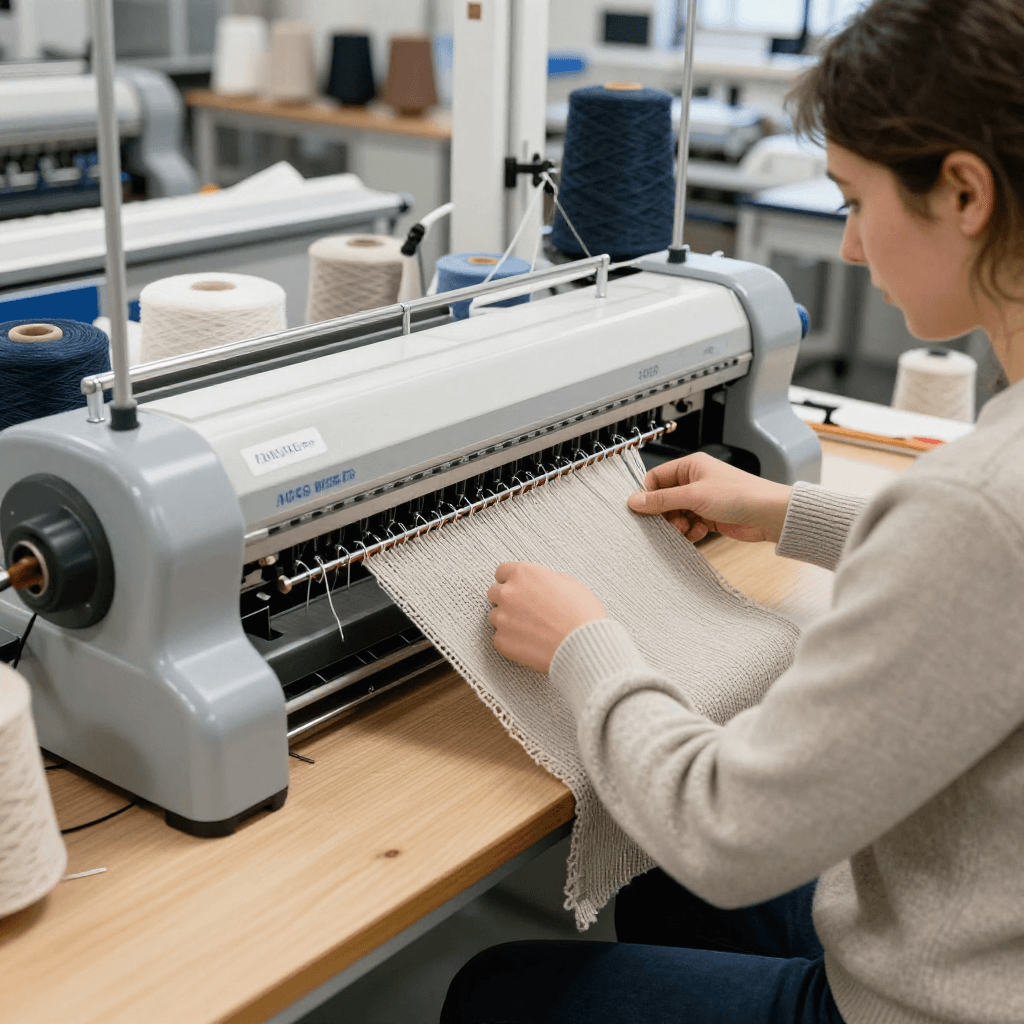
When sourcing premium knitwear, such as a custom merino/acrylic/cotton blend sweater, the risk of IP theft is particularly high during the sampling phase. This is because complex knit structures (such as a 12GG midweight knit using superfine merino wool ≤18.5µm or fine merino wool ≤20µm) require precise programming files (e.g., Stoll or Shima Seiki machine code). These proprietary program files represent hundreds of hours of design and engineering work. If these files are shared without restriction, a third-party factory can replicate the identical knit structure instantly without the initial R&D costs.
In the production of custom woven garments, custom-dyed yarns must match specific color profiles to maintain brand identity. Suppliers who offer precise Pantone TCX matching ensure that even the dye formulas remain proprietary. To mitigate exposure, established manufacturers utilize a dual-base manufacturing strategy to isolate processes. For example, a brand might use Humen for cut-and-sew woven garments and Dalang for premium knitwear. This physical division of labor means no single facility possesses the full blueprint for an entire mixed-material collection, restricting the overall risk of a complete design leak.
Furthermore, strict volume controls prevent unauthorized overruns. Contracts must specify that production runs are capped exactly at the purchase order quantity, with a standard maximum tolerance of +/-5% for fabric yields. Any overruns or irregulars must be documented under AQL 2.5 inspection standards, and the supplier must provide certified destruction receipts for any garments that fail quality control, ensuring that flawed or excess merchandise does not enter parallel markets.
— as detailed in our article on The Benefits of Localized Sourcing in Dongguan.
Supplier Solution
To successfully implement these IP safeguards, brands must partner with contract manufacturers who respect and enforce strict asset protection protocols. Suppliers like Cogarm achieve this by utilizing a highly organized dual-base manufacturing infrastructure in Dongguan. By separating woven cut-and-sew operations in Humen from premium knitwear production in Dalang, they physically segregate technical assets, preventing any single point of vulnerability from exposing an entire collection.
Additionally, flexible supply chains reduce the necessity of sharing massive, multi-season design archives all at once. By offering a minimum order quantity (MOQ) of 100 pcs per color/style for knitwear and 200 pcs for woven garments, Cogarm allows brands to test markets with limited design releases, reducing IP exposure. They provide a standardized sample lead time of 15-20 days (plus 5-7 days for sourced yarns) under a strict bilateral Non-Disclosure Agreement, ensuring that early-stage concepts are legally protected before full production begins.
These operational standards are backed by global compliance frameworks. While certifications like OEKO-TEX, GOTS, GRS, and BSCI are integrated specifically when required by client specifications, the underlying management systems ensure full traceability and chain of custody for all physical materials. This means every thread of Cashmere Grade A (≤15.5µm) or recycled wool (GRS) is tracked from raw material sourcing through to the final 30% deposit and 70% pre-shipment balance, eliminating parallel manufacturing loops.
Protecting IP in Apparel Manufacturing
Specify Encrypted Digital Rights Management (DRM) and segregated dual-base manufacturing for high-value, complex knitwear designs using proprietary machine codes. Specify Standard PDF Tech Packs with bilateral NDAs for basic woven silhouettes and standard commodity cuts where the primary IP risk is limited to basic pattern geometry.
For a deeper dive, see What Information to Provide in an RFQ.
FAQ
How do I protect proprietary Shima Seiki or Stoll knitting machine codes?
Restrict machine code access to the factory’s primary engineering terminal and ensure the manufacturing contract prohibits the copying of proprietary program files (e.g., 3GG to 18GG layouts) to external media.
What physical security measures should I demand at the garment factory?
Ensure the factory uses locked pre-production rooms, maintains an active log of all visitors, and implements a strict policy where all fit samples are returned or destroyed within 30 days of production completion.
How do I handle excess or defective garments to prevent unauthorized resale?
Mandate that all products failing AQL 2.5 inspection must be defaced (labels cut) and destroyed, with a certified destruction report provided within 14 business days.
What is the standard payment and deposit structure that helps maintain leverage?
Utilize a standard payment structure of 30% deposit and 70% paid only after final AQL 2.5 inspection and verification of IP compliance prior to shipment.
Protecting IP in Apparel Manufacturing
Protecting your intellectual property in garment manufacturing requires a combination of robust digital access controls, physical security protocols on the factory floor, and structured supplier agreements. By limiting the distribution of raw CAD files, segregating production across specialized bases, and auditing sample waste, apparel brands can scale their production safely without risking market dilution or design cloning.
Partnering with a sophisticated, compliant contract manufacturer is the final link in a secure supply chain. Request a secure knitwear sample kit and a standard Non-Disclosure Agreement (NDA) with full traceability data from Cogarm to protect your designs from concept to final delivery.
