

Sourcing multiple product lines simultaneously requires a highly structured supply chain to prevent lead-time drift, quality cross-contamination, and color variance. This article analyzes the operational blueprints for balancing complex flat-bed knitwear with structured woven apparel production. By optimizing factory-floor specialization, mapping technical specifications, and aligning raw material leads, procurement managers can secure consistent quality across diverse product categories.
Sourcing Multi-Line Apparel: Knitwear vs Wovens Execution
When global leaders like precision manufacturers design their hardware ecosystems, they do not route CNC-milled aluminum enclosures through the same assembly lines as their soft-goods accessories. Instead, they segment production by material specialization while maintaining unified quality control benchmarks. In the fashion and retail industries, scale players like IKEA and global retailers follow a similar architecture: they separate structured cut-and-sew wovens from complex, tension-sensitive knitwear to avoid production bottlenecks.
For procurement managers overseeing multiple product lines, the challenge lies in managing disparate manufacturing physics. Woven garments rely on stable, non-elastic fabrics where precision lies in cutting tolerances and seam strength. Knitwear, however, is a dynamic structure where the fabric itself is built yarn-by-yarn on computerized flat knitting machines, making loop density, yarn micron counts, and tension control the critical quality variables.
(See our related guide: How to Manage Multiple Product Lines Simultaneously.)
This analysis details how to manage these distinct product categories simultaneously. The supplier will outline technical specifications—ranging from yarn micron tolerances to gauge ranges—and compare the operational workflows of knits versus wovens. Readers will learn how to design a dual-base sourcing model that minimizes lead-time compounding and ensures consistent execution.
Technical Specifications & Sourcing Standards
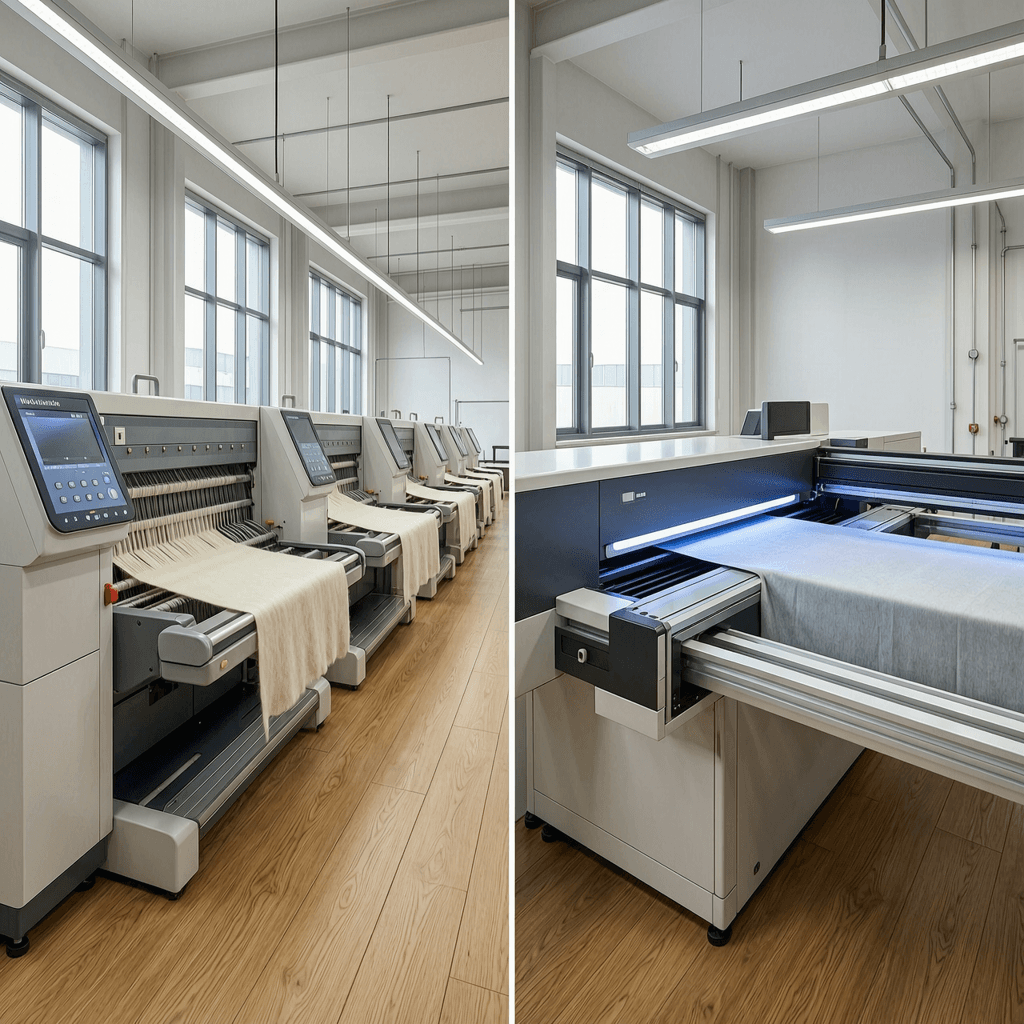
Managing multiple lines concurrently requires establishing rigid, quantitative technical baselines. Knitwear production depends heavily on raw material fiber metrics. Fine-gauge knits require precise yarn diameters to prevent pilling, surface hairiness, and premature fiber breakage. For instance, merino wool must be specified between 17-24µm, where superfine wool is defined as ≤18.5µm, fine wool is ≤20µm, and medium wool is ≤22µm. Cashmere requires even stricter classification, utilizing Grade A fibers measuring ≤15.5µm to achieve the correct hand feel and tensile recovery.
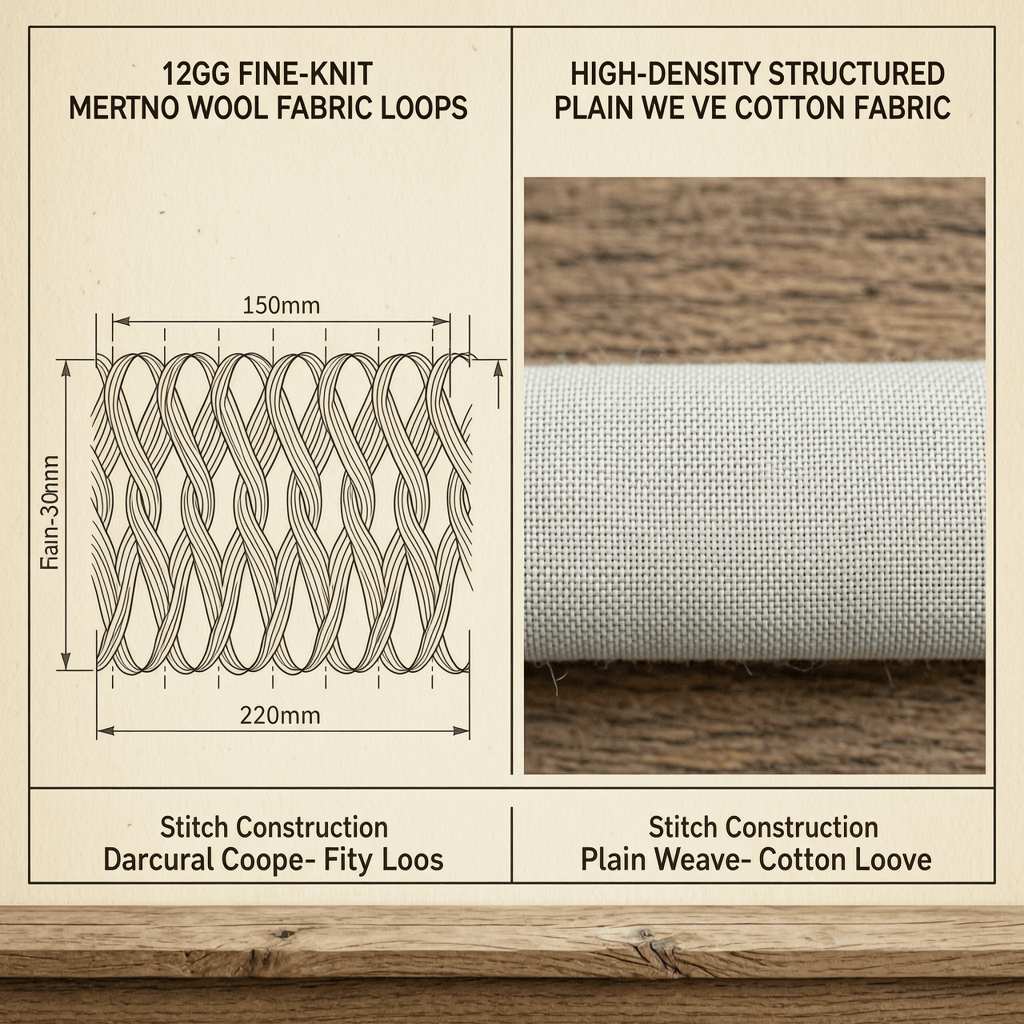
Machine setup dictates the structural density of the knitwear. This is measured in gauge (GG), representing the number of needles per inch. A comprehensive multi-line setup must span from chunky 3-5GG knits up to fine-gauge 12-18GG execution, with 7-10GG serving as the midweight baseline. Wovens, conversely, do not use gauge; they require rigorous control over warp/weft thread density, seam slippage tolerances, and fabric weight (GSM), demanding dedicated pattern grading and distinct pressing machinery.
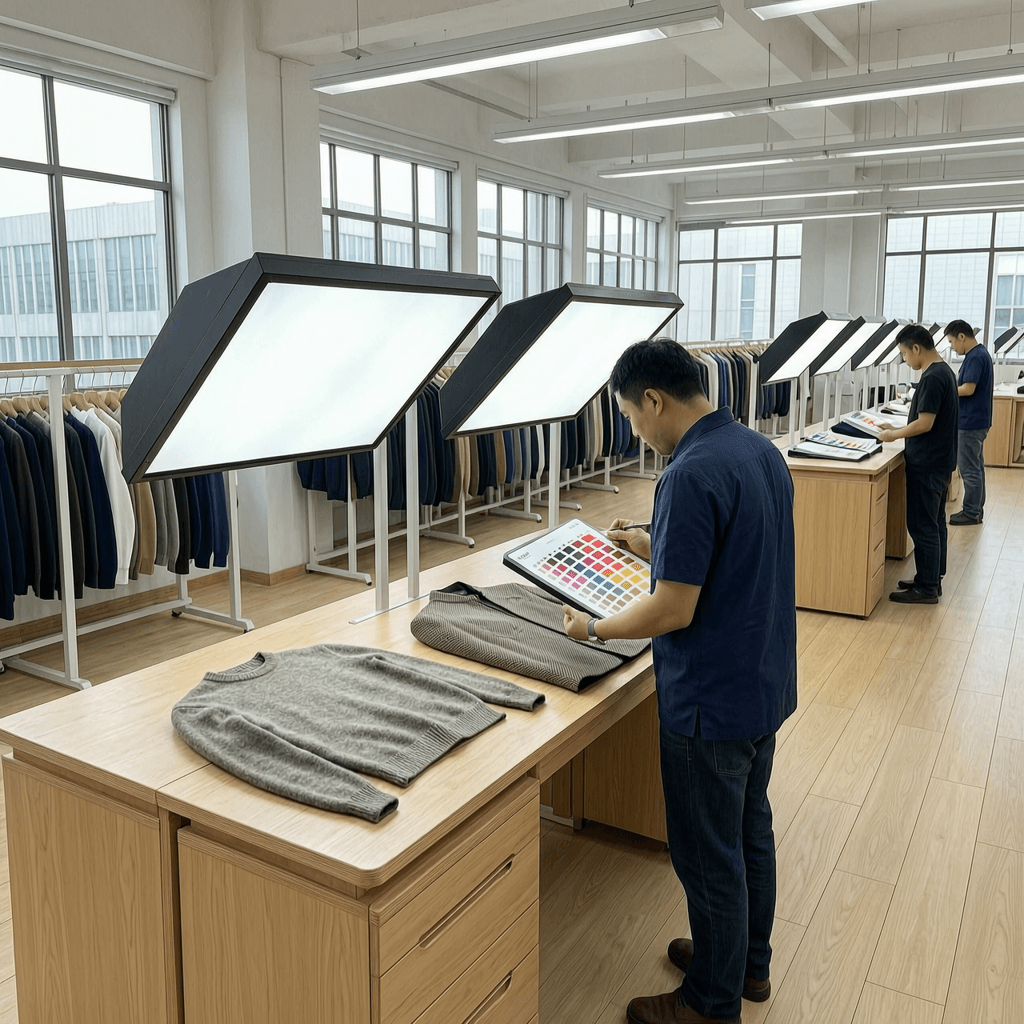
Color consistency across different fiber structures (such as acrylic-wool blends vs. 100% cotton wovens) requires systematic matching. Utilizing digital spectral analysis matched against Pantone TCX codes prevents metamerism, ensuring that a jacket and a knit sweater designed to be worn together match under both fluorescent retail lights and natural daylight.
Read more about The Benefits of Localized Sour for additional context.
Comparison of Knitwear vs. Woven Operational Pathways
When balancing knits and wovens in a single sourcing cycle, understanding the distinct operational timelines is critical to preventing inventory bottlenecks. The following comparison table maps the structural, logistical, and technical parameters of both product types.
| Operational Metric | Knitwear Production (Dalang Base) | Woven Garment Production (Humen Base) |
|---|---|---|
| Minimum Order Quantity (MOQ) | 100 pcs/colour/style | 200 pcs/colour/style |
| Base Sample Lead Time | 15–20 days (standard) | 10–14 days (standard) |
| Sourced Yarn/Fabric Buffer | Add 5–7 days for custom yarn | Add 3–5 days for custom dyed woven fabric |
| Standard Bulk Production Lead | 45–60 days from sample approval | 30–45 days from sample approval |
| Fiber Diameter Tolerances | ≤15.5µm (Cashmere), ≤18.5µm (Superfine Wool) | Not applicable (yarn count / thread density standard) |
| Standard Gauge Range | 3GG to 18GG flat-bed knitting | 80/2 to 120/2 yarn count for woven fabrics |
| Quality Inspection Standard | AQL 2.5 defect threshold | AQL 2.5 defect threshold |
| Color Formulation Standard | ΔE ≤0.8 deviation from Pantone TCX | ΔE ≤0.8 deviation from Pantone TCX |
This comparative matrix highlights the structural differences in timing and raw material handling. While knitwear requires a longer development cycle due to yarn spinning and complex flat-bed programming, woven garments demand higher initial order volumes to justify the mill-run minimums of structural fabrics. Managing both categories concurrently requires a staggered release schedule to align final delivery windows.
Dual-Base Sourcing Framework
To execute a multi-line strategy without quality degradation, buyers must segregate manufacturing by technical discipline. For example, a retailer developing a fall collection can leverage specialized manufacturing hubs to maximize efficiency. For premium knitwear, utilizing a dedicated knitting base allows for the production of custom sweaters using a 12-18GG setup with superfine merino wool (≤18.5µm) blended with GOTS organic cotton to target high-end corporate accounts.
Simultaneously, the woven component of the collection—such as structured utility shirts or lined jackets—should be routed to a specialized cut-and-sew hub. This ensures that heavy pressing equipment, automated pattern cutters, and specialized pocket-setting machines do not compete for floor space or operator attention with delicate flat-knitting assemblies. By maintaining an AQL 2.5 inspection threshold across both facilities, the buyer achieves uniform quality control despite the differing technical platforms.
— as detailed in our article on Managing the Full Lifecycle in Our Dongguan Facilities.
Suppliers like Cogarm manage this complexity by splitting operations across geographic micro-clusters: Humen for specialized cut-and-sew woven garments, and Dalang for premium knitwear. This regional division prevents cross-contamination of fibers (such as wool lint getting trapped in pristine woven cotton lines) and optimizes specialized labor forces.
Dedicated Production Lines and Supply Chain Alignment
Navigating the operational divide between knits and wovens is streamlined when partnering with a manufacturer that operates dedicated facilities for each category. Multi-line procurement is optimized when utilizing a dual-base manufacturing model. This geographic specialization splits work between Humen (for high-precision cut-and-sew wovens) and Dalang (for premium knitwear). This setup allows brands to manage their entire product line under a single contract while maintaining localized expertise.
To lower the barrier to entry for complex collections, this production model offers MOQ flexibility starting at just 100 pcs per color/style for knitwear and 200 pcs for woven garments. The sample development cycle is kept highly predictable: standard sample leads are 15-20 days, with an additional 5-7 days for sourcing custom yarn blends. This level of responsiveness is backed by strict compliance profiles, integrating global standards such as OEKO-TEX, GOTS, GRS, and BSCI as required by client specifications.
For procurement teams sourcing custom apparel, establishing a unified color management system is critical. By utilizing exact Pantone TCX matching, suppliers like Cogarm eliminate color variance between different fiber types, whether processing 17-24µm merino wool, recycled wool (GRS), acrylic, modal, viscose, or LENZING ECOVERO. This precise calibration ensures that multi-piece ensembles coordinate perfectly upon arrival at the retail DC.
For a deeper dive, see How to Scale Production without Sacrificing Quality.
Sourcing Decisions for Apparel Programs
Specify 12GG to 18GG flat-bed premium knitwear (using ≤18.5µm merino or Grade A cashmere) for lightweight, high-insulation corporate layering and premium fashion collections. Specify high-density structured wovens from dedicated cut-and-sew lines for durable, shape-retentive outerwear, uniforms, and tailored utility shirts requiring precise structural seams.
FAQ
Frequently Asked Questions
How does fiber micron count affect pilling in multi-line knitwear?
Lower micron counts, such as superfine merino wool ≤18.5µm or Grade A cashmere ≤15.5µm, have longer, finer fibers that twist more securely into the yarn core, reducing loose fiber ends and lowering pilling rates compared to coarse wools >22µm.
What is the impact of gauge (GG) on production lead times?
Fine gauge garments (12GG-18GG) require significantly more knit courses and longer machine run times than chunky gauges (3GG-5GG), which can extend bulk knitwear production times up to the 60-day threshold.
How is color consistency maintained between wool-acrylic blends and cotton wovens?
We utilize dual-dyeing protocols calibrated against digital Pantone TCX matching, applying acid dyes for the wool/acrylic fibers and reactive dyes for the cotton fabrics to achieve a ΔE variance of ≤0.8.
Why are wovens and knitwear manufactured in separate facilities?
Separating them prevents airborne fiber contamination (e.g., wool lint settling on woven cotton) and ensures that specialized machinery, like flat-bed knitting machines in Dalang and heavy-duty sewing lines in Humen, run at peak efficiency without resource competition.
Supply Chain Integration for Modern Apparel Portfolios
Managing multiple apparel lines simultaneously does not have to introduce supply chain instability. By separating knitwear and woven production into dedicated technical hubs—while maintaining unified standards like AQL 2.5 and Pantone TCX matching—brands can scale their collections with predictable lead times and cohesive quality.
Partnering with specialized dual-base manufacturers like Cogarm allows apparel brands to streamline their vendor matrix without sacrificing localized expertise. Request a physical yarn swatch book or a trial sample package with full GOTS/OEKO-TEX traceability data to verify our material tolerances and execution standards today.
