

This article examines the operational frameworks required to execute a rapid-launch apparel project under tight market windows. We analyze the technical trade-offs between Cut, Make, Trim (CMT) and Full Package Production (FPP) sourcing models, giving procurement managers the exact metrics needed to accelerate lead times without compromising product quality.
Sourcing Under Tight Retail Windows
In an era where fast-moving consumer brands like established automotive manufacturers and precision manufacturers launch physical merchandise to anchor major product keynotes, the traditional nine-month apparel development cycle is no longer viable. Today’s apparel landscape requires supply chains that function with the precision of a high-tech electronics line. When a capsule collection must align with a synchronized global marketing launch, procurement managers cannot afford the luxury of linear prototyping, long textile development windows, or fragmented logistics.
To execute a successful rapid-launch campaign, fashion brands and enterprise retailers must transition from passive purchasing to highly active supply chain engineering. This paradigm shift requires a deep understanding of raw material constraints, regional specialization, and manufacturing workflows. A single day’s delay in yarn spinning or color approval can derail a multi-million-dollar retail window, making the choice of production methodology the ultimate determinant of project success.
(See our related guide: Our Approach to Collaborative Product Development.)
This analysis provides procurement professionals and supply chain decision-makers with a data-driven framework for executing rapid-turn apparel projects. You will learn how to optimize yarn selection, select the ideal manufacturing model, leverage regional production clusters, and manage lead-time risks from initial sample to final quality inspection.
Technical Comparison: CMT vs. FPP Models
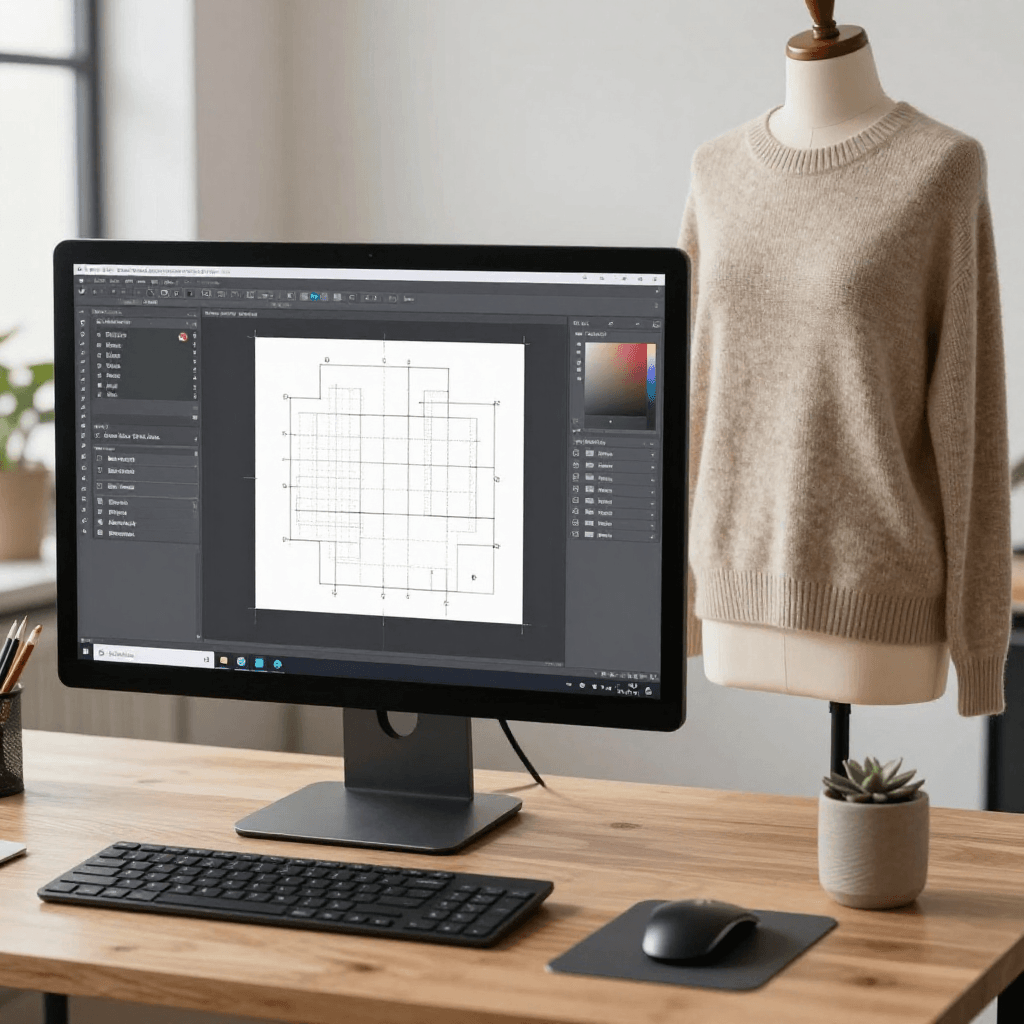
Selecting the appropriate sourcing model is the most critical decision in a rapid-launch timeline. Cut, Make, Trim (CMT) requires the brand to supply all raw materials—including fabrics, threads, and trims—leaving only the assembly to the factory. Full Package Production (FPP) shifts the entire supply chain responsibility to the manufacturer, from raw material procurement and pattern development to bulk cutting, assembly, and final quality control.
The table below contrasts the operational realities of CMT and FPP across key procurement metrics. Both pathways present distinct advantages and constraints depending on your team’s internal supply chain bandwidth.
| Sourcing Metric | Cut, Make, Trim (CMT) Model | Full Package Production (FPP) Model |
|---|---|---|
| Initial Sourcing Setup | Client-supplied tech pack and fabric rolls | Supplier sources yarn and fabric based on specs |
| Yarn Sourcing Lead Time | 0 days (client-managed delivery) | 5 to 7 days for custom or specialized yarn |
| Sample Development Window | 7 to 10 days from receipt of fabric | 15 to 20 days including fit correction |
| Minimum Order Quantity (MOQ) | Typically 500 pcs per style (due to fabric yields) | 100 pcs/colour/style (knitwear), 200 (woven) |
| Color Matching Standard | Lab dips approved by client-specified mill | Pantone TCX matching with spectrophotometer |
| Production Lead Time (Bulk) | 20 to 30 days after fabric delivery | 45 to 60 days from final sample approval |
| Quality Inspection Standard | Client-managed or third-party at factory | AQL 2.5 internal and final QC inspection |
| Financial Risk / Deposit Structure | 50% deposit on labor, 50% on bill of lading | 30% deposit + 70% before shipment |
The technical comparison highlights that while CMT offers slightly shorter factory-side processing windows because the buyer manages fabric logistics, it shifts the entire raw material supply chain risk onto the buyer. FPP, conversely, aggregates material sourcing, pattern-making, and manufacturing under a single point of accountability. For rapid-turn initiatives, FPP is often the faster path because it eliminates the logistical lag of shipping client-owned fabrics across borders or between independent processing facilities.
for additional context.
Material and Gauge Specifications for Rapid Launches
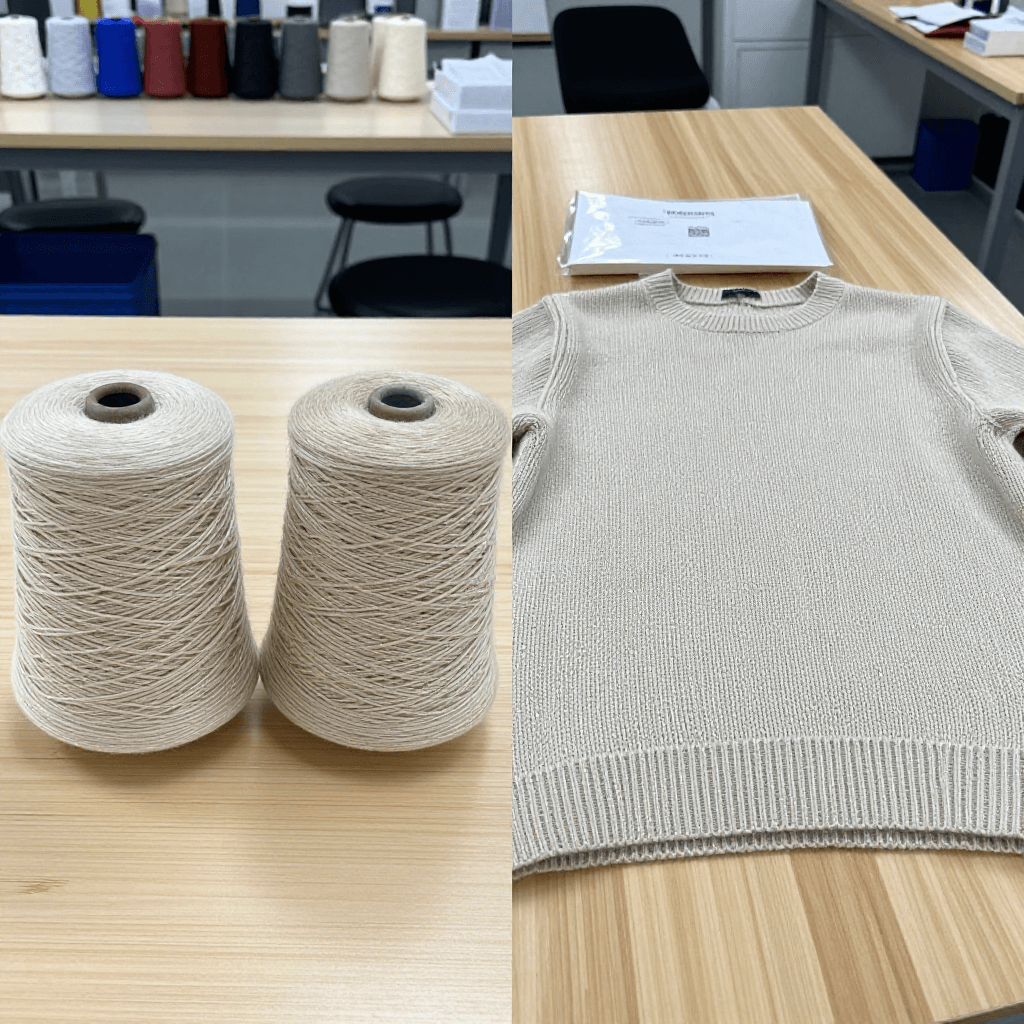
For midweight premium sweaters targeted at fast-turn product launches, utilizing a merino-acrylic-cotton blend offers the optimal balance of thermal efficiency, shape retention, and speed to market. Selecting Merino wool with a fiber diameter of 17-24µm (specifically superfine ≤18.5µm for next-to-skin wear, fine ≤20µm for activewear, or medium ≤22µm for structured outerwear) ensures a premium hand-feel. For ultra-premium collections, Grade A cashmere (≤15.5µm) can be blended with fine merino to elevate the product’s market positioning.
The choice of knitting gauge is highly dependent on the target aesthetic and thermal weight. Fine-gauge knitwear (12GG-18GG) is ideal for lightweight, layerable corporate or luxury apparel, whereas midweight (7-10GG) and chunky (3-5GG) knits serve outdoor and rugged lifestyle applications. For example, a brand launching a premium corporate apparel program might specify a 12GG merino-acrylic blend to achieve high pill resistance while maintaining the luxury drape of natural fibers.
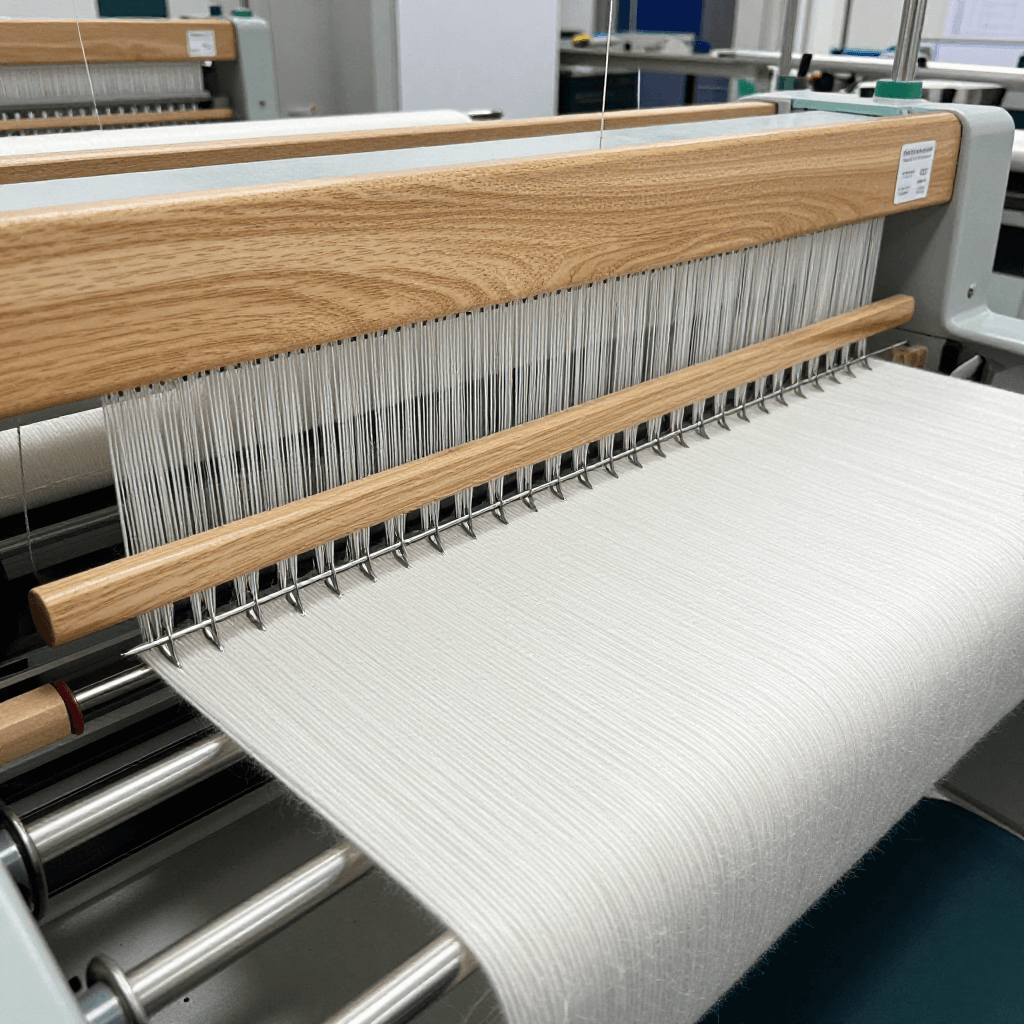
Woven garments, such as structured overshirts or utility pants, present different engineering challenges during rapid launches. While knitwear can be manufactured with a flexible MOQ of 100 pcs per colour/style, woven apparel production typically requires an MOQ of 200 pieces due to fabric roll constraints. Managing these distinct MOQ thresholds across a unified collection requires strategic planning to ensure raw fabric and yarn acquisitions align perfectly.
— as detailed in our article on How to Scale Production without Sacrificing Quality.
Compressing Timelines with Dual-Base Clusters
Modern apparel production centers utilize geographical clusters to compress development cycles. Suppliers like Cogarm leverage a strategic dual-base manufacturing model in Dongguan, China, utilizing the Humen facility for precision cut-and-sew woven garments and the Dalang facility for premium knitwear engineering. By separating these distinct technical operations while maintaining centralized logistics, a brand can prototype and manufacture multi-category collections concurrently, dramatically reducing transport overhead and coordination friction.
Speed in rapid prototyping is highly dependent on material availability and color-matching precision. When utilizing standard yarns, a sample lead time of 15-20 days is standard, with an additional 5-7 days required for sourcing specialty or custom-dyed fibers. Utilizing digital Pantone TCX matching ensures first-time-right color accuracy, avoiding the costly and time-consuming feedback loops of physical dye lab dips.
Additionally, compliance and traceability are increasingly mandatory for global market access. Integrated compliance standards—including GOTS (Global Organic Textile Standard) for organic cotton, GRS (Global Recycled Standard) for recycled wool, and OEKO-TEX Standard 100 for chemical safety—ensure that rapid-launch apparel can pass customs and retail compliance audits instantly. Factories like Cogarm incorporate these certifications directly into their material sourcing networks, ensuring a clean chain of custody from yarn spin to final packaging.
When to Choose Rapid-Launch Manufacturing
Specify 12GG-18GG fine-gauge Merino-acrylic blends for rapid-launch corporate and luxury lightweight layerable collections requiring superior pill resistance. Specify 3GG-5GG chunky-knit cashmere-merino blends or 200-piece MOQ woven garments for structured, high-insulation outdoor capsule lines where thermal efficiency is paramount.
For a deeper dive, see Our Commitment to Local Community and Industry.
Frequently Asked Questions
What is the typical sample lead time for custom knitwear?
The standard sample lead time is 15-20 days, with an additional 5-7 days required if specialized yarn must be sourced from spinning mills.
What are the standard Minimum Order Quantities (MOQs) for rapid-launch apparel?
The industry standard for flexible FPP production is 100 pcs per colour/style for knitwear and 200 pieces for woven garments.
What is the standard fiber diameter for premium merino wool?
Merino wool fiber diameters range from 17µm to 24µm, classified as superfine (≤18.5µm), fine (≤20µm), and medium (≤22µm).
How is product quality ensured before bulk shipment?
Shipments undergo strict AQL 2.5 quality control inspections, evaluating seam strength, dimensions, and color matching under D65 standard light sources.
What is the standard payment and deposit structure?
Most manufacturers operate on a 30% deposit with the remaining 70% balance paid prior to shipment.
Optimizing Sourcing Decisions
Executing a rapid-launch apparel project requires a disciplined approach to sourcing, pattern-making, and production tracking. By choosing an FPP model, leveraging regional manufacturing hubs, and choosing yarn options that balance aesthetics with fast procurement cycles, fashion and retail brands can confidently launch collections within weeks rather than months.
To begin your next high-speed collection, request a custom sample with full Pantone TCX matching and compliance documentation from Cogarm.
