

2026 Sweater Trends: 6 Knitwear Designs Buyers Should Stock Now
Every season, a handful of sweater silhouettes quietly decide which brands sell through their stock and which ones end up marking down inventory in February. Runway shows from major fashion houses set the direction, but it’s search and social data — what shoppers are actually clicking, saving, and buying — that tells the real story of where 2026 demand is heading. As a custom knitwear manufacturer producing across nearly every gauge and category, Cogarm tracks these shifts closely so our brand partners can commit to production before a trend peaks, not after.
This kind of trend awareness matters most for the buyers placing orders months before a season actually starts. By the time a style is visibly trending on a retailer’s shelves, the production window to capture that demand has often already closed. Understanding which directions are gaining traction now — and which construction details separate a bestseller from a markdown — gives a buying team a real head start on the next season’s plan.
In This Article
- Why 2026’s Winning Sweaters Aren’t About Warmth Anymore
- Trend 1: Quarter-Zip and Polo Knits
- Key Construction Details
- Buying Notes
- Where This Style Fits in a Collection
- Trend 2: Rollnecks and Turtlenecks
- Key Construction Details
- Buying Notes
- Trend 3: Textured and Cable-Knit Popovers
- Key Construction Details
- Trend 4: Bold, Saturated Color Knits
- Trend 5: Prelayered “Knit-on-Knit” Sweaters
- Trend 6: Touch-Me Textures and Fancy Stitches
- Turning Trend Data Into a Smart Buying Plan
Why 2026’s Winning Sweaters Aren’t About Warmth Anymore
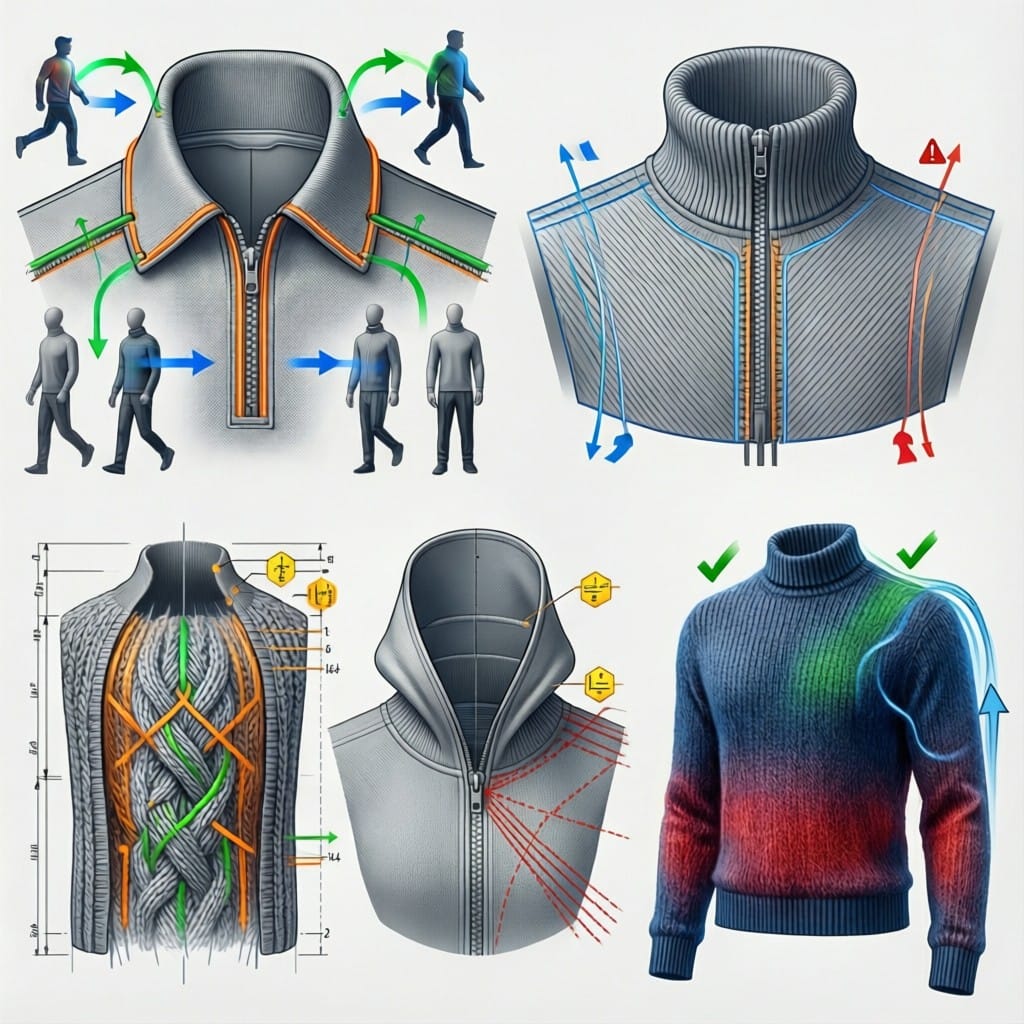
For years, sweater marketing leaned almost entirely on one message: warmth. That’s shifted. Search and social engagement data through the first half of 2026 shows shoppers responding far more strongly to look, texture, and styling versatility than to insulation alone. A cable-knit quarter-zip inspired by recent Ralph Lauren runway pieces has driven a notable surge in related searches this year, and platforms like Pinterest have seen rising interest in specific silhouettes like knit polos and saturated color knits.
Three shifts are driving this behavior. Shoppers increasingly treat knitwear as a style statement first and a cold-weather necessity second. Transitional, lighter-weight styles are now selling earlier in the season than in past years, well before temperatures actually drop. And “sells out fast” has become a real psychological driver on both sides of the transaction — shoppers fear missing a design, and sellers fear under-ordering a hit style. Below are six directions currently converting well across online retail, along with practical notes for any buyer deciding what to commit production budget to next.
Trend 1: Quarter-Zip and Polo Knits
This is the standout knitwear silhouette of the year. Major fashion houses including Chanel, Dior, and Ralph Lauren have all featured versions of the quarter-zip or polo-collar knit on recent runways, and the style has moved decisively from a niche “heritage menswear” staple into a broad, cross-gender must-have. The appeal lies in its versatility — it reads as both polished and relaxed, which makes it a natural fit for the blurred dress codes of modern offices and weekend wardrobes.
Key Construction Details
A well-made quarter-zip needs a collar that holds its shape and a zipper that lies flat when closed. This typically means a ribbed or jersey collar construction and careful attention to the placket reinforcement. Whether you’re sourcing from a sweater OEM factory or developing in-house, the gauge matters as much as the silhouette. For a piece meant to transition across seasons, the knit gauge guide points to a 7GG to 12GG range — dense enough to hold structure, light enough to layer.
Buying Notes
Buyers should look for a zipper with a shorter metal or nylon tooth profile to prevent bulk, and consider a contrast tape on the inside placket as a premium detail. The best-selling versions this season use a Merino wool or Merino-cotton blend, which gives the polish of wool without the itch or weight. From a private label knitwear perspective, this is a style that rewards clean finishing over embellishment.
Where This Style Fits in a Collection
Quarter-zips are selling across men’s and women’s. In men’s, they’re replacing the traditional crewneck in many casual-smart capsules. In women’s, the silhouette is showing up in cropped and longer-line versions alike, often with a slightly relaxed fit. A single production run with a versatile yarn can cover both categories with a change in grading and proportion.
Trend 2: Rollnecks and Turtlenecks
The rollneck is having a distinct revival, but the 2026 version is not the heavy, bulky turtleneck of past decades. The new rollnecks are closer-fitting, often in a fine-gauge knit, and designed to sit comfortably under blazers, overshirts, and coats. They read as sleek and deliberate, not just warm.
Key Construction Details
The key to a modern rollneck is in the fold. A double-layer fold that is too tight will pull at the neckline; too loose and it gapes. The standard approach is a 1×1 rib construction on a 12GG to 14GG machine, which gives the fold enough recovery to hold its shape while remaining flexible. A small percentage of elastane or Lycra in the collar yarn can significantly improve recovery over the life of the garment.
Buying Notes
Fine-gauge Merino or a Merino-silk blend is the most common choice for this style because it allows the close fit without bulk. For buyers concerned about seasonality, this is one of the easiest styles to extend into spring, especially in a lighter weight. This is where knitwear buying for summer strategies come into play; a fine-gauge rollneck in a breathable Merino can easily be a year-round piece when styled properly.
Trend 3: Textured and Cable-Knit Popovers
The popover — a pullover with a partial button placket — is the dark horse of the 2026 season. It combines the ease of a pullover with the detail of a cardigan, and when executed in a textured or cable-knit stitch, it becomes the kind of piece shoppers perceive as high-value. The texture does the heavy lifting: it adds visual interest without relying on color or print alone.
Key Construction Details
Cable and textured stitches are inherently heavier and require a more open gauge to show their dimension. A 7GG or 8GG machine is ideal for cables, while finer textures can be done on a 10GG. The critical detail is the button placket: it must be reinforced to prevent stretching, usually with a woven interlining or a fully-fashioned construction that incorporates the placket into the knit itself.
For buyers navigating the knitwear buying fabric decision, wool-blends are the standard for cables because they hold the stitch definition better than cotton. That said, a cotton-cashmere blend in a textured stitch is a strong option for knitwear buying for hot weather markets, offering the look without the warmth.
Trend 4: Bold, Saturated Color Knits
Color is the easiest way to make a knitwear statement, and 2026 is seeing a clear move away from the safe neutrals that dominated last year. Bright cobalt, emerald, and tomato red are showing up across contemporary brands, often in otherwise simple silhouettes. The saturation of the color is what matters — these are not pastels or washed-out tones, but full-strength, high-impact hues.
This trend puts a premium on yarn dyeing quality. A merino wool sweater supplier needs to demonstrate that their yarn will hold a deep, saturated color across production runs. At Cogarm, we use Pantone TCX matching to ±1 shade for color consistency, which is critical when a buyer’s entire season is built around one signature color like “cobalt blue” or “racing green.”
The practical consideration for buyers is lead time. Highly saturated colors often require custom-dyed yarn, which adds 5-7 days to the sampling phase. It’s worth planning for that in your production calendar — the payoff is a shelf presence that standard shades just can’t match.
Trend 5: Prelayered “Knit-on-Knit” Sweaters
The prelayered look — where a knit garment is designed to look like two pieces layered together, such as a long-sleeve mock neck with a short-sleeve crewneck on top — is gaining traction among shoppers who want the layered aesthetic without the bulk of two actual garments. These are often done in a contrast color on the sleeves or collar to reinforce the illusion.
The main production challenge is the join. A true knit-on-knit garment either needs to be knitted in one piece on a jacquard or intarsia machine, or the two sections need to be seamlessly linked. This is where the skill of the knitting machine operator becomes the differentiator. It is not a style for every factory, but for buyers looking for something distinctive, it has minimal competition on the shelf.
Trend 6: Touch-Me Textures and Fancy Stitches
The final trend is less about a single silhouette and more about the surface of the knit itself. “Touch-me” textures — brushed surfaces, bouclé loops, and intricate fancy stitches — are driving engagement online because they photograph well and invite physical interaction in-store. These are the sweaters shoppers pick up and hold onto.
From a manufacturing standpoint, this trend requires experimentation with yarn and machine settings. A brushed lambswool or a multi-ply bouclé yarn will need specific gauge selection and finishing processes like garment washing to achieve the desired handle. For buyers, this means relying on a factory that is willing to work through sample iterations. This is also a good opportunity to consider GRS-certified recycled wool or other sustainable options, which align well with the tactile, crafted aesthetic of this trend.
Turning Trend Data Into a Smart Buying Plan
The common thread across all six trends is that they reward decisiveness. The buyers who lock in production on a quarter-zip or a saturated color knit early will be the ones who have stock when demand peaks. Waiting for confirmed sell-through data on a trend means the production window is already closed.
A practical approach is to allocate a portion of your open-to-buy for a “test” run of a high-risk, high-reward style like the knit-on-knit or a fancy stitch piece. With a low knitwear MOQ 100 pieces per color/style, a brand can validate a trend with minimal inventory risk and then scale with a quick reorder if the style performs. This is exactly the kind of flexibility a responsive sweater OEM factory can offer, and it is the difference between leading a trend and chasing it.
If you’re mapping out your next season’s buy, having a manufacturing partner who understands both the technical side and the market side of these styles makes the process significantly smoother. Reach out to the team at Cogarm to review your line plan and production schedule — steve@cogarm.com or visit www.cogarm.com.
Frequently asked questions
Why are 2026 sweater trends no longer about warmth?
Search and social engagement data through the first half of 2026 shows shoppers responding to more than insulation, shifting sweater marketing away from warmth alone. Demand signals now matter more than the temperature story a style was designed around.
Which sweater silhouettes should buyers stock for 2026?
Six directions are highlighted: quarter-zip and polo knits, rollnecks and turtlenecks, textured and cable-knit popovers, bold saturated colour knits, prelayered knit-on-knit sweaters, and touch-me textures with fancy stitches for buying teams planning the season. Construction details are what separate a bestseller from a markdown.
Why should buyers commit before a trend peaks?
By the time a style is visibly trending on retailer shelves, the production window to capture that demand has often closed. Buyers place orders months before a season starts, so trend awareness at planning stage is what protects the buy.
Where does 2026 knitwear trend direction come from?
Runway shows from major fashion houses set direction, but search and social data, what shoppers actually click, save and buy, tells the real story of where demand is heading. The two should be read together before committing to production.
Cogarm has manufactured custom knitwear and woven garments in Dongguan, Guangdong, China since 2006. Minimum order is 100 units per style and colourway.
