

How to Choose Fabric: A Sourcing Guide for Brands and Buyers
Quick answer: Choose a fabric partner on five checks: a written fabric specification, reproducible quality lot after lot, an MOQ that matches your launch, capacity you can audit, and traceable certifications. Price matters only after those are answered, because fabric that pills, shifts shade or arrives late costs more than the margin it saves.
Let’s be honest: the fabric is the soul of your garment. You can nail the design, perfect the marketing, and price it just right, but if the material pills after two washes, fades under a showroom light, or arrives late and throws your whole launch into chaos, none of that matters. Your customers feel it, and your brand reputation pays the price.
Picking a fabric manufacturer is not just a procurement task — it’s a strategic move that affects your quality, your costs, your timeline, and ultimately, how your customer experiences your product. This guide cuts through the noise, helping fashion brands, independent designers, and bulk buyers approach the decision with clarity and confidence.
Why Your Choice of Fabric Partner Can Make or Break You
Most brands pour their energy into design and marketing, only to realize that sourcing is their biggest weak spot. A manufacturer that seems solid on paper might deliver inconsistent dye lots, have a limited fabric library, or vanish when a problem arises mid-order.
The fallout multiplies fast. One delayed shipment can push back your entire collection. A subpar batch discovered after cutting means wasted inventory and frantic reorders. For exporters or corporate buyers handling bulk orders, these issues don’t just dent margins — they damage client relationships that took years to build.
Here’s the good news: these risks are avoidable when you know what to look for. Let’s walk through the steps.
Step 1: Get Laser-Specific About Your Fabric Needs (Before You Even Look)
The biggest mistake buyers make is contacting suppliers without a clear fabric brief. Before you start evaluating anyone, you need to know exactly what you’re after.
- Fiber type: Cotton, viscose, polyester, or a blend? Each has different drape, durability, and care characteristics.
- Weight (GSM): Are you in the lightweight range (100–160 GSM for summer shirts) or midweight (180–260 GSM for tees and chinos) or heavyweight (280–450+ GSM for workwear)?
- Construction: Do you need woven or knitted fabric? That decision impacts everything from stretch to breathability.
- Finish: Do you need the fabric ready for dyeing (RFD), or do you want it finished and ready to cut?
Think about your end use, too. Daily wear needs breathability and softness. If you’re printing digitally, you need a fabric with a smooth, absorbent surface that makes colors pop. For occasion wear, you need drape and richness. Armed with this level of detail, you can filter manufacturers with precision instead of wading through hundreds of irrelevant options.
Step 2: Scrutinize Quality and Manufacturing Muscle
Anyone’s website can claim “premium quality.” What you’re looking for is proof — documented processes, relevant certifications like OEKO-TEX or GOTS, and a track record with clients similar to you.
Ask about dyeing consistency between lots. Color variation between batches is one of the most frustrating issues in apparel production, especially if you have a signature palette. Do they test shrinkage, tensile strength, and colorfastness before shipping? A manufacturer that runs strict internal QC is usually upfront about what they can and can’t do — that’s a green flag.
Also, consider their knitting or weaving capabilities. For example, a partner like Cogarm, a custom sweater and woven garment manufacturer, operates across a 3-to-18 gauge range, so they can produce everything from chunky knits to fine gauge, and they match Pantone TCX shades with a tolerance of ±1 shade — that level of precision matters.
Why RFD Fabric Quality Is Non-Negotiable
If you do custom prints or dye lots, the quality of your Ready for Dyeing (RFD) base fabric is everything. RFD fabric is the pre-treated base cloth that has been desized, scoured, and bleached so it can absorb dye or digital ink evenly. Poor RFD quality leads to patchy prints, uneven color, and finished fabric that’s unusable.
A good manufacturer produces RFD fabric with consistent GSM, a smooth surface, and proper absorbency across every roll. For instance, some suppliers specialize in premium RFD fabrics in viscose, polyester, and cotton, all tested for performance in both reactive dyeing and hi-res digital printing workflows. That’s the kind of expertise you want to verify.
Step 3: Understand MOQs (The Hidden Trap)
Minimum order quantities are a practical barrier for growing brands and startups. Many manufacturers set high MOQs that work for big players, but can choke a smaller business that’s still testing designs.
Before you get excited, clarify the MOQ at every stage — per fabric type, per color, per print design. Some suppliers advertise a low headline MOQ but then hit you with setup fees or minimum runs that raise your real commitment.
If you’re a D2C brand or boutique launching frequently, look for a partner with flexible MOQ structures and make-to-order production. That lets you test a design in small volumes without over-committing inventory. For knitwear, some manufacturers offer MOQs as low as 100–200 pieces per style and color, which is a game-changer for emerging labels.
Step 4: Assess Capacity and Delivery Consistency—Today and Tomorrow
A manufacturer that handles your first order might not handle your growth. Your volume and complexity will increase as your brand scales. The supply chain that works for 500 meters today must be ready for 5,000 in 18 months.
Ask about monthly production capacity, lead times for standard and custom orders, and how they manage peak season. Also, probe their logistics: can they ship reliably to your market? Do they have experience with international export docs? For context, the industry average sample lead time is 35-45 days, but some manufacturers, like Cogarm, can get samples to you in 10-15 days and production done in 35–45 days after approval. That speed can be a competitive advantage.
Delivery consistency matters as much as quality. A manufacturer that delivers on time, every time, is a real asset. Look for evidence in testimonials, case studies, or referrals from brands in your niche.
Step 5: Seek End-to-End Support and Custom Capabilities
The most efficient partnerships cover multiple stages — not just supplying fabric. If you’re a brand or designer, you want a partner who can handle custom fabric development, printing, and production consultation under one roof.
Why? Every extra vendor adds coordination overhead, quality inconsistency risk, and communication delays. When your RFD supplier is also your print partner, the handoff is seamless — the same team that knows your fabric spec is managing the print application. Some manufacturers even have in-house creative teams that collaborate on design development, turning your concept directly into finished fabric.
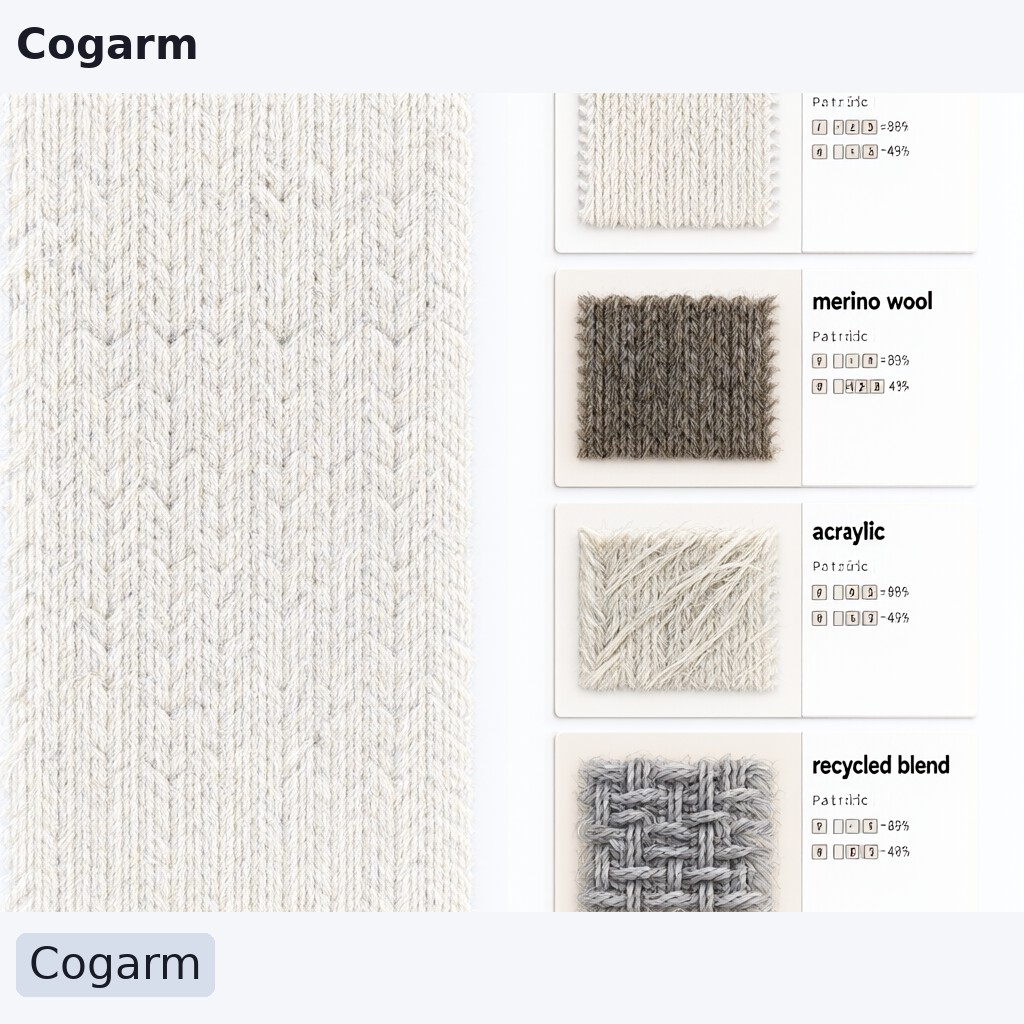
For knitwear, this means a partner who can guide you on yarn selection (like merino, cashmere, or recycled wool) and gauge to achieve the right hand-feel and drape, then manage everything from knitting to linking to washing and finishing.
Step 6: Location Matters—Why Surat is India’s Fabric Capital
If you source from India, geography is strategic. Surat, in Gujarat, is the largest textile manufacturing cluster in Asia, producing about 40% of India’s synthetic fabric output and a dominant share of global digital printed fabric supply. Working with a Surat-based manufacturer gives you access to world-class infrastructure, competitive pricing from raw material concentration, and logistics networks built for textile trade. Plus, they have deep experience with global export requirements, making them dependable partners.
But you don’t have to be in India to benefit. With the right partner, you can leverage their location and expertise regardless of where you are. For US-based brands, Cogarm combines Asian manufacturing with US operations, offering you the best of both worlds — deep production knowledge and easy communication.
Making the Final Decision: A Checklist
- Prototype first: Order samples and test them thoroughly — wash, wear, print, dye.
- Talk to references: Ask for client contacts in your segment.
- Read the fine print: Understand MOQ terms, lead times, and payment terms.
- Visit if possible: A facility tour can be eye-opening.
- Check certifications: Look for OEKO-TEX, GOTS, GRS, BSCI, or WRAP to ensure ethical and environmental compliance.
FAQ: Your Sourcing Questions Answered
What’s the typical MOQ for custom fabric?
It varies widely. Knitwear MOQs can start around 100 pieces per style per color, while woven garments might require 200 pieces. Larger manufacturers may have higher minimums, so ask upfront.
How long does fabric production take?
Sample lead times range from 35-45 days industry-wide. Production can take 35–45 days once you approve samples, depending on the complexity.
Should I choose fabric based on price alone?
Price is important, but it shouldn’t be the sole driver. A cheap fabric that fails quality tests costs more in the long run. Balance cost with performance and durability.
What’s the difference between RFD and finished fabric?
RFD (Ready for Dyeing) fabric is pre-treated to absorb dye evenly, ideal for custom colors and prints. Finished fabric has already been dyed and processed, ready for cutting and sewing.
Choosing the right fabric partner is a strategic decision that shapes your brand’s future. By getting clear on your needs, vetting quality, and understanding MOQs and lead times, you set yourself up for success. If you’re exploring knitwear or woven garments, reach out to Cogarm — a partner that can guide you from yarn to finished product. Contact steve@cogarm.com or visit www.cogarm.com to start the conversation.
Which checks separate a reliable fabric mill from a risky one?
Test reproducibility, not the sample. Ask for three consecutive dye lots of the same article and compare shade, weight and shrinkage; variation between lots is the defect that ruins a launch. Confirm the specification in writing, covering fibre content, construction, weight per ASTM D3776 and shrinkage after laundering, and agree an AQL 2.5 inspection plan under ISO 2859-1 for deliveries. Check certification scope directly: OEKO-TEX STANDARD 100 limit values on the finished fabric, and GOTS chain of custody where organic cotton is claimed, with at least 95% certified organic fibre for the organic grade. Finally, visit or video-audit the mill and confirm capacity against your peak month, not your average.
Cogarm has manufactured custom knitwear and woven garments in Dongguan, Guangdong, China since 2006. Minimum order is 100 units per style and colourway.
