
How New Brands Prepare for Their First Clothing Sample
For many new clothing brands, the first sample feels like the moment everything becomes real. Before that point, the product often lives in sketches, moodboards, fabric ideas, saved reference photos, and brand language. It feels clear in the founder’s mind. But once the sample stage begins, the idea has to survive contact with real yarn, real measurements, real knit construction, real manufacturing limits, and real cost. This is where many brands discover that having a strong concept is not the same as having a product that can actually be made, worn, sold, and reordered.
The first sample is not just a factory task. It is the first serious product test. It shows whether the fit makes sense, whether the yarn supports the intended drape, whether the stitch details are too complex for the price point, and whether the product has enough consistency to move toward production. For a new brand, this stage matters even more because the first few products often shape customer trust. If the fit feels wrong, if the merino wool sweater supplier’s fabric feels cheaper than expected, or if the garment changes too much after washing, the problem is no longer only technical. It becomes a brand problem.
To prepare well for a first clothing sample, a new brand should define the product clearly before contacting a manufacturer. That means deciding what the garment is, who it is for, how it should fit, what kind of fabric experience it should deliver, which details are essential, and what cost range is realistic. Clear preparation reduces revisions, shortens development time, and helps the factory make better decisions from the start.
A lot of founders assume the hardest part is finding a factory. In reality, the harder part is often learning how to communicate a product so clearly that the factory can build it well. That is why some brands move through sample development smoothly while others lose weeks in confusion. The difference is usually not luck. It is preparation. And once you understand that, your first clothing sample stops feeling like a gamble and starts becoming a system you can actually manage.
Why the First Sample Matters So Much
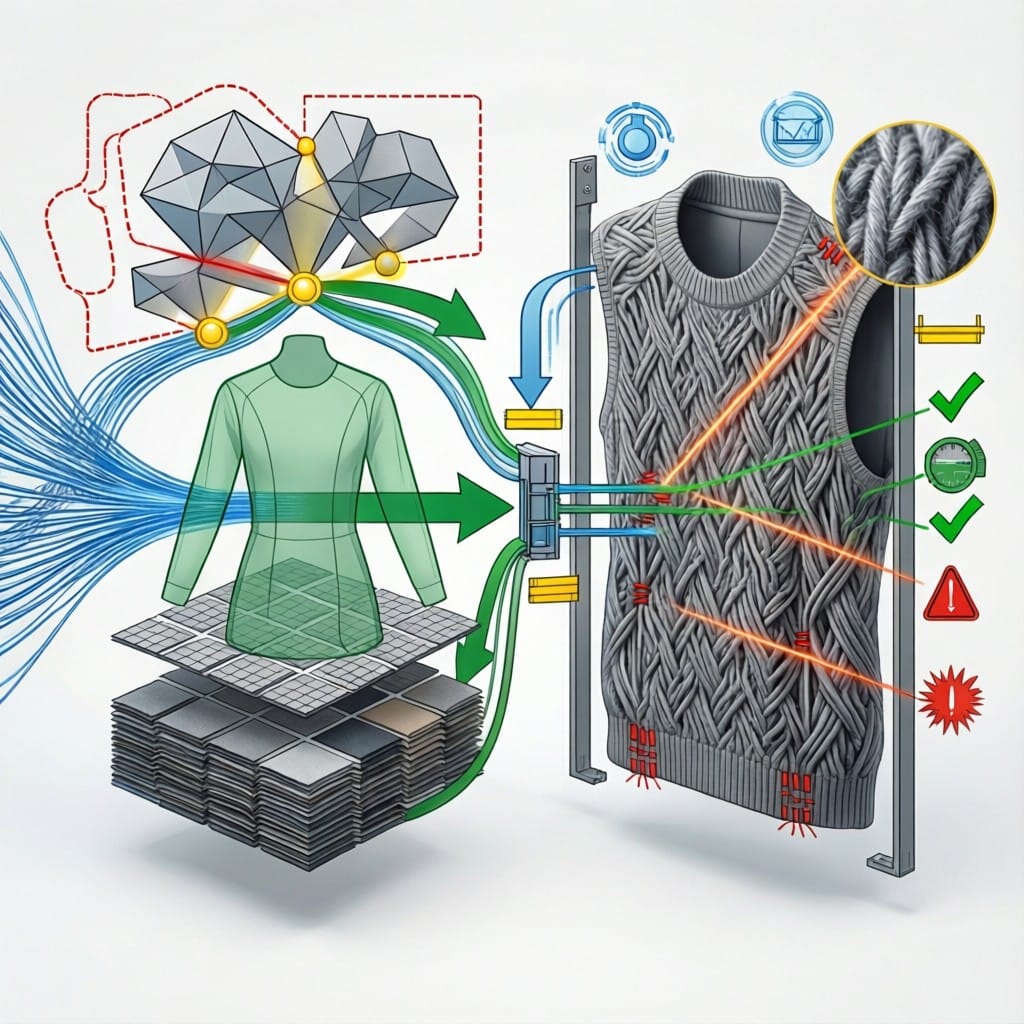
The first sample matters because it is the point where assumptions stop being ideas and start becoming cost, quality, fit, and delivery decisions. Before the sample, a product can still look correct in sketches, mockups, or reference photos. Once the sample is made, the product starts revealing the truth. The body length may feel too long. The collar may feel too loose. The merino wool may not carry the shape you expected. The cable stitch may look great laid flat but lose structure once worn.
For a new brand, this stage matters more than many founders expect because the first sample affects much more than one garment. It affects development speed, revision cost, production planning, launch timing, pricing confidence, and later reorder stability. If the first sample is handled seriously, the brand gets clearer decisions earlier. If it is rushed, the brand often pays for that haste in later rounds of corrections.
What the First Sample Actually Verifies
A first sample is not a finished product. It is a working model that tests whether the design can be translated into a physical garment. For knitwear, the first sample confirms the stitch gauge, the yarn weight, the panel shaping, and how the garment behaves when worn. A sweater OEM factory will use the sample to verify that the 7-gauge or 12-gauge construction matches the intended hand-feel and drape.
The sample also tests the pattern itself. When a muslin or prototype garment is cut from a first pattern, it reveals whether the proportions work in real life — not just on paper. The sample shows whether the sleeve length balances with the body, whether the neckline sits where it should, and whether the overall silhouette matches the brand’s vision.
The Sample Tests Performance, Not Just Looks
No. The first sample is as much about behavior as it is about looks. A garment that appears perfect on a hanger can still fail in daily use. The way a fabric drapes, the way it recovers after stretching, the way it feels against the skin — these are functional qualities that only become obvious when the sample is worn and handled.
For new brands, especially those planning basics and activewear, the sample is the first chance to test how a garment performs. Does the fabric breathe? Does it hold its shape after a full day of wear? Does it feel comfortable in warm conditions? The answers to these questions shape whether the product satisfies the customer’s expectations.
How the First Sample Sets the Standard for Production
The first sample sets the standard for everything that follows. It locks in the construction methods that will be repeated across bulk production. When a knit gauge guide is followed carefully at the sample stage, the factory can replicate the same tension, the same finishing, and the same measurements in every production run.
If the first sample is vague or inconsistent, those problems multiply in bulk. A stitch that worked by luck in a single sample may not hold up across 500 units. A fabric that was loosely specified may arrive differently in the next batch. The first sample is where those variables get controlled — and that control carries directly into production.
The Link Between Sampling and Inventory Risk
Inventory risk is one of the greatest concerns for any new brand. If the first sample is not accurate, the brand may order bulk quantities of a product that does not meet expectations. That leaves the founder with unsold stock and limited cash flow. If the sample is well developed, the brand can move into production with confidence, knowing the final product will match what was approved.
For private label knitwear, the stakes are even higher. The brand carries the inventory and takes the risk. A well-executed sample reduces the chance of expensive mistakes. It also gives the founder a realistic view of what the cost structure will look like at scale.
Sampling as a Test of the Factory Relationship
The first sample is also a test of the working relationship between the brand and the factory. It shows how the factory communicates, how it handles feedback, and whether it can translate a designer’s intentions into a physical product. A good factory will ask questions, flag potential issues, and offer solutions rather than simply producing what was drawn.
For new brands, this relationship is crucial. A sweater OEM factory that is responsive during the sample stage will likely be more reliable during production. The sample phase reveals patterns of communication that will continue throughout the partnership. If the factory ignores feedback or delivers something off-spec, it is better to discover that early — before large orders are placed.
What a Founder Should Take Away from the First Sample
The first sample is a learning tool, not just a deliverable. A founder should walk away knowing whether the product works, what adjustments are needed, and what the realistic cost and timeline look like. The sample should give the founder enough clarity to make smart decisions about sizing, materials, and pricing.
It also helps the founder understand the difference between what was imagined and what is manufacturable. Sometimes the original idea needs refinement. Sometimes the fabric needs to be swapped for something that performs better. Sometimes the gauge needs to be adjusted to create the right weight. These are not failures — they are the natural process of developing a product.
Many founders also need to decide how to prepare for seasonal demands. When brands prepare for summer, they often need lighter yarns and looser weaves. When brands prepare for hot weather, breathable fabrics become essential. And when brands prepare fabric choices, they compare options carefully — merino wool against cotton, for example — weighing factors like moisture management and temperature regulation. Preparing for these decisions before the sample stage means the founder can be more specific when requesting samples.
Key Pre-Sampling Checklist
Before you brief a manufacturer, make sure your sample request covers these essentials:
| Category | Essential Details Required | Common Pitfall to Avoid |
|---|---|---|
| Material Specs | Exact fiber composition, micron count, ply, yarn supplier | Requesting generic terms like “soft wool” |
| Machine / Gauge | Target gauge (e.g., 7GG, 12GG), stitch structure, tension | Ignoring how gauge affects drape and weight |
| Dimensions | Full measurement spec sheet with allowable tolerances | Supplying only S/M/L without flat measurements |
| Trims & Labels | Button materials, main labels, care labels, zipper specs | Overlooking trim sourcing and lead times |
| Cost & Timeline | Target price point, sampling budget, desired lead time | Approving a sample without knowing its scale cost |
Conclusion
The first clothing sample is more than a prototype — it is the foundation of the entire production process. New brands that prepare carefully, communicate clearly, and review samples thoroughly will move into production with confidence. Those that skip the preparation often pay for it in revisions, delays, and lost time.
If you are ready to develop your first knitwear sample, Cogarm can help you navigate the process. As a custom knitwear manufacturer with experience across gauges and yarns, we work with new brands to refine their ideas into manufacturable products. Reach out to Steve at steve@cogarm.com or visit www.cogarm.com to start the conversation.
Frequently Asked Questions
How long does a first clothing sample take?
Most reputable factories produce a first sample in about 35-45 days, assuming the yarn or fabric is in stock. If materials need to be sourced, add another 5–7 days. New brands should plan for at least one revision round, which adds time to the overall schedule.
What should be included in a sample request?
The more specific the request, the better. Include technical drawings, measurements, yarn or fabric specifications, stitch details, and any reference photos. A clear tech pack helps the factory avoid guesswork and produces a more accurate sample.
How many samples should a new brand order?
One sample is rarely enough. Most brands order a single piece for fit evaluation, then a revised sample after making changes. Some brands order multiple samples to test different yarns or colors at the same time. Budgeting for two to three rounds is realistic.
What is a knit gauge guide and why does it matter?
A knit gauge guide describes the number of stitches per inch in a knitted fabric. Lower gauges (3–5GG) create chunky, open knits. Higher gauges (12–18GG) create fine, dense fabrics. The gauge affects the hand-feel, weight, and appearance of the final garment.
What is the MOQ for custom knitwear?
For most knitwear manufacturers, the minimum order quantity is around 100 pieces per color per style. Some factories offer flexibility for new brands, but the 100-piece MOQ is a common industry standard. That said, some suppliers, including Cogarm, work with smaller startups to help them launch without overcommitting.
How does a new brand prepare for different seasons?
Seasonal preparation starts with fabric selection. For warm weather, choose breathable yarns like cotton or lightweight merino. For cold weather, choose heavier weights or wool blends. The sample stage is the time to test how the fabric behaves under real wearing conditions.
Should the first sample match the final price point?
Not perfectly, but it should be close. The sample reveals how much yarn or fabric is needed, how complex the construction is, and whether the details are cost-effective. A new brand should use the sample to estimate the final wholesale and retail price.
Cogarm has manufactured custom knitwear and woven garments in Dongguan, Guangdong, China since 2006. Minimum order is 100 units per style and colourway.
