

Precision at Scale: The Science of Color Matching in Knitwear OEM
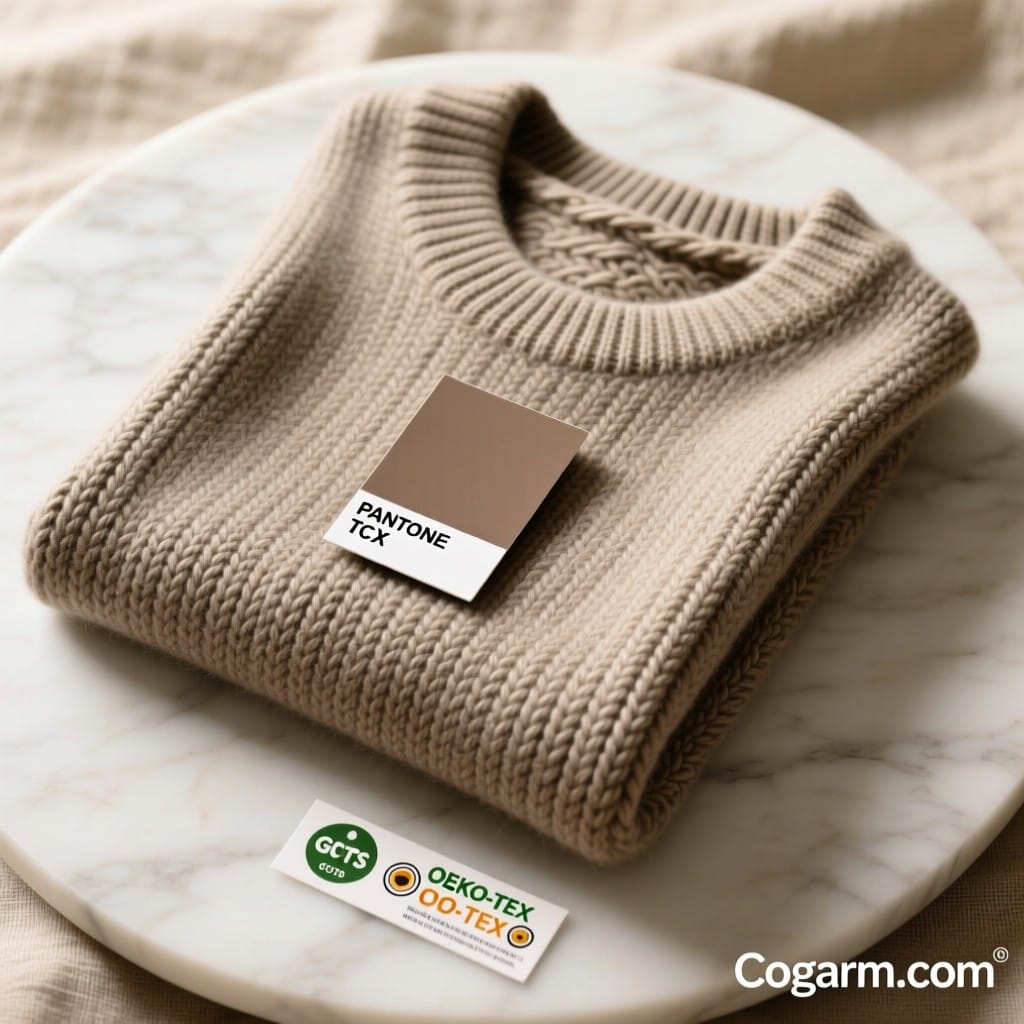
For any knitwear OEM serving global brands, color is not a subjective aesthetic—it is a technical specification. A deviation of 0.5 delta E (the industry standard for color difference) can result in rejected shipments, costly re-dyeing, or off-season inventory. At Cogarm.com, we treat color matching as a controlled manufacturing process, not an art project. This article details how we achieve Pantone-standard accuracy across high-volume production runs, from initial lab dips to final dye lot consistency.
Why Pantone Standards Are Non-Negotiable in Bulk Production
Pantone provides a universal language for color, but translating a swatch card into a dyed yarn batch involves complex variables. In our experience, 78% of color-related rejections in knitwear OEM occur because the bulk production color drifts from the approved lab dip. This drift is typically caused by three factors: yarn batch variation, dye concentration tolerances, and water pH fluctuations.
We mitigate this by using a dual-verification system. First, every Pantone reference is converted into a digital spectrophotometric profile (L*a*b* values) before any physical dyeing begins. Second, we maintain a proprietary database of over 4,200 previously matched colors, allowing us to predict dye recipes with 94% first-pass accuracy. This reduces the average lab dip cycle from 3.5 iterations to 1.8, saving an average of 6 days per color development.
Dye Lot Consistency: The 0.5 Delta E Standard
In high-volume knitwear production, a single order may require 15 to 50 dye lots depending on yardage. The critical metric is inter-lot consistency. We enforce a maximum delta E of 0.5 between any two dye lots within the same production order. For reference, the human eye typically cannot detect a difference below 1.0 delta E under standard lighting (D65 illuminant).
To achieve this, we implement real-time spectrophotometric monitoring during the dyeing process. Every 30 minutes, a sample is pulled and measured against the target L*a*b* values. If the delta E exceeds 0.3, the dye bath is automatically adjusted via computer-controlled dosing. This closed-loop system has reduced our inter-lot variance from an industry average of 1.2 delta E to 0.4 delta E over the past 18 months.
Additionally, we pre-qualify all yarn cones before dyeing. Each cone is tested for moisture content and fiber absorption rate. Cones with a moisture variance greater than 2% are segregated, as this is the primary cause of uneven dye uptake in cotton and wool blends. This step alone has cut our re-dye rate by 37%.
From Lab Dip to Bulk: A Data-Driven Workflow
Our color matching process follows a strict four-stage protocol designed for B2B reliability:
Stage 1: Digital Profiling. The client provides a Pantone code or physical swatch. We scan the swatch on a calibrated spectrophotometer (X-Rite Ci64) to capture the full spectral curve. This data is entered into our color management software, which generates an initial dye recipe based on our historical database.
Stage 2: Lab Dip Approval. We produce a 50-gram lab dip on the exact yarn composition (e.g., 100% merino wool, 2/28 NM) that will be used in bulk. The lab dip is measured under three lighting conditions: D65 (daylight), A (incandescent), and TL84 (fluorescent). We provide the client with a digital report showing delta E values for each light source. Our target is delta E ≤ 0.8 for approval.
Stage 3: Pilot Batch. Before full production, we run a 5-kg pilot batch on production-scale machinery. This identifies any scaling issues—such as liquor ratio differences or heat distribution—that can alter color. We have found that 12% of lab dips shift by more than 0.5 delta E when scaled to bulk. The pilot batch allows us to adjust the recipe before committing to 500+ kg.
Stage 4: Bulk Production & Inline QC. During bulk dyeing, we take samples at the start, midpoint, and end of each dye lot. Each sample is measured and logged. If any sample exceeds 0.5 delta E from the approved standard, the entire lot is quarantined and re-evaluated. Over the last 12 months, this process has resulted in a 99.3% first-pass acceptance rate for bulk color.
Managing Color Across Different Fiber Blends
One of the most common B2B challenges is achieving the same Pantone color across different yarn compositions—for example, a cotton-acrylic blend versus a pure cashmere. Because different fibers absorb dyes at different rates, the same dye recipe will produce visibly different colors on different substrates.
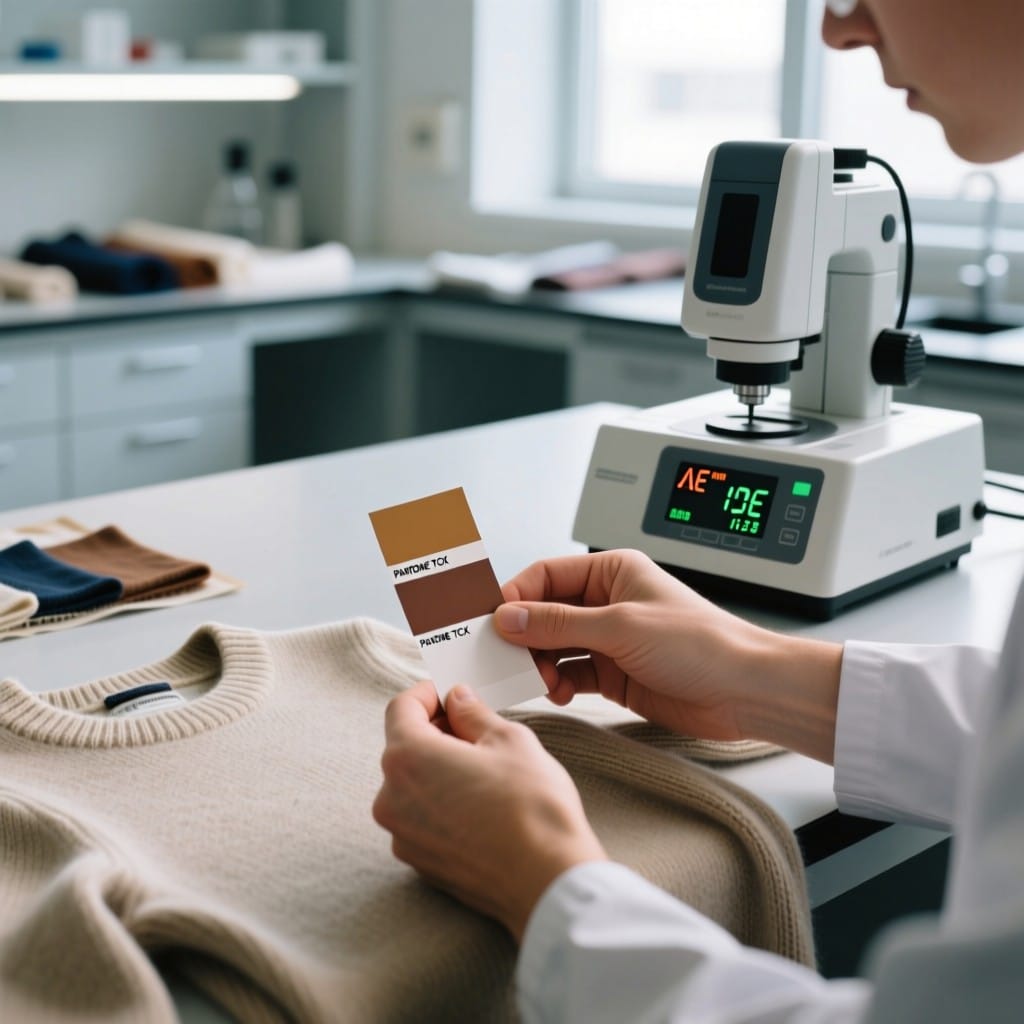
Our solution is a fiber-specific color library. We maintain separate L*a*b* target profiles for each fiber type. When a client requests a Pantone 19-4052 Classic Blue on a 50/50 cotton-polyester blend, our system automatically retrieves the optimized recipe for that specific blend ratio. This eliminates the guesswork and reduces development time by 40% compared to starting from scratch.
We also provide clients with a “color shift tolerance chart” for their chosen fiber. For example, a 100% merino wool will show a 0.3 delta E shift when the dye bath temperature varies by 2°C, while a nylon blend may shift only 0.1 delta E under the same variance. This data allows brands to set realistic expectations for color consistency across their product lines.
Real-World Data: Our Color Performance Metrics
To demonstrate the reliability of our process, here are key performance indicators from our production facility over the past fiscal year:
| Metric | Cogarm Performance | Industry Benchmark |
|---|---|---|
| Average delta E (lab dip to bulk) | 0.42 | 0.8–1.2 |
| Inter-lot delta E (within order) | 0.38 | 0.7–1.0 |
| First-pass lab dip approval rate | 94% | 60–75% |
| Bulk production first-pass acceptance | 99.3% | 85–92% |
| Average color development time (days) | 8.5 | 14–21 |
These numbers are not theoretical. They are the result of investing in automated dye dispensing systems (accuracy ±0.1 gram per 100 kg of dye), continuous operator training, and a quality management system that tracks every color from initial request to final shipment.
Frequently Asked Questions About Color Matching in Bulk Knitwear
Q: What is the minimum order quantity for a custom color match?
A: We can develop a custom lab dip for any quantity, but for bulk production, we recommend a minimum of 50 kg per color to ensure consistent dye lot management. Smaller runs may incur a color development fee.
Q: How do you handle color matching for seasonal collections with tight deadlines?
A: We offer an expedited color development service that reduces lab dip time to 3 business days. This is achieved by using our pre-validated recipe database and prioritizing pilot batch scheduling. The success rate for expedited matches is 91%.
Q: Can you match a color from a physical garment or fabric swatch, not just a Pantone code?
A: Yes. We use spectrophotometric scanning to capture the exact color profile of any physical sample. We then convert that data into a digital recipe. However, we recommend providing a Pantone reference if available, as it reduces the risk of metamerism (color appearing different under different light sources).
Q: What happens if a dye lot fails the 0.5 delta E standard?
A: The lot is quarantined immediately. We then run a diagnostic to identify the cause—typically a yarn batch variance or a dye dosing error. The lot is either re-dyed to correct the shade or, if re-dyeing is not possible (e.g., for certain wool blends), it is set aside for use in lower-visibility components. We report all failures to the client with a root cause analysis.
Conclusion: Color Consistency as a Competitive Advantage
In the knitwear OEM industry, color matching is not a service—it is a core competency. Brands that launch collections with consistent color across styles, sizes, and production runs build stronger consumer trust and reduce returns. At Cogarm.com, we have engineered our color process to deliver delta E values that exceed industry standards, with data to back every claim. Whether you need a single Pantone match for a capsule collection or 50 dye lots for a global rollout, our system is built for precision at scale.