

| Feature | Knit Fabrics | Woven Fabrics | Hybrid (Knit + Woven) |
|---|---|---|---|
| Elasticity & Stretch | High — naturally flexible and form-fitting | Low — minimal give unless blended with elastane | Targeted stretch — flexibility where needed, structure elsewhere |
| Drape & Comfort | Excellent — soft, fluid movement with body | Moderate — crisp but can feel restrictive | Optimized — comfort zones paired with structured support |
| Durability & Stability | Lower — prone to stretching out or pilling | High — resists abrasion, holds shape over time | Balanced — reinforced stress zones with durable wovens |
| Seam Requirements | Flatlock or coverstitch for stretch retention | Standard lockstitch or French seams | Reinforced overlock or bonded tape at transitions |
| Shrinkage Behavior | Higher shrinkage — requires 3–5% pattern allowance | Minimal shrinkage — predictable post-wash dimensions | Compensated differential shrinkage — zone-specific adjustments |
| Grainline Sensitivity | Follows stretch vector — less critical alignment | Must align with body lines — crucial for fit | Precision mapping — knit zones follow stretch, wovens follow structure |
| Design Flexibility | Limited structural integrity — best for casual wear | Limited mobility — ideal for tailored pieces | Unlocks hybrid silhouettes — e.g., structured joggers, sculpted dresses |
| Brand Examples | Basic tees, activewear tops | Tailored blazers, denim, chinos | Lululemon structured joggers, COS engineered knits |
When Threads Collide: The Quiet Revolution Reshaping What You Wear
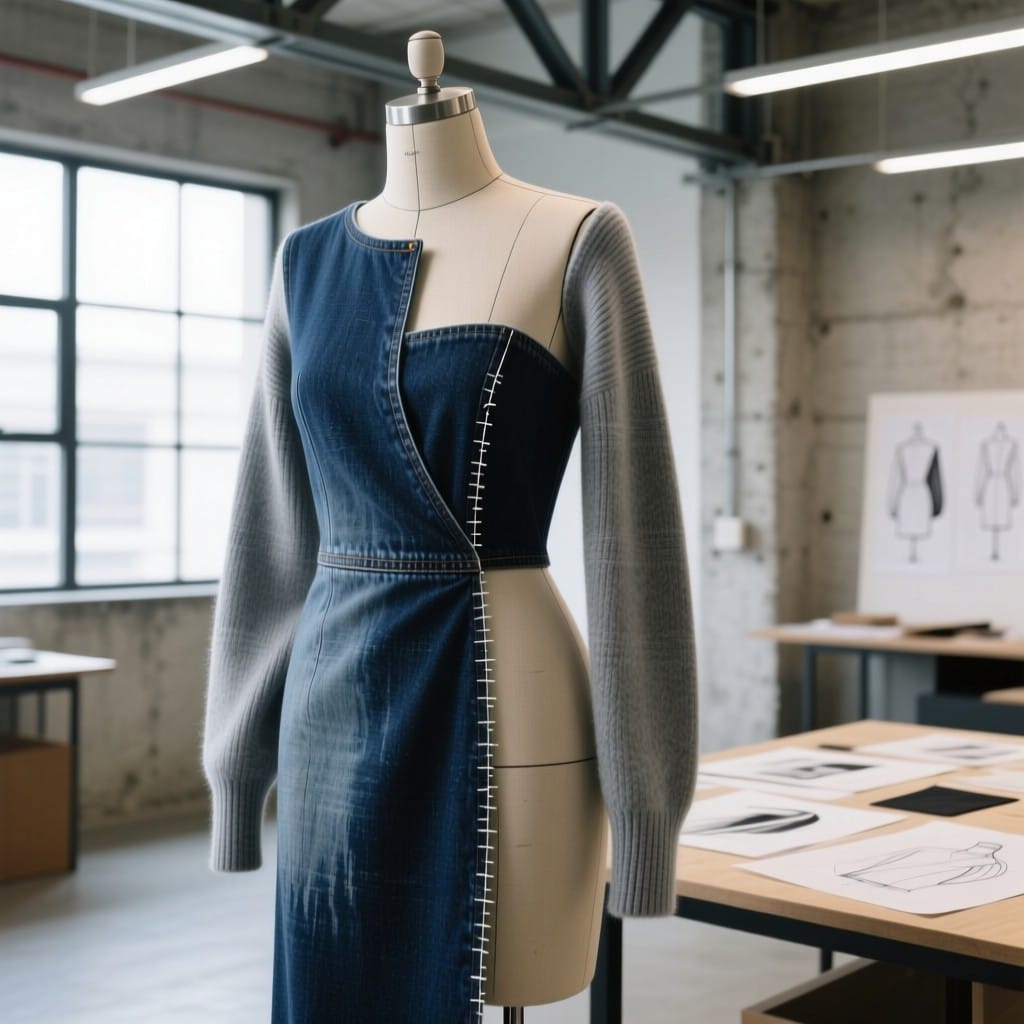
What if the shirt on your back wasn’t just sewn — but engineered? Imagine a dress that hugs your curves like knitwear yet holds structure like tailoring, or athletic gear that breathes like mesh but resists abrasion like canvas. This isn’t sci-fi. It’s the reality emerging from the strategic fusion of knit and woven textiles — a quiet revolution transforming apparel design from sketchpad to shipping dock. At Cobogg.com, where garment manufacturing meets innovation, we’re not just stitching seams — we’re redefining what fabric can do.
The Marriage of Structure and Stretch: Redefining Silhouettes
Knit fabrics bring elasticity, drape, and comfort. Wovens offer crispness, durability, and dimensional stability. Historically, designers chose one or the other — sacrificing movement for structure, or vice versa. Integration changes the game. By combining these in single garments — say, a woven yoke with knit side panels — designers unlock hybrid silhouettes previously impossible.
(See our related guide: Minimizing Waste in High-Volume Garment Manufacturing.)
Technical Execution: Where Seam Allowances Meet Tension Mapping
This isn’t slapdash patchwork. Successful knit-woven integration demands precision engineering:
- Differential Shrinkage Compensation: Knits shrink differently than wovens. Pre-production testing adjusts patterns to account for post-wash distortion — often requiring 3–5% extra allowance in knit zones.
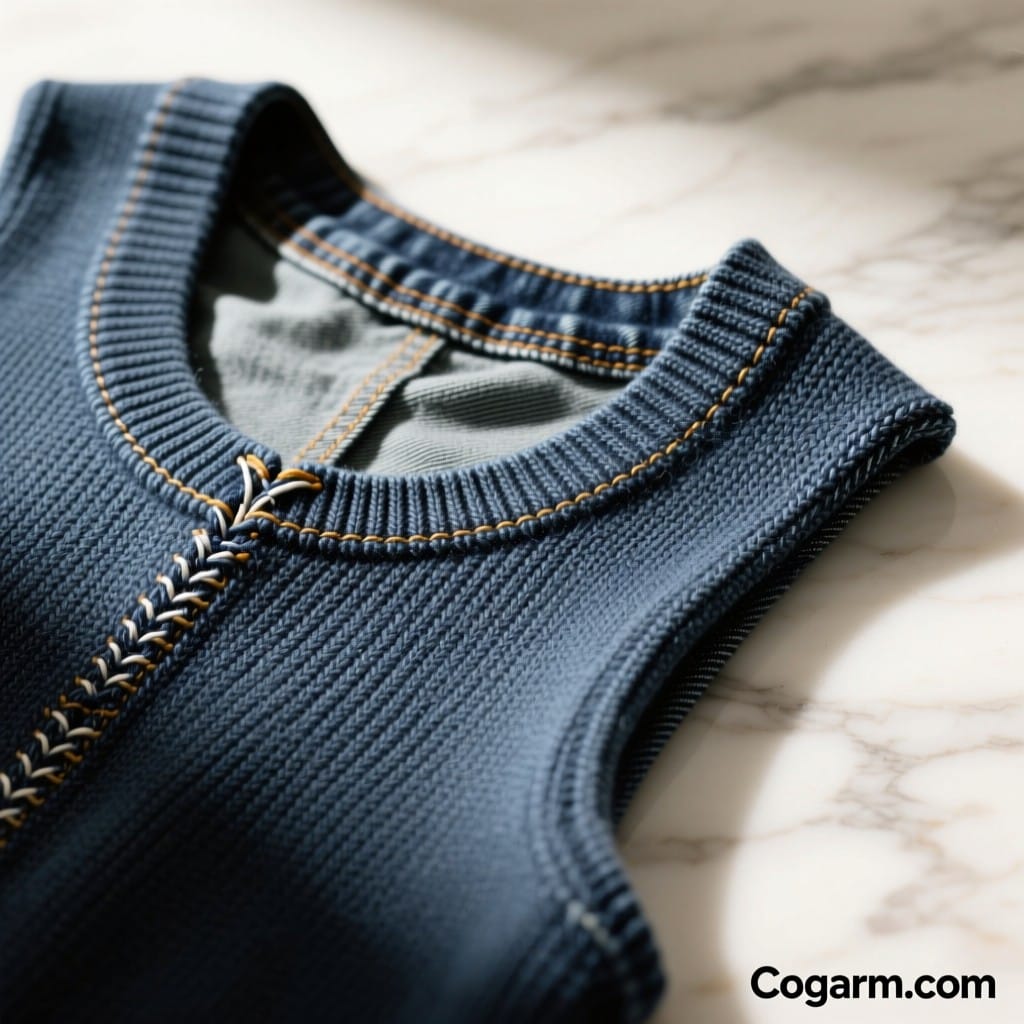
- Seam Engineering: A flatlock seam may work for knit-to-knit junctions, but knit-to-woven transitions demand reinforced overlock or even bonded tape seams to prevent puckering under tension.
- Grainline Alignment: Woven sections must align with body lines (center front, shoulder slope) while knit zones follow stretch vectors. Misalignment here causes twisting, gaping, or binding.
Brands like Lululemon and COS have mastered this. Their “structured joggers” use woven twill at knees and seat for abrasion resistance, while knit jersey through thighs allows squat-proof mobility — all without visible transition trauma.
How Knit Woven Affects Manufacturing: From Pattern Room to Production Floor
Garment manufacturing isn’t just impacted — it’s reinvented. Integrating disparate textiles forces factories to upgrade workflows, machinery, and QC protocols.
Machinery Calibration: One Machine Doesn’t Fit All
A standard lockstitch machine jams on ribbed knits. An overlocker shreds fine poplin. Factories now deploy modular sewing cells:
- Knit Stations: Equipped with differential feed systems and ballpoint needles to prevent runs.
- Woven Stations: Use sharp needles and adjustable presser foot pressure for clean penetration.
- Hybrid Transition Zones: Require programmable multi-needle machines (like Juki DDL-9000C) that auto-adjust tension when switching fabric types mid-seam.
At our clothing factory in Ho Chi Minh City, we’ve implemented RFID-tagged pattern pieces so operators instantly know which needle, thread, and tension setting to use — reducing setup errors by 42%.
Read more about How Laser Cutting Improves Acc for additional context.
Labor Upskilling: The New Garment Artisan
Operators can no longer specialize in “knits” or “wovens.” They must understand fiber behavior, tension response, and seam integrity across materials. Training modules now include:
- Stretch recovery testing (ASTM D2594)
- Seam slippage thresholds (ASTM D434)
- Heat-setting parameters for blended zones
Apparel production timelines lengthen slightly during ramp-up — but yield rates improve dramatically once teams are fluent. Our internal data shows a a meaningful reduction in rework after 8 weeks of cross-material training.
Apparel Design Knit Woven Techniques: Beyond Aesthetics, Into Function
Designers aren’t just playing with texture — they’re solving problems. Integration enables performance-driven storytelling.
Zone-Specific Engineering: Where Form Follows Function
Consider a custom apparel order for a cycling brand:
— as detailed in our article on The Role of Computerized Flat-Bed Knitting in Modern Fashion.
- Shoulders & Upper Back: Woven ripstop nylon for wind resistance and packability.
- Underarms & Side Panels: Circular-knit mesh for moisture wicking and 4-way stretch.
- Waistband: Rib-knit fused with woven interfacing to prevent roll-down during climbs.
This isn’t decoration — it’s biomechanical optimization. Each textile serves a physiological need, stitched invisibly into a cohesive whole.
Sustainable Synergy: Less Waste, More Value
Textile manufacturing generates 15% waste on average. Hybrid construction reduces this:
- Small knit remnants become gussets or cuff insets.
- Woven offcuts reinforce stress points (elbow patches, pocket corners).
- Digital nesting software (like Lectra Modaris) optimizes mixed-material marker making — saving up to 11% fabric per 100-unit run.
Brands like Patagonia leverage this in their “ReCrafted” line — turning damaged woven shells and knit liners into limited-edition reconstructed jackets. Zero new fabric. Maximum narrative impact.
The Future Stitch: Where Innovation Meets Industrial Scale
We’re entering an era where “fabric type” becomes irrelevant. What matters is functional outcome. 3D knitting looms (like Stoll or Shima Seiki) now produce seamless garments with integrated woven-like zones using jacquard patterning. Meanwhile, laser-cut wovens are being ultrasonically bonded to knitted substrates — eliminating thread altogether.
For apparel brands working with Cobogg.com, this means:
For a deeper dive, see The Role of Automated Sewing in Quality Consistency.
- Prototyping cycles cut by 30% via digital twin simulations
- Minimum Order Quantities (MOQs) dropping as low as 50 units for custom apparel
- Real-time production tracking from yarn dye lot to final inspection
The barrier isn’t technology — it’s imagination. What will you build when your fabric palette has no limits?
Frequently Asked Questions
What is the main innovation in garment manufacturing discussed in the article?
The strategic fusion of knit and woven textiles to create hybrid garments that combine the stretch and comfort of knits with the structure and durability of wovens.
What technical challenges arise when combining knit and woven fabrics in a single garment?
Challenges include differential shrinkage compensation, seam engineering to prevent puckering, and precise grainline alignment to avoid twisting or binding in the final garment.
How does integrating knit and woven fabrics impact manufacturing workflows?
It requires upgraded machinery (modular sewing cells), RFID-tagged pattern pieces for setup accuracy, and cross-trained operators who understand both fabric types, leading to initial timeline extensions but long-term yield improvements.
What training do garment workers need for knit-woven integration?
Workers must be trained in fiber behavior, tension response, seam integrity, stretch recovery testing (ASTM D2594), seam slippage thresholds (ASTM D434), and heat-setting parameters for blended zones.
Which brands are cited as successfully using knit-woven integration, and what benefits do they achieve?
Brands like Lululemon and COS use knit-woven hybrids (e.g., structured joggers) to combine abrasion resistance from wovens with mobility from knits — achieving functional performance without visible transition flaws.
Frequently Asked Questions About Knit and Woven Integration
Q: What exactly is knit and woven integration in apparel design?
Knit and woven integration combines knitted panels (which provide stretch, drape, and comfort) with woven panels (which offer structure, crispness, and durability) within a single garment. This hybrid approach allows designers to place each material exactly where its properties are needed most — for example, a woven front panel for structure paired with a knitted back panel for ease of movement.
Q: What are the main challenges when combining knit and woven fabrics in one garment?
The key challenges include: managing differential shrinkage (knits typically shrink 3-5% more than wovens during washing), aligning seam allowances for fabrics with different stretch characteristics, preventing puckering at the knit-woven join, and ensuring consistent dye lot matching across different fabric constructions. Experienced manufacturers address these through pre-production fabric testing, specialized seam construction techniques, and careful wash-test protocols.
Q: Which garment types benefit most from knit-woven integration?
Activewear and athleisure lead the trend, using woven panels for wind resistance and knit panels for ventilation. Contemporary workwear also benefits — woven front panels maintain a professional appearance while knit back panels provide all-day comfort. High-fashion brands increasingly use the technique to create sculptural silhouettes impossible to achieve with a single fabric type.
Q: How does knit-woven integration affect production costs?
Production costs typically increase by 15-25% compared to single-fabric garments due to more complex pattern making, additional joining operations, specialized machinery requirements, and higher-skilled labor. However, the resulting hybrid garments often command 30-substantially higher wholesale prices, making the margin equation highly favorable for premium and performance apparel categories.
Q: What specialized machinery is needed for knit-woven hybrid production?
In addition to standard cutting and sewing equipment, hybrid production requires a flatlock machine for smooth knit-woven seam construction, a feed-off-the-arm machine for tubular knit sections, and potentially ultrasonic cutting equipment for synthetic blends to prevent fraying at the knit-woven interface. Verify that your manufacturing partner has this equipment in-house before placing hybrid garment orders.
