

This article examines how fashion brands and retail procurement managers can build resilient, compliant supply chains by navigating the technical distinctions between organic and recycled material certifications. By understanding the rigorous traceability requirements of GOTS and GRS, decision-makers can mitigate greenwashing risks and optimize their product development cycles. This framework provides actionable engineering and sourcing benchmarks to transition from transactional purchasing to verifiable, sustainable partnerships.
Global apparel brands are undergoing a structural shift driven by shifting consumer values and tightening environmental legislation. Retail giants like IKEA and Patagonia have set aggressive carbon-reduction targets, forcing supply chain managers to look beyond surface-level marketing and demand verifiable raw material traceability. For modern apparel production, sustainability is no longer an optional marketing label; it is a core engineering specification governed by rigorous third-party audits and chain-of-custody documentation.
Sourcing teams face a fragmented landscape where “sustainable” can mean anything from organic cultivation to post-consumer chemical recycling. A single compliance failure can result in costly customs delays, brand damage, or product recalls under emerging greenwashing regulations. Establishing a sustainable supply chain partnership requires a systematic approach to fiber selection, wet processing compliance, and social accountability standards.
(See our related guide: Protecting Your Intellectual Property in Apparel Design.)
This article analyzes the technical differences between the Global Organic Textile Standard (GOTS) and the Global Recycled Standard (GRS), providing procurement managers with the raw data, specifications, and inspection frameworks needed to evaluate factory capabilities and secure compliant custom apparel lines.
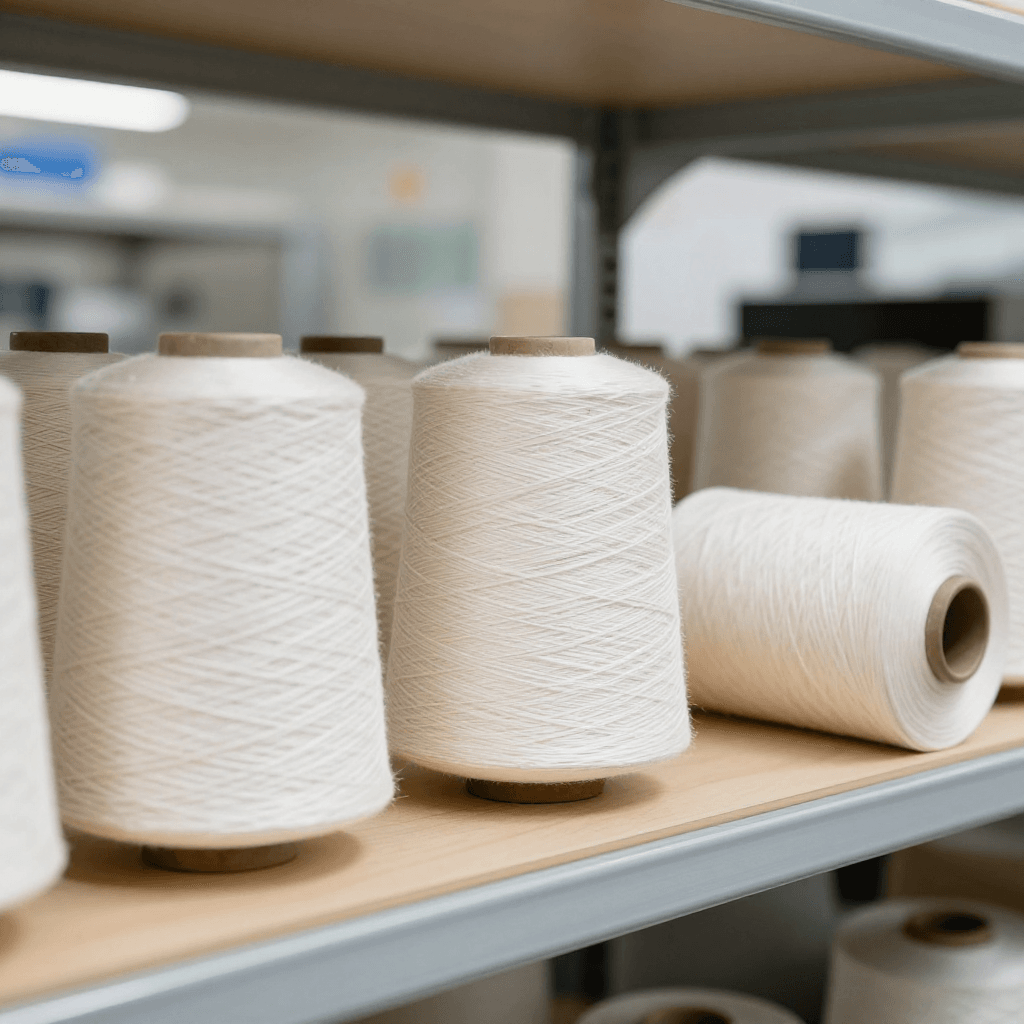
Technical Specifications and Raw Material Standards
Evaluating sustainable inputs requires rigorous chemical and physical criteria. For natural fibers, the primary objective is verifying agricultural purity and eliminating hazardous pesticide residues. Organic cotton sourcing must conform strictly to GOTS agricultural mandates. When sourcing animal fibers like wool or cashmere, procurement managers must evaluate fiber diameters and ethical harvesting practices. Premium knitwear requires tracking fiber origin down to the micron level: superfine Merino wool must measure \le18.5µm, fine Merino wool \le20µm, and medium Merino wool \le22µm. Raw Cashmere Grade A requires an even tighter threshold of \le15.5µm to ensure both material purity and structural performance.
For synthetic and blended yarns, the engineering focus shifts to the origin of the feedstock and the chemical processes used to depolymerize or mechanically shred waste materials. Recycled wool (GRS), viscose, modal, and LENZING ECOVERO require dedicated chain-of-custody (CoC) transaction certificates to verify that post-industrial or post-consumer waste is not mixed with virgin synthetics during spinning.
GOTS vs. GRS: Structural Standards Compared
To build a reliable garment manufacturing pipeline, procurement teams must understand how GOTS and GRS compare across critical environmental, chemical, and physical parameters. The table below outlines these differences based on international testing standards.
Read more about Why Direct-to-Factory is Bette for additional context.
| Metric / Parameter | Global Organic Textile Standard (GOTS) Specification | Global Recycled Standard (GRS) Specification |
|---|---|---|
| Minimum Certified Input Content | \ge70% organic fiber (up to 95% for “Organic” grade) | \ge20% recycled material (\ge50% for consumer-facing logo) |
| Formaldehyde Limits (Baby/Adult) | \le16 ppm (babywear), \le75 ppm (adult clothing) | \le16 ppm (babywear), \le75 ppm (adult clothing) |
| Wastewater COD (Chemical Oxygen Demand) | <20 g/kg of organic textile processing output | <150 mg/L effluent concentration per ZDHC MRSL |
| pH Value Tolerance Range (ISO 3071) | 4.0 to 7.5 (optimal skin compatibility) | 4.0 to 7.5 (optimal skin compatibility) |
| Extractable Heavy Metals (Lead/Pb) | \le50.0 mg/kg limit in chemical inputs | \le50.0 mg/kg limit in recycled matrices |
| Audit Frequency & Validity | 12-month cycle with annual physical inspections | 12-month cycle with annual physical inspections |
| Traceability Chain of Custody (CoC) | From farm seed source to garment manufacturing | From recycling collection point to finished garment |
| Synthetic Fiber Blend Tolerance | \le30% synthetic/non-organic blends allowed | Up to 80% virgin synthetics/naturals allowed in cert |
The choice between GOTS and GRS is determined by the raw material strategy of the brand. GOTS provides rigorous environmental and chemical safety thresholds for organic natural fibers, making it ideal for pure cotton, cotton-modal blends, and high-quality wool products. GRS focuses on tracking post-consumer and pre-consumer synthetic wastes (such as recycled polyester and recycled wool blends), ensuring that the materials are diverted from landfills while enforcing the same stringent non-toxicity thresholds as organic standards.
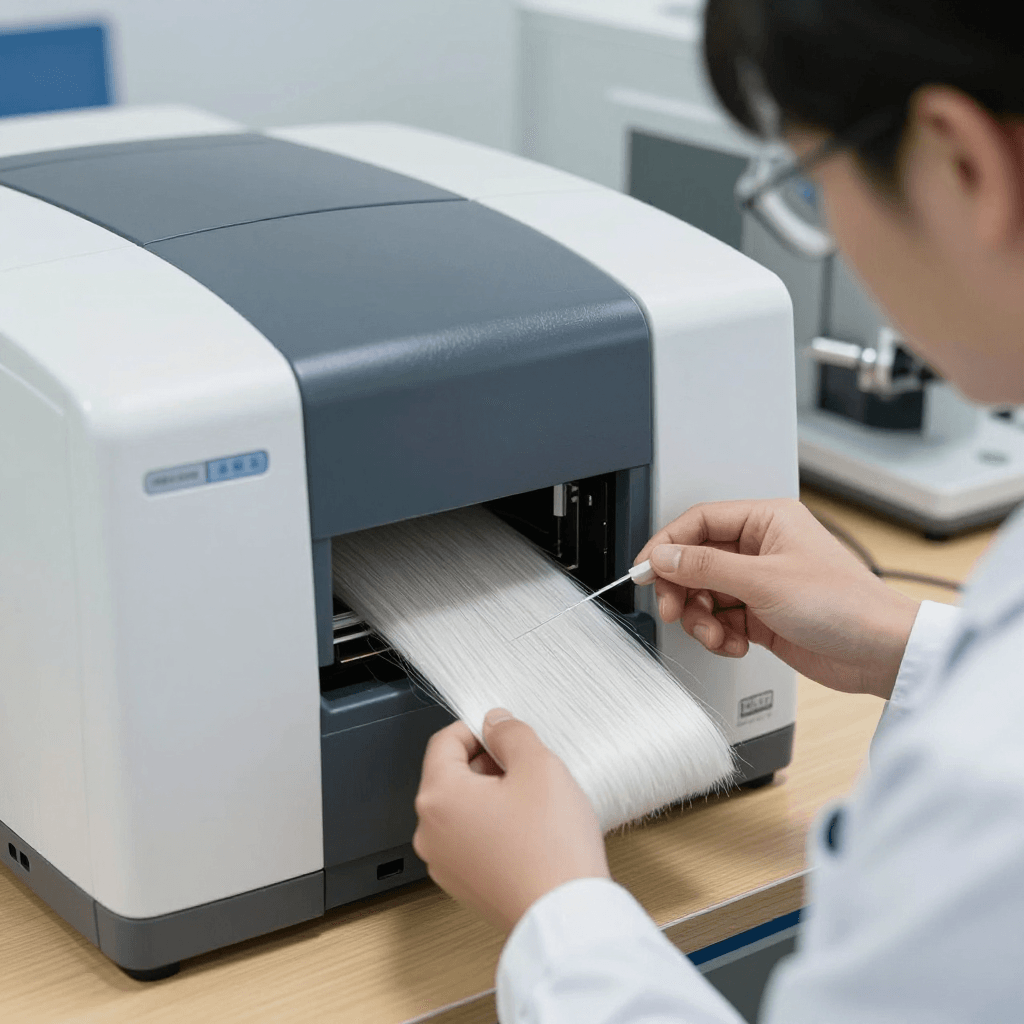
Application Context and Custom Knitwear Engineering
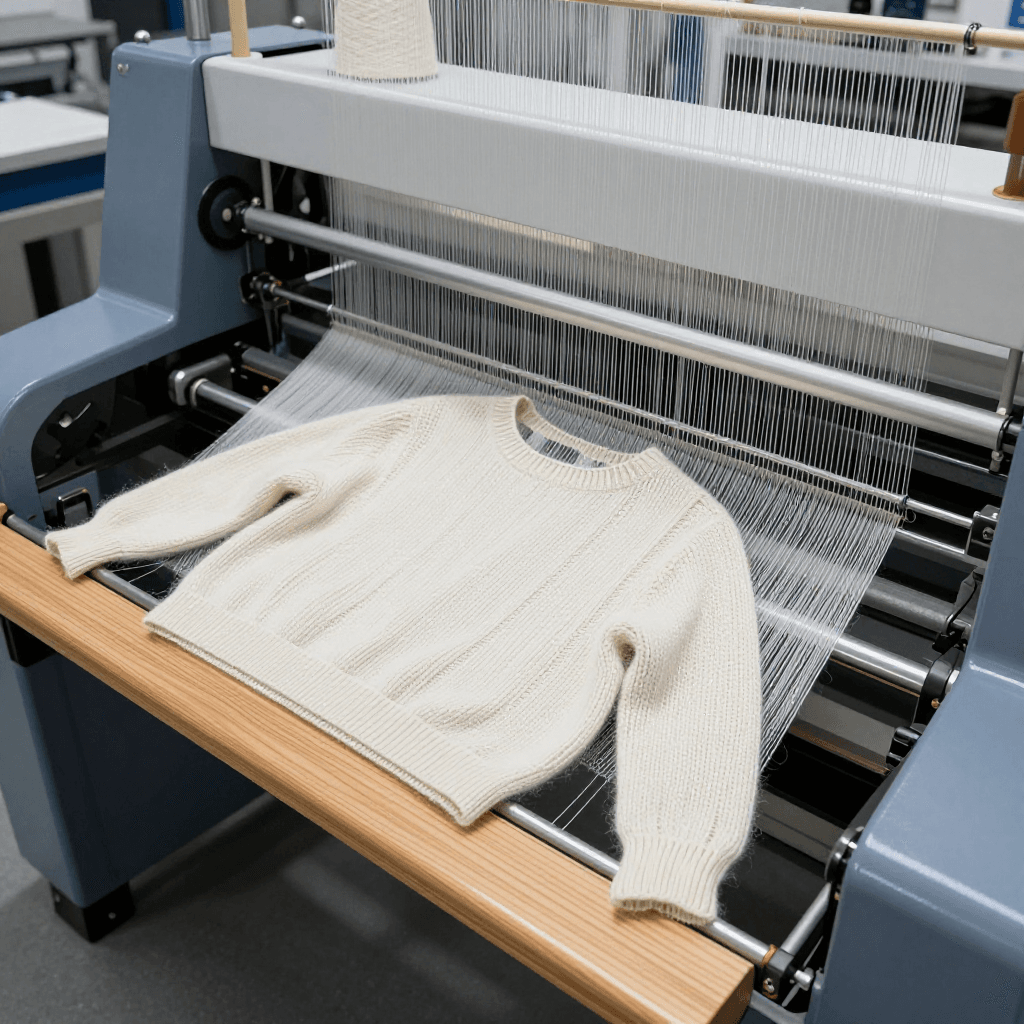
Selecting the appropriate material blend and knitting gauge is critical to balancing durability, comfort, and compliance. For high-end retail lines, wool-acrylic or cashmere-merino blends are highly favored. Chunky knits, which utilize heavy 3GG-5GG configurations, require highly stable, low-pilling yarns to maintain their structure over time. Conversely, midweight garments (7GG-10GG) and fine-gauge knitwear (12GG-18GG) require highly consistent yarn diameters to prevent machine binding during high-speed production.
For example, a luxury outerwear brand launching a winter capsule would specify a GOTS-compliant, 12GG fine-gauge knit made from superfine Merino wool (\le18.5µm) blended with Cashmere Grade A (\le15.5µm). This combination yields a luxurious, soft hand-feel while meeting strict traceability standards. For high-volume corporate uniform programs, a blend of GOTS organic cotton and recycled polyester (GRS-certified) knitted on a 14GG machine provides the optimal balance of tensile strength, colorfastness, and eco-certification.
— as detailed in our article on What Information to Provide in an RFQ.
Strategic Sourcing and Supplier Verification
Suppliers like Cogarm support sustainable garment manufacturing by bridging the gap between design requirements and compliance standards. They operate a strategic dual-base manufacturing model in Dongguan: the Humen facility specializes in high-efficiency cut-and-sew woven garments, while the Dalang base serves as a hub for premium, high-gauge knitwear. This structure allows buyers to consolidate their apparel production across both knit and woven lines under a unified quality management framework.
To lower the barrier to entry for brands transitioning to sustainable lines, suppliers like Cogarm offer low MOQ flexibility starting at just 100 pcs per color/style for knitwear and 200 pcs for woven garments. They utilize precise Pantone TCX matching to ensure brand aesthetic consistency across diverse fiber blends, including merino-acrylic-cotton, recycled wool (GRS), viscose, and organic cotton (GOTS).
The sampling process is engineered for rapid prototyping, featuring a sample lead time of 15-20 days (plus an additional 5-7 days if sourcing specialized, certified yarns). Once samples are approved and AQL 2.5 inspections are verified, bulk production is completed within 45-60 days under a structured 30% deposit and 70% pre-shipment payment framework. Global compliance standards like OEKO-TEX, GOTS, GRS, and BSCI are integrated directly when required by the client’s engineering and retail specifications.
Sustainable Sourcing Specification by Program
Specify GOTS-certified organic cotton and superfine Merino wool (\le18.5µm) for premium, next-to-skin knitwear lines requiring maximum breathability and verified agricultural sourcing. Specify GRS-certified recycled wool and synthetic blends for durable, high-performance outerwear and commercial uniforms requiring structural stability and circular lifecycle compliance.
Frequently Asked Questions
What is the typical lead time for custom sustainable yarn development?
Custom yarn sourcing and development requires an additional 5-7 days on top of the standard 15-20 days sample lead time to verify compliance certificates.
For a deeper dive, see The Benefits of Localized Sourcing in Dongguan.
What is the minimum order quantity (MOQ) for certified sustainable garments?
Sustainable knitwear requires an MOQ of 100 pcs per color/style, while custom woven garments require a minimum of 200 pcs per style.
How are material tolerances and fiber diameters verified during production?
Fiber diameters are measured in microns (e.g., Cashmere Grade A at \le15.5µm, superfine Merino at \le18.5µm) and audited using AQL 2.5 quality control standards prior to final garment manufacturing.
What payment terms govern standard sustainable apparel production runs?
Sourcing contracts operate under a standard commercial framework of a 30% deposit upon sample approval and the remaining 70% balance before shipment.
Sustainable Sourcing Integration
Navigating sustainable garment manufacturing requires a disciplined approach to material specs, certification standards, and manufacturing lead times. By aligning product designs with clear chemical, social, and physical criteria, procurement managers can build highly resilient supply chains that withstand regulatory scrutiny and deliver exceptional product quality.
Request a GOTS/GRS certified yarn cutting sample with full chain-of-custody test reports and Pantone TCX color matching data from Cogarm to begin your transition to verified, sustainable apparel production.
