

How can material inputs and yarn consumption be quantified?
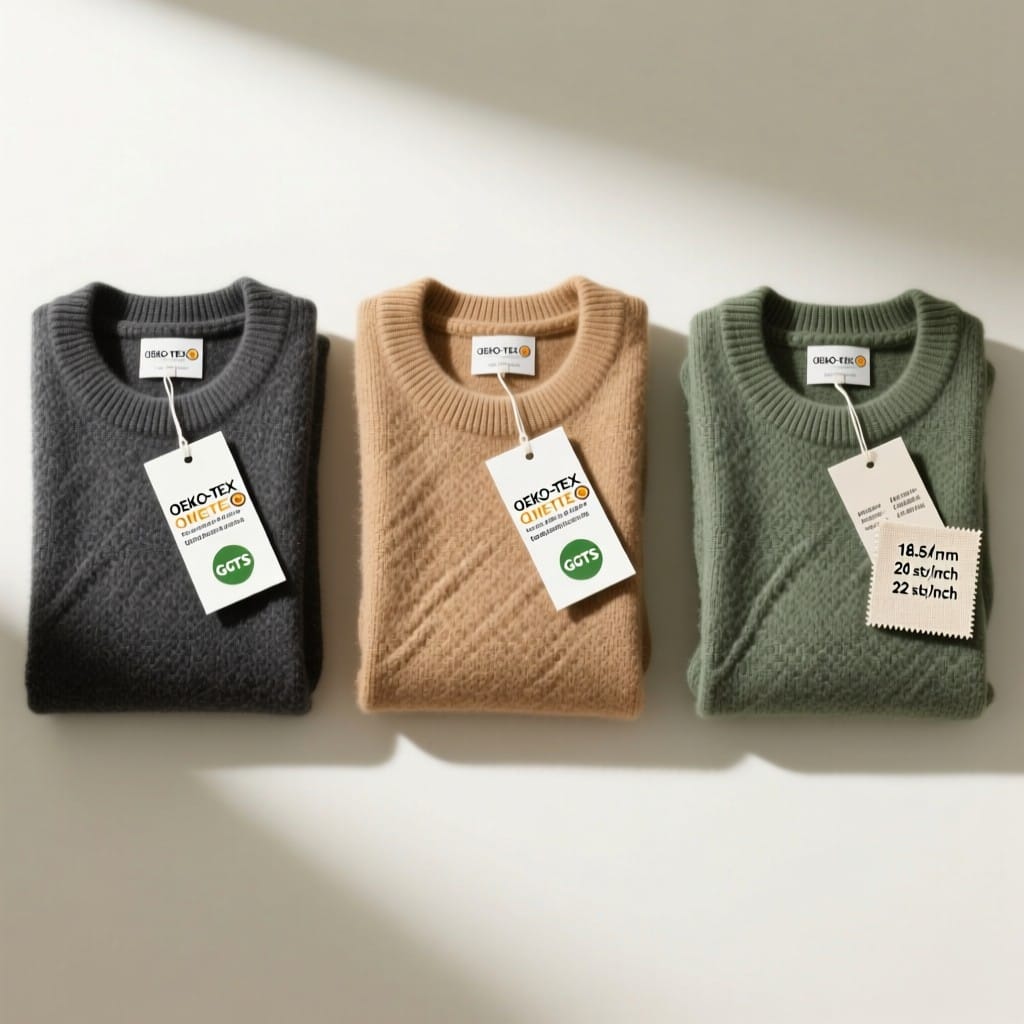
Sweater cost is built from four blocks: yarn, knitting and linking labour, overhead and trims, and compliance testing. In garment manufacturing, raw materials are the largest expense, typically 60% to 70% of the FOB price. The yarn choice—from 100% cashmere to synthetic blends—sets the baseline: Grade A cashmere can exceed $120 per kilogram, while standard acrylic fibers range between $2 and $4 per kilogram. Yarn count, measured in metric count (Nm) or worsted count (Ne), directly influences consumption; a finer Nm 48/2 yarn requires less weight per unit than a bulky Nm 6/2, altering the material bill by 15% to 25% depending on the sweater’s target weight. Accurate costing must also include knitting efficiency and waste: industry-standard yarn waste during knitting and linking runs 2% to 5%, so a 300-gram (size M) men’s pullover may require 315 grams of raw yarn input. Because fiber prices can fluctuate 10% to 15% seasonally, supplier contracts need real-time market indexing to prevent margin erosion.
How do labor metrics and machine gauge affect production efficiency?
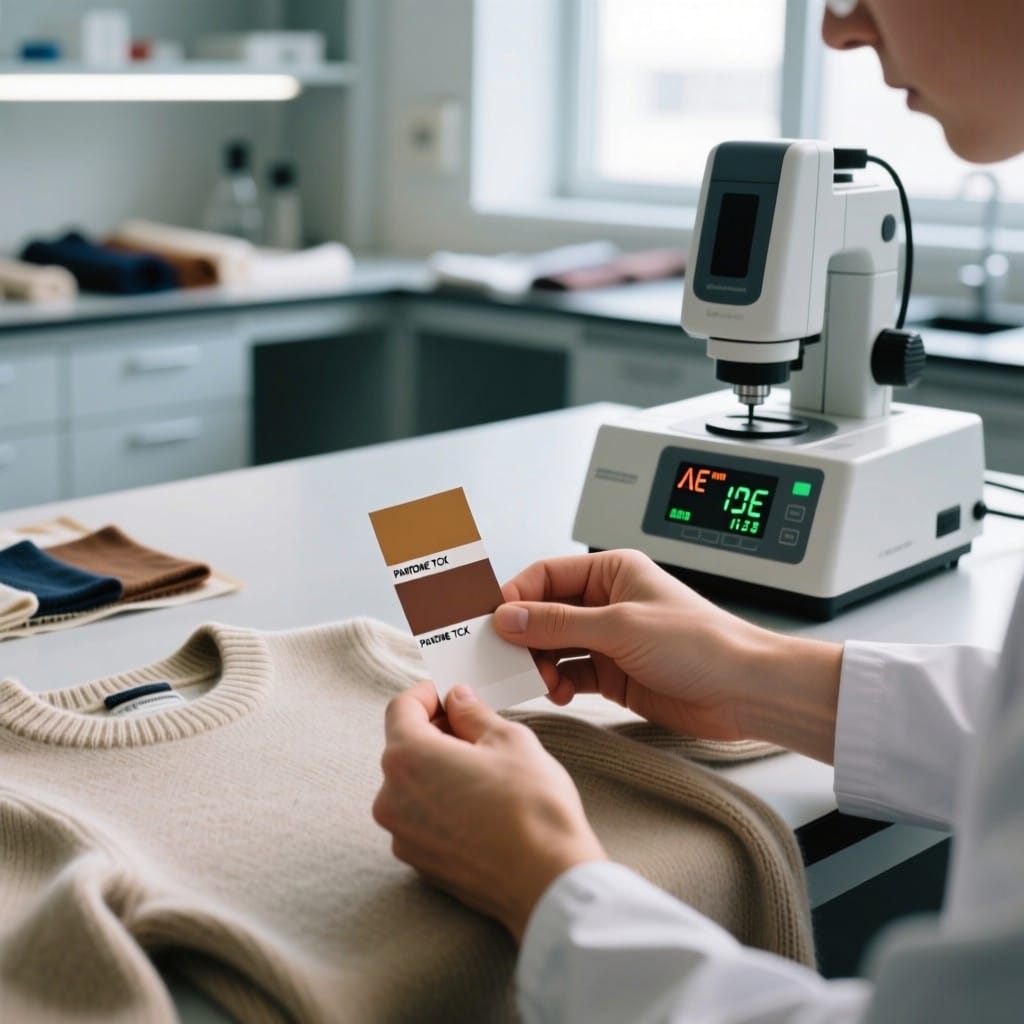
Labor costs in a clothing factory are driven by the Standard Minute Value (SMV) of the garment and the local wage rate. A basic plain knit sweater might have an SMV of 18 to 22 minutes, while a complex cable-knit design can exceed 40 minutes per unit. In China, labor cost per minute may average $0.08 to $0.12, whereas emerging markets may offer $0.04 to $0.06 per minute—a disparity meaning a 40-minute SMV sweater could vary $1.60 to $4.80 per unit purely by geography. (See our related guide: Your Ultimate China Sweater Sourcing Guide.) Machine gauge selection also impacts throughput: a typical computerized flat knitting machine produces 8 to 12 pieces of a 12GG sweater per day, whereas a 3GG chunky knit limits output to 4 to 6 pieces per machine. Consequently, lower gauge products often command processing fees 20% to 30% above standard gauges, due to reduced machine productivity and higher yarn tension requirements.
How are overhead, trims, and freight costs allocated?
Beyond yarn and labor, apparel production incurs substantial overheads related to trims, labeling, and packaging. High-quality trims, such as mother-of-pearl buttons, cost $0.50 to $1.00 per set, compared to $0.02 to $0.05 for standard polyester buttons. Main labels and care labels add $0.10 to $0.30 per unit, while polybagging and carton packing contribute an additional $0.20 to $0.50. Though individually minor, these ancillary costs accumulate to 5% to 10% of total product cost and must be itemized in the Bill of Materials (BOM). Logistics calculations are equally vital, particularly volumetric weight: a standard 20-foot container holds approximately 28 cubic meters (CBM), but inefficient packing can reduce utilization to 22 CBM, effectively increasing per-unit shipping costs by 25%. For custom apparel orders with specialized hangtags or rigid boxes, packaging dimensions can raise volumetric weight by 15% to 20%, impacting FOB or landed costs, so verify quotations include carton dimensions optimized to 60cm x 40cm x 30cm standards. Read more about Top Sweater Suppliers for Fast for additional context.
How can quotation structures and MOQ requirements be analyzed?
When evaluating a manufacturer’s quotation, a line-by-line breakdown is essential to identify hidden margins. A transparent quote should separate yarn cost, knitting cost, linking cost, washing cost, and trimming cost. The linking process (joining panels) accounts for 15% to 20% of total labor cost; a quote bundling this into a generic “CM” (Cut & Make) line may obscure inefficiencies. Reputable garment manufacturing partners provide an “Open Cost” sheet detailing consumption allowances and labor minute rates, allowing engineers to validate calculations against industry benchmarks. Minimum Order Quantity (MOQ) requirements also directly influence unit pricing due to fixed setup costs. A typical MOQ for a stock yarn color is 300 to 500 pieces per style, whereas custom-dyed yarns may require minimums of 1,000 to 3,000 kilograms. Failing to meet these thresholds can trigger surcharges of 10% to 30% to cover dye setup and machine calibration time, so cross-reference the quoted MOQ with the factory’s actual yarn lot capacity to avoid over-pricing on smaller runs.
How should technical specifications align with brand positioning?
The technical specifications of a sweater must align with the brand’s market tier to ensure profitability. For luxury positioning, pilling resistance grades of 4.0 to 5.0 (ISO 12945-2) are mandatory, necessitating higher yarn twist levels and tighter tension settings; this increases knitting time by approximately 10% but reduces return rates caused by fabric degradation. Conversely, value-oriented brands may accept a pilling grade of 3.0, allowing faster production speeds and lower yarn costs, optimizing the product for a sub-$30 retail price point—as detailed in our article on Cardigan vs. Sweater: Key Differences Explained. Dimensional stability is another critical metric dictated by positioning: high-end textile manufacturing standards require shrinkage control within 3% to 5% after washing, achievable through rigorous enzymatic treatments or compaction processes that add $0.30 to $0.60 per unit. Mass-market products may allow tolerances up to 7% to 8% with simpler washing protocols. By specifying these tolerances in the initial tech pack, brands ensure the quote reflects the actual cost of quality control required for the target demographic.
Which factors differ between budget, mid-range, and luxury brands?
Brand positioning drives stark differences in materials, origin, pricing, and markup. The table below summarizes how budget, mid-range, and luxury tiers compare across the key cost and positioning factors.
| Factor | Budget Brand | Mid-Range Brand | Luxury Brand |
|---|---|---|---|
| Material Composition | 100% Acrylic | 50% Merino Wool / 50% Nylon | 100% Cashmere (Grade A) |
| Manufacturing Origin | Mass-produced in Bangladesh | Made in China (ethical audit) | Hand-finished in Italy |
| Average Wholesale Price (per unit) | $8 – $12 | $25 – $40 | $80 – $150 |
| Retail Markup & Positioning | 2.5x – 3x (fast fashion) | 3.5x – 4x (contemporary) | 5x – 8x (heritage / designer) |
| Key Selling Point | Low price, trend-driven | Durability & comfort balance | Exclusivity & craftsmanship |
For a deeper dive, see Sweater Design: Function vs. Quality.
What are the payment terms, MOQs, and lead times?
Standard payment terms are 30% deposit upon order confirmation and 70% before shipment, with wire transfer (T/T) or Alibaba Trade Assurance accepted. The MOQ is 100 pieces per color/style for knitwear and 200 pieces for woven garments, while stock yarn options allow smaller trial orders. Sample production takes 15-20 days; if sourced yarn is required, add 5-7 days for yarn procurement, and samples are charged at 1.5x unit price, refundable upon bulk order confirmation. Bulk production runs 45-60 days from sample approval, with rush orders (20-30 days) available for repeat clients with confirmed yarn stocks.
Which compliance certifications are available?
The supplier supports OEKO-TEX Standard 100, GOTS (organic cotton), GRS (Global Recycled Standard), and BSCI audits. Certification costs are borne by the buyer, and the supplier facilitates the process. These certifications matter especially for mid-range and luxury tiers, where ethical audits and documented material standards form part of the brand positioning described above.
Which cost inputs should a sweater quotation break out separately?
Ask for the quote line by line. Yarn should show fibre, count in Nm or Ne, consumption per unit including 2 to 5% knitting and linking waste, and the price basis; a 300 g men’s pullover typically needs about 315 g of input yarn. Labour should show machine gauge, minutes per piece and linking time. Then add trims, testing, packing, freight and the payment terms, and fix fabric weight per ASTM D3776 so quotes are comparable. Confirm OEKO-TEX STANDARD 100 limit values on the finished article, keep GOTS chain of custody for organic cotton, and agree AQL 2.5 inspection under ISO 2859-1.
Frequently asked questions
What are the main cost blocks in a sweater quotation?
Yarn, knitting and linking labour, overhead and trims, and compliance testing. The article says raw materials are typically 60% to 70% of the FOB price, which makes yarn consumption the first line to check in any quotation review.
How does yarn count affect the material bill?
Yarn count, in metric or worsted count, directly influences consumption: a finer Nm 48/2 yarn requires less weight per unit than a bulky Nm 6/2. The article says that alters the material bill by 15% to 25%.
How much yarn waste should a quote allow for?
Industry-standard yarn waste during knitting and linking runs 2% to 5%. The post illustrates it with a 300-gram size M men's pullover that may require 315 grams of raw yarn input. Buyers should check that allowance rather than accept a single weight figure.
What drives labour cost in a sweater?
The Standard Minute Value of the garment and the local wage rate. The article gives a basic plain knit sweater at 18 to 22 minutes, while a complex cable-knit design can exceed 40 minutes per unit.
Cogarm has manufactured custom knitwear and woven garments in Dongguan, Guangdong, China since 2006. Minimum order is 100 units per style and colourway.

[…] brands asking about cashmere knitwear fabric sourcing, it helps to understand that the key factors are the micron count, the staple length, and the spinning method — all of which affect both […]
[…] audit (e.g., assessing facilities, certifications, and capacity) forms the foundation of supplier evaluation , it alone cannot guarantee product quality. For sweater production—where complexities like […]
[…] related to material compliance. For a new brand, that stability may be worth considering alongside other quality factors. Note that certifications apply to specific facilities and products; always verify current […]