
Cotton Denim Knit & Woven Fabric: A Sourcing Guide for Apparel Brands
When you’re building a clothing line, the fabric you choose determines everything from the drape to the durability. For brands, wholesalers, and sourcing teams, understanding the differences between cotton, denim, and knit fabrics is the first step toward reliable sampling, clear MOQs, and repeatable bulk quality.
At Cogarm, we’ve spent years as a custom woven apparel OEM and sweater manufacturer, helping brands navigate these choices. Here’s what you need to know about cotton denim knit and woven fabrics to make smarter sourcing decisions.
Understanding Cotton Denim Knit: A Versatile Option
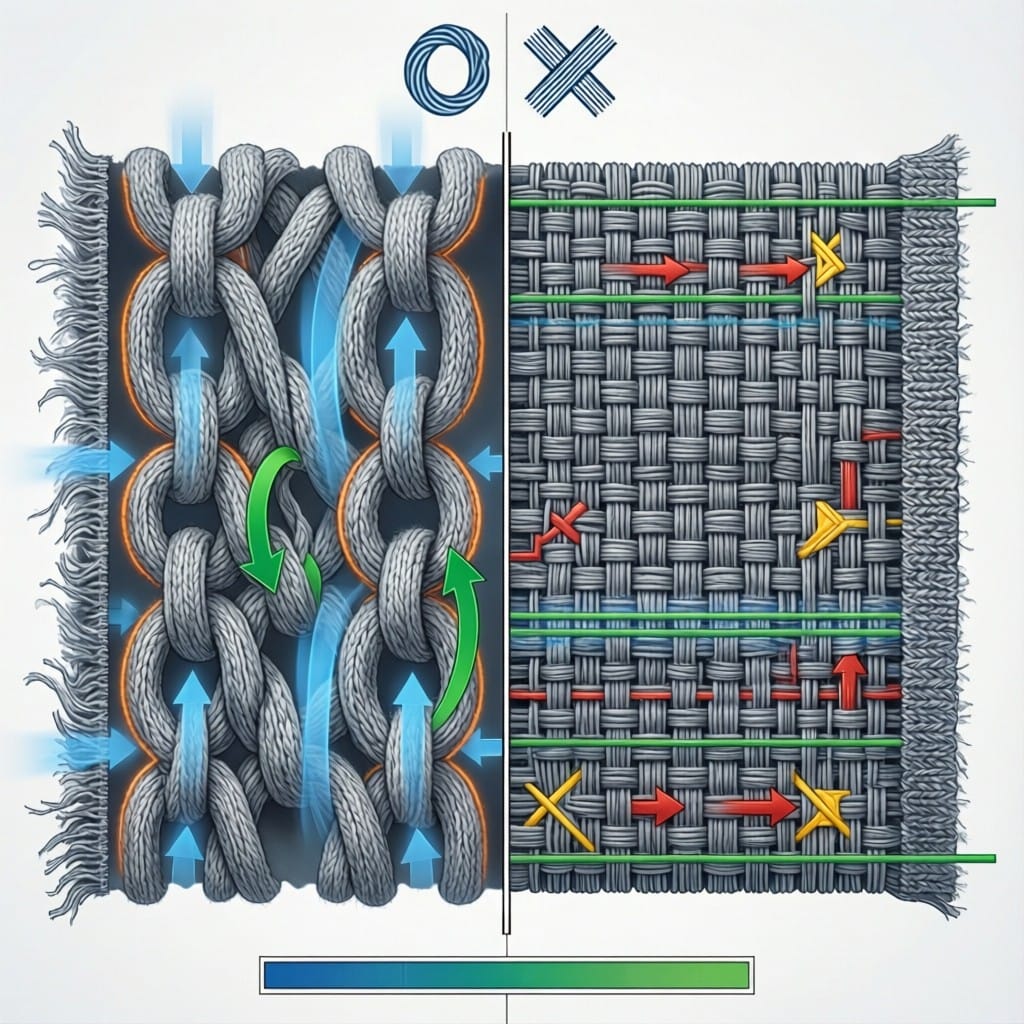
Cotton denim knit is exactly what it sounds like—a knit fabric that mimics the appearance of traditional denim but with the stretch and comfort of a knit. Unlike woven denim, which is rigid and structured, denim knit is made by interlocking loops of yarn, giving it a softer hand feel and natural recovery.
For seasonal collections, denim knit for summer is a favorite because it offers the casual aesthetic of denim without the weight. The looped construction allows more air to circulate, making it a great choice for warm-weather styles like dresses, skirts, and lightweight jackets.
When comparing denim knit vs cotton, it’s worth noting that both are breathable, but the knit structure creates a more open fabric, which enhances airflow. For brands looking to blend style and comfort, cotton denim knit delivers on both fronts.
The Basics of Woven Cotton Fabric
Woven fabric is created by interlacing warp (lengthwise) and filling (crosswise) yarns at right angles. This structure creates a stable, durable fabric with a distinct selvage edge. Common examples include cotton twill, canvas, and poplin.
For a woven shirt manufacturer, cotton twill is a staple because it drapes well and resists wrinkles. The thread count—measured in threads per square inch—affects the fabric’s hand feel and durability. A high thread count often means a smoother surface, which is why premium shirting uses finer yarns.
In our experience as a woven garment manufacturer, we recommend woven fabrics for structured pieces like uniforms, workwear, and tailored shirts. The stability of the weave holds its shape, which is essential for garments that need to look sharp throughout the day.
Denim Knit vs. Cotton Woven: Key Differences
To help you choose, here’s a quick comparison between denim knit and cotton woven fabrics:
| Aspect | Denim Knit | Cotton Woven |
|---|---|---|
| Construction | Interlocking loops | Interlaced warp & filling yarns |
| Stretch | Natural stretch and recovery | Minimal stretch (unless elastane added) |
| Breathability | High – open knit structure | Moderate – depends on thread count |
| Durability | Good, but less abrasion-resistant | Excellent – holds shape well |
| Best For | Casual wear, summer styles, loungewear | Shirts, uniforms, jeans, workwear |
For a uniform supplier factory, woven fabrics are often preferred because they withstand frequent washing and industrial wear. On the other hand, if you’re designing a recreational line, denim knit offers comfort that your customers will love.
What is Denim Knit Fabric and How Is It Made?
Denim knit fabric starts with cotton yarns, often dyed with indigo to achieve that classic blue. The yarns are then knitted on circular or flat knitting machines. The result is a fabric that has the color and texture of denim but the flexibility of a t-shirt.
At Cogarm, we work with various gauges to achieve different weights. For instance, a 12-gauge denim knit is midweight and perfect for cardigans or light jackets, while a 16-gauge is finer, suitable for tops. The gauge number refers to the number of needles per inch—the higher the gauge, the finer the knit.
Because denim knit is breathable, it’s an ideal choice for hot weather. The open loops let heat escape, and the cotton fibers absorb moisture, keeping the wearer dry. For brands targeting tropical climates, this fabric helps bridge the gap between style and function.
Sourcing Cotton Denim Knit: Quality Checks and AQL Inspection
When sourcing denim knit fabric or any woven material, quality control is non-negotiable. At Cogarm, we follow a strict AQL 2.5 inspection protocol. This means that for a given batch, only a small number of defects are permitted, ensuring consistent quality across your order.
We also offer Pantone TCX shade matching within ±1 shade, which is crucial for denim—a fabric notorious for color variation. Whether you’re ordering denim knit for hot weather styles or woven uniforms, our team checks every roll for flaws like slubs, misprints, and irregular stitching.
For a garment AQL inspection, we recommend third-party audits as well. This gives you an independent verification of our quality. In fact, many of our clients in uniform and workwear sectors require this before shipment.
Pricing and MOQ Considerations for Denim Knit
Denim knit price varies based on yarn quality, dyeing complexity, and order volume. As a rule, natural cotton is more expensive than blends, but it offers better breathability and comfort. At Cogarm, we keep our MOQs flexible—100 pieces per color/style for knitwear and 200 for woven—so you can test a new fabric without a massive upfront commitment.
For example, a 12-gauge cotton denim knit might cost slightly more than a polyester-cotton blend, but the hand feel justifies the difference. We recommend ordering lab dips and pre-production samples before committing to a full run. Our sample lead time is 10-15 days, which is faster than the industry average of 35-45 days, so you can move quickly.
Applications: From Workwear to Fashion
As a workwear manufacturer, we see a growing trend toward comfortable yet durable fabrics. While traditional workwear uses heavy canvas, newer designs incorporate denim knit for items like polo shirts and light jackets. The stretch improves mobility, and the cotton content keeps wearers cool during long shifts.
For fashion brands, cotton denim knit offers a unique texture that stands out from standard jersey. It’s perfect for summer dresses, skirts, and accessories. In contrast, woven cotton is a classic choice for tailored shirts and trousers, providing structure and longevity.
Your Sourcing Partner for Quality Garments
At Cogarm, we’re not just a woven shirt factory—we’re a full-service partner for custom apparel. Our certifications, including OEKO-TEX Standard 100 and GOTS, ensure that your fabrics are safe and sustainably sourced. Whether you need denim knit for a new line or woven uniforms for your team, we have the expertise to bring your vision to life.
If you’re comparing denim knit for summer vs traditional woven fabrics, consider the end-use and your customer’s expectations. Both have their place, but understanding the difference is key to a successful product.
FAQ
What is denim knit fabric?
Denim knit is a knitted fabric that mimics the look of traditional denim but has the stretch and breathability of a knit. It's made by interlocking loops of cotton yarn, often dyed with indigo.
Is denim knit good for summer?
Yes, denim knit is breathable and lightweight, making it suitable for warm weather. The open knit structure allows air to flow, reducing heat retention.
What is the difference between denim knit and cotton woven?
Denim knit is stretchy and breathable, ideal for casual wear. Cotton woven is stable and durable, better for structured garments like shirts and uniforms.
How do I ensure quality when sourcing denim knit?
Always request a fabric inspection, such as AQL 2.5, and lab dips to verify shade consistency. Partnering with a certified manufacturer like Cogarm ensures standardized quality.
Can I get denim knit for hot weather?
Absolutely. Look for lightweight denim knit in 16-18 gauge, which is finer and more breathable. Cotton content is key for moisture absorption.
What is the typical price for denim knit fabric?
Prices vary by quality and order volume. At Cogarm, we offer competitive pricing and flexible MOQs. Contact us for a quote based on your specific needs. At Cogarm, we help brands source and manufacture high-quality knitwear and woven garments. Whether you need custom sweaters or workwear uniforms, our team is ready to assist. Reach out to us at steve@cogarm.com or visit www.cogarm.com to discuss your project.
Cogarm has manufactured custom knitwear and woven garments in Dongguan, Guangdong, China since 2006. Minimum order is 100 units per style and colourway.
