

What are the critical tensile strength parameters in sweater manufacturing?
Quick answer: Choosing a sweater for a B2B range comes down to four measurable decisions: fibre and its warmth-to-weight ratio, gauge and stitch density, fit with written tolerances, and care performance after laundering. Test the finished garment rather than the swatch, and set acceptance limits before the purchase order.
Suppliers like Cogarm achieve this by implementing rigorous quality checks at each stage.
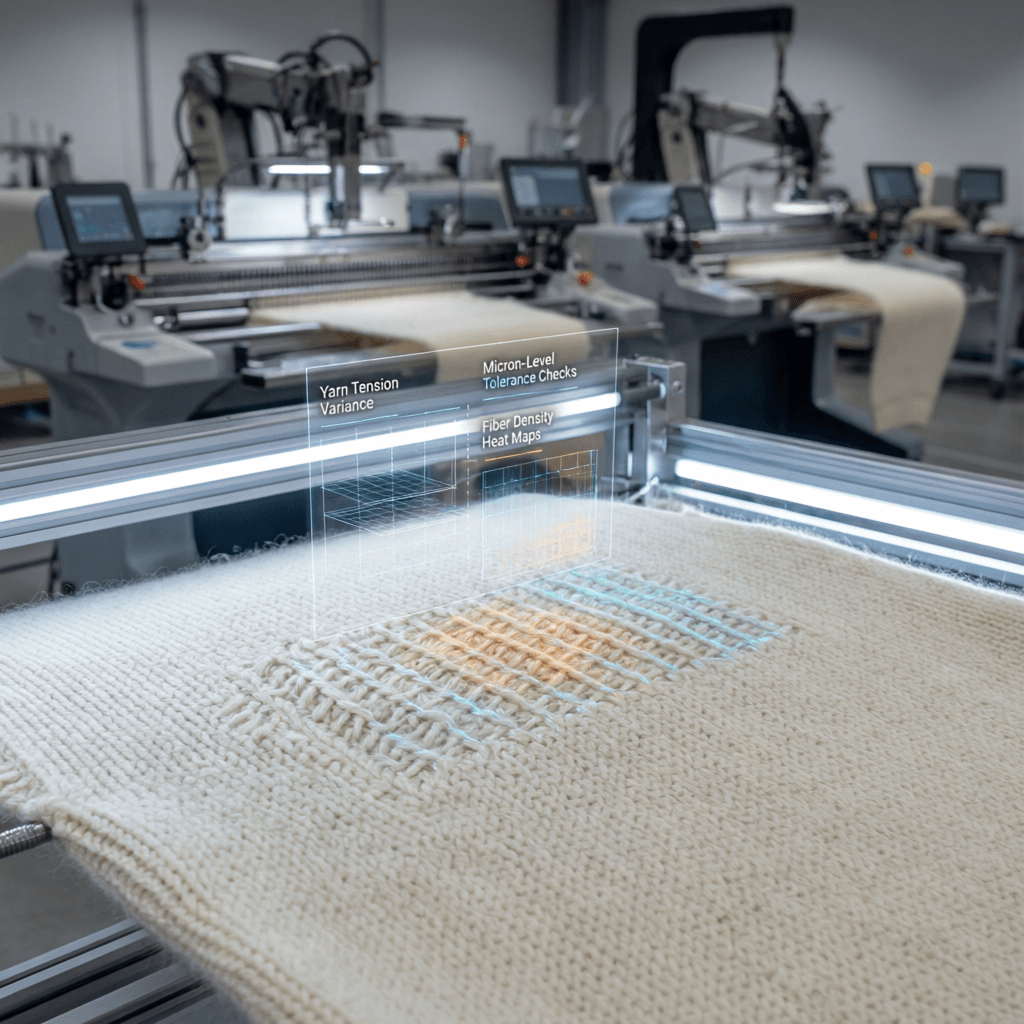
Tensile strength represents one of the most crucial performance metrics in textile manufacturing, directly affecting garment durability and customer retention rates. Industry testing reveals that optimal yarn tensile strength for sweater construction ranges between 12 cN for lightweight fashion pieces and 20 cN for heavy-duty outdoor applications. Manufacturing facilities must calibrate their knitting machinery to maintain consistent tension throughout production runs, as deviations exceeding 15% from specified tensile values result in structural failures within the first 50 wash cycles.
How should tensile testing be implemented in production quality control?
Low-twist yarn configurations typically demonstrate tensile values around 9 cN, making them suitable only for decorative or lightweight layering pieces that experience minimal mechanical stress. Quality assurance protocols should mandate tensile testing every 500 units during production, with rejection thresholds set at 10% below the minimum specified strength. Statistical process control data indicates that maintaining yarn tension within 0.5 cN tolerance reduces defect rates by approximately 23% across large-scale production batches.
(See our related guide: Shop Premium Sweaters: Best Time to Buy.)
For example, Cogarm maintains AQL 2.5 inspection standards across all production batches.
Read more about 5 Key Factors When Buying a Sw for additional context.
How do material composition and fabric selection affect woven sweaters?

When selecting fabrics for woven sweaters, prioritize weave types such as plain, twill, or rib constructions, as each impacts drape, stretch, and durability. For fiber qualities, choose natural options like merino wool for softness and breathability, or cotton for lightweight comfort; synthetic blends with nylon or polyester enhance strength and wrinkle resistance. Weight considerations are critical: light-to-medium weight fabrics (150–250 gsm) suit transitional seasons, while heavier weights (300+ gsm) provide warmth for winter. Care instructions should specify gentle machine washing in cold water with mild detergent, flat drying to prevent distortion, and avoiding high heat to maintain fiber integrity and shape retention.
— as detailed in our article on Woven Sweater Trends: Style Redefined.
What are the frequently asked questions?
What is the minimum order quantity (MOQ)?
MOQ is 100 pieces per color/style for knitwear and 200 pieces for woven garments. Stock yarn options allow smaller trial orders.
For a deeper dive, see Cardigan vs. Sweater: Key Differences Explained.
What is the sample lead time?
Sample production takes 15-20 days. If sourced yarn is required, add 5-7 days for yarn procurement. Samples are charged at 1.5x unit price, refundable upon bulk order confirmation.
What is the bulk production lead time?
Bulk production runs 45-60 days from sample approval. Rush orders (20-30 days) available for repeat clients with confirmed yarn stocks.
What are the payment terms?
Standard terms: 30% deposit upon order confirmation, 70% before shipment. Wire transfer (T/T) or Alibaba Trade Assurance accepted.
What compliance certifications are available?
The supplier supports OEKO-TEX Standard 100, GOTS (organic cotton), GRS (Global Recycled Standard), and BSCI audits. Certification costs are borne by the buyer; we facilitate the process.
How does gauge selection affect cost and market positioning?
When sourcing knitwear, selecting the correct gauge is not merely an aesthetic decision but a fundamental cost and performance driver that dictates factory compatibility. Procurement managers must align gauge specifications with their target retail price point and end-use functionality to avoid production inefficiencies. In Dongguan manufacturing clusters, fully fashioned flat-knit machines are typically categorized by gauge, directly influencing yarn consumption rates and machine runtime per unit.
- Fine Gauge (12GG–16GG): Requires finer yarn counts (e.g., 2/48NM or higher) and longer knitting cycles due to higher needle density. Best suited for lightweight merino or cashmere blend base layers targeting premium retail segments. Expect 15–20% higher CMT (Cut-Make-Trim) costs compared to mid-gauge due to slower machine speeds and increased defect sensitivity.
- Mid-Gauge (7GG–9GG): The industry standard for transitional outerwear and core collection sweaters. Compatible with standard wool/acrylic blends (e.g., 2/30NM). Offers the optimal balance between production speed, durability, and perceived value. Most Dongguan OEMs maintain highest capacity in this range, offering shorter lead times and lower MOQs.
What should buyers know about chunky gauges and yarn-gauge mismatches?
- Chunky/Low Gauge (3GG–5GG): Utilizes thicker yarns and knits faster, reducing machine time. However, material costs constitute a larger percentage of total FOB price. Structural integrity testing is critical here, as low-stitch-density fabrics are prone to snagging and seam slippage if linking tension is not properly calibrated during assembly.
A common procurement pitfall is requesting fine-gauge construction using yarns designed for mid-gauge applications. This mismatch causes excessive yarn breakage, uneven fabric face, and tensile failures that no amount of post-production steaming can rectify. Always request a swatch approval with specified yarn count and gauge before confirming bulk tech packs.
How does garment assembly method affect quality and dimensional stability?
Beyond tensile strength, the method of garment assembly fundamentally determines whether a sweater maintains its silhouette after consumer laundering. For B2B buyers evaluating Dongguan suppliers, distinguishing between full-fashion linking and overlock sewing is essential for quality tier classification. Full-fashion garments are knit to shape with finished edges, then linked stitch-for-stitch at seams. This technique preserves natural elasticity and prevents bulky seam allowances that cause puckering. Conversely, cut-and-sew knitwear relies on overlocked seams, which restrict stretch recovery and increase failure risk at stress points like armholes and necklines.
Additionally, verify that the supplier’s linking operators use appropriate needle sizes relative to gauge. Using a 14G linking needle on a 12G garment creates visible holes at seams, while using a 10G needle on 12G fabric produces stiff, inflexible joints. Request photos of internal seam construction during sample review to confirm linking quality matches spec sheet requirements. This verification step prevents costly rework claims post-delivery, as linking defects are irreversible without complete panel replacement.
How should shrinkage and dimensional stability be verified before bulk production?
Dimensional stability should be verified through standardized shrinkage testing protocols before bulk authorization. Reputable manufacturers conduct wash tests using AATCC 135 or ISO 6330 standards on pre-production samples. Acceptable tolerance thresholds for knitwear typically allow ±3% for length and width on wool-rich compositions, and ±5% for cotton-heavy or loose-gauge constructions. Buyers should require test reports showing both vertical and horizontal shrinkage percentages, as asymmetric shrinkage indicates improper finishing steam pressure or inconsistent knitting tension across panels.
What other questions exist on sweater selection?
What is the optimal tensile strength range for sweater yarns in different applications?
For lightweight fashion sweaters, the optimal tensile strength ranges between 12 cN, while heavy-duty outdoor sweaters require up to 20 cN to ensure durability.
How does improper yarn tension affect sweater quality during production?
Deviations exceeding 15% from specified tensile values can lead to structural failures within the first 50 wash cycles, compromising garment integrity and customer satisfaction.
Why are low-twist yarns limited to specific types of sweaters?
Low-twist yarns typically have tensile values around 9 cN, making them suitable only for decorative or lightweight layering pieces that experience minimal mechanical stress.
What quality control measures should be implemented during sweater manufacturing?
Manufacturers should conduct tensile testing every 500 units, with a rejection threshold set at 10% below the minimum specified strength, ensuring consistent quality throughout production.
Which measurable criteria should drive a sweater range decision?
Use four filters in order. Fibre sets warmth-to-weight and care: wool and cashmere insulate and recover, cotton breathes, blends trade both. Gauge and stitch density set structure, with finer gauges giving a cleaner surface and heavier gauges more volume; measure fabric weight per ASTM D3776. Fit needs written points of measure and a tolerance of 0.5 cm at chest and length. Care performance covers shrinkage and recovery after laundering, tested on the finished garment. Apply them in that order, then compare quotes against the same specification rather than against each other. Confirm OEKO-TEX STANDARD 100 limit values on the finished article, verify wool content through Woolmark where claimed, keep GOTS chain of custody for organic cotton with at least 95% certified organic fibre, and inspect to AQL 2.5 under ISO 2859-1.
Frequently asked questions
Which four factors should a buyer specify before choosing a sweater style?
Fibre and its warmth-to-weight ratio, gauge and stitch density for structure, fit with written tolerances of 0.5 cm, and care performance after laundering. The article recommends testing finished garments rather than swatches and setting acceptance limits before placing the order.
What tensile strength range is appropriate for sweater yarns?
The page reports optimal yarn tensile strength between 12 cN for lightweight fashion pieces and 20 cN for heavy-duty outdoor applications. It notes that deviations exceeding 15% from the specified value produce structural failures within the first 50 wash cycles.
How often should tensile testing be carried out during production?
Quality assurance protocols referenced in the article call for tensile testing every 500 units during production. Low-twist yarns, which sit around 9 cN, are described as suitable only for decorative or lightweight layering pieces with minimal mechanical stress.
Why compare supplier quotes against one written specification?
Because otherwise the quotes are not comparable. The article's framework requires acceptance limits to be set before the order and all suppliers to quote on the same fibre, gauge, tolerance and care requirement, so price differences reflect capability rather than different product assumptions.
Cogarm has manufactured custom knitwear and woven garments in Dongguan, Guangdong, China since 2006. Minimum order is 100 units per style and colourway.
