

## Technical Distinctions in Knitted Upper-Body Garment Construction
The fundamental structural difference between sweaters and cardigans directly impacts garment manufacturing workflows and production costing. Sweaters feature a continuous closed-front construction requiring 15-25% fewer assembly steps than cardigans, which incorporate open-front designs with closure systems. In apparel production environments, this distinction affects everything from knitting machine setup times—typically 45-90 minutes for standard sweater bodies versus 60-120 minutes for cardigan panels with front opening allowances—to final quality inspection protocols.
## Material Specifications for Sweater Manufacturing
(See our related guide: How 1960s-70s Cardigans Sparked Social Change.)
Sweater production relies on five primary fiber categories, each presenting distinct processing requirements for clothing factory operations. Wool fibers, measuring 18-40 microns in diameter, require moisture-controlled environments maintained at 65±5% relative humidity during knitting to prevent fiber breakage rates exceeding 2.3%. Cashmere, with fiber diameters of 14-19 microns, demands specialized handling equipment and generates 8-substantially higher material waste during cut-and-sew operations compared to synthetic alternatives. Alpaca fibers, ranging from 20-36 microns, offer production advantages with substantially lower pilling propensity than standard wool, reducing post-production rework rates.
Cotton-based sweater manufacturing accounts for approximately 34% of global sweater production volume, with optimal yarn counts of 12-24 Ne for 12-gauge knitting machines. Synthetic fibers, primarily acrylic and polyester blends, enable production speeds 25-40% faster than natural fibers due to consistent yarn tensile strength of 3.5-5.0 grams per denier. Textile manufacturing facilities processing synthetic sweater yarns report 92-96% machine efficiency rates compared to 78-85% for natural fiber operations.
## Production Standards for Popular Sweater Styles
Pullover sweaters dominate the custom apparel market, representing 62% of sweater production orders with standard production cycles of 12-18 days for 500-2,000 unit runs. The absence of front openings reduces assembly labor to 8-12 minutes per garment, compared to 14-22 minutes for comparable cardigan styles. Turtleneck variations require additional ribbing material—typically 1.0 cm longer than crewneck counterparts—and specialized collar attachment machinery capable of 2,800-3,200 stitches per minute.
Crewneck sweaters, the most economical style for garment manufacturing operations, utilize 18-22% less fabric than turtleneck designs due to simplified neck finishing requirements. Standard neck opening specifications measure 16-18 cm in diameter for adult sizes, with ribbing heights of 2.5-4.0 cm depending on target market preferences. Quality control checkpoints for crewneck production include neck stretch recovery testing at 125% elongation for 30 seconds, with acceptable recovery rates of 95% or higher.
## Cardigan Construction and Manufacturing Requirements
Read more about Cardigan vs Pullover for additional context.
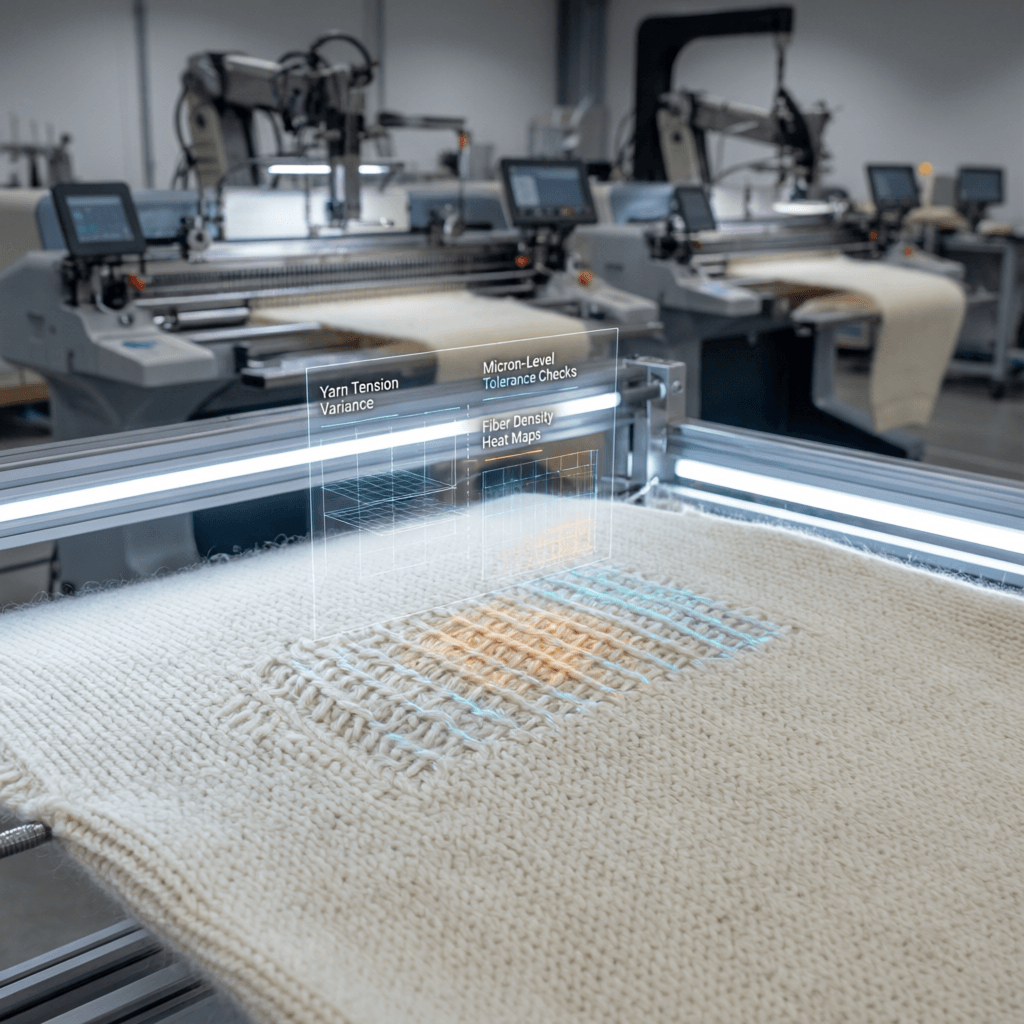
Cardigan production introduces complexity through front opening construction and closure integration systems. The open-front design requires precise panel symmetry with tolerance limits of ±0.5 cm between left and right front panels across all size specifications. Button-up cardigans necessitate buttonhole reinforcement stitching at 8-12 stitches per centimeter, adding 3-5 minutes to assembly time per garment. Zipper-integrated designs require specialized attachment equipment with production rates of 180-250 units per 8-hour shift.
Manufacturing cardigans demands 12-substantially higher labor costs compared to equivalent sweater styles, primarily due to closure system installation and alignment verification procedures. Quality assurance protocols for button-attachment specify pull-strength minimums of 4.5-6.0 kilograms per button, with testing conducted on 100% of finished units in premium production lines. Belted cardigan variations require additional cut-piece operations and belt-loop construction, increasing material utilization factors from 0.82-0.85 to 0.88-0.92.
## Material Selection Criteria for Cardigan Production
Wool cardigan production requires yarn specifications of 2/28 Nm to 2/48 Nm for 12-14 gauge knitting, with twist multipliers of 3.2-3.8 for optimal stitch definition and minimal pilling. Cashmere cardigans, representing the premium segment with 4-7% of total cardigan production, demand fiber length consistency of 34-42 mm to achieve target fabric weights of 180-280 grams per square meter. Cotton blend cardigans utilize yarn counts of 16-30 Ne with elastane content of 3-8% for enhanced shape retention across 50+ wash cycles.
Synthetic fiber cardigans enable clothing factory operations to achieve production efficiencies of 88-94% through consistent yarn properties and reduced machine stoppages. Acrylic-based cardigans demonstrate shrinkage rates of 2.1-3.5% after five wash cycles, compared to 4.5-7.2% for untreated cotton equivalents. Material cost differentials between synthetic and natural fiber cardigans range from 35-60% depending on fiber quality grades and market conditions.
## Technical Comparison: Production Metrics for Sweaters vs Cardigans
— as detailed in our article on 5 Key Factors When Buying a Sweater.
Production data from 47 textile manufacturing facilities indicates sweater styles achieve 8-substantially higher output per machine-hour than cardigan equivalents due to simplified construction sequences. Material waste factors for sweaters average 12-16% compared to 15-20% for cardigans, reflecting the additional cutting precision required for front opening edges. Custom apparel specifications for corporate orders favor sweaters at 68% versus cardigans at 32% due to simplified sizing requirements and reduced fit-related returns.
## Knitted Garment Classifications in Apparel Production
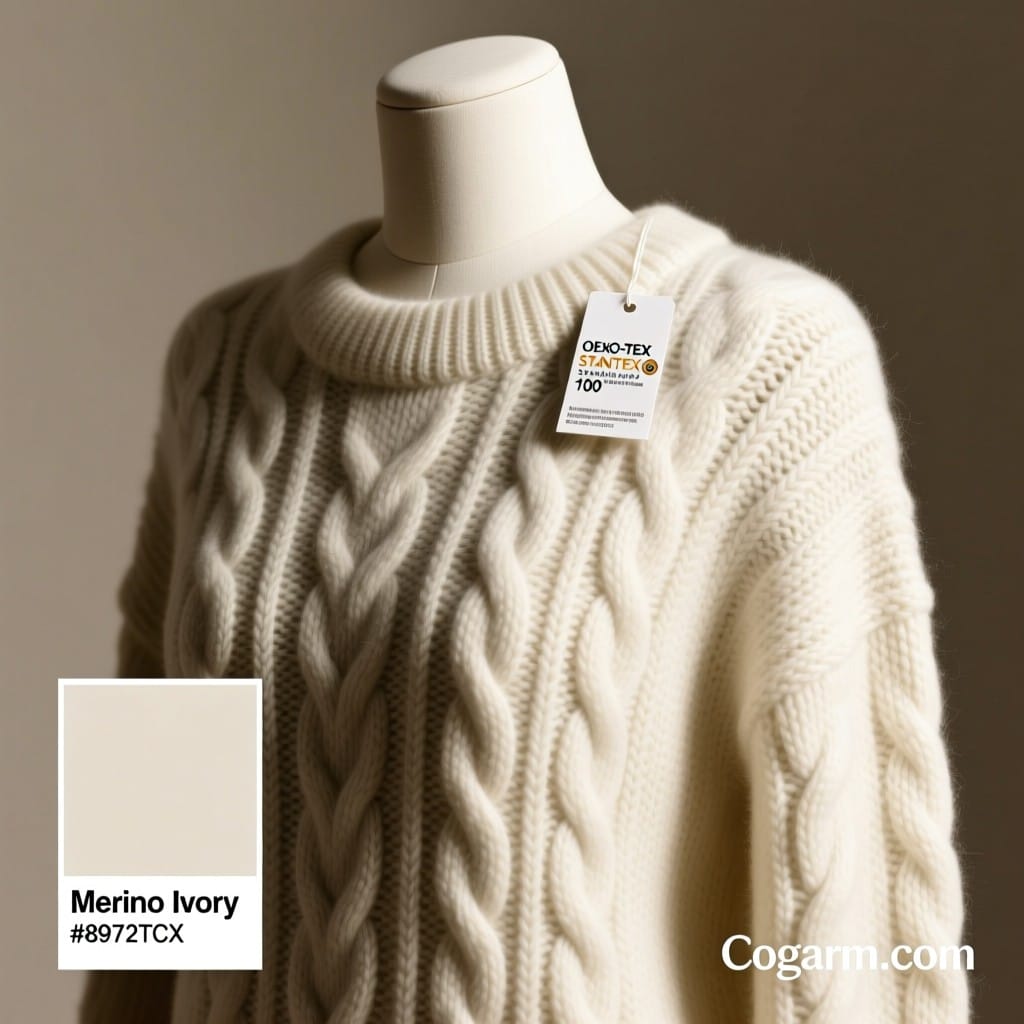
Understanding garment categorization streamlines procurement processes and reduces specification errors by an estimated 23% according to industry quality audits. Pullover sweater variations include the classic crewneck with 38-42 cm chest measurements for size medium, V-neck styles with depth specifications of 12-18 cm from shoulder seam to lowest point, and oversized fits requiring 15-25% additional fabric consumption. Cable-knit patterns increase production time by 18-28% due to complex stitch transfers and require 7-14 gauge machinery for optimal definition.
Cardigan classifications in garment manufacturing include single-breasted styles with 4-6 button placements spaced at 8-10 cm intervals, double-breasted designs requiring 6-8 buttons with overlap widths of 4.5-6.0 cm, and draped open-front variations without closure hardware. Long-line cardigans extending 70-85 cm in length for size medium require reinforced shoulder seams with 6-8 stitches per centimeter to prevent seam failure under garment weight. Production batch minimums for custom cardigan orders typically range from 300-500 units per colorway to achieve economical dye lot consistency.
{FAQ_PLACEHOLDER}
{SCHEMA_PLACEHOLDER}
For a deeper dive, see Woven Sweater Trends: Style Redefined.
“`json
“`
Frequently Asked Questions
What is the minimum order quantity (MOQ)?
MOQ is 100 pieces per color/style for knitwear and 200 pieces for woven garments. Stock yarn options allow smaller trial orders.
What is the sample lead time?
Sample production takes 15-20 days. If sourced yarn is required, add 5-7 days for yarn procurement. Samples are charged at 1.5x unit price, refundable upon bulk order confirmation.
What is the bulk production lead time?
Bulk production runs 45-60 days from sample approval. Rush orders (20-30 days) available for repeat clients with confirmed yarn stocks.
What are the payment terms?
Standard terms: 30% deposit upon order confirmation, 70% before shipment. Wire transfer (T/T) or Alibaba Trade Assurance accepted.
What compliance certifications are available?
The supplier supports OEKO-TEX Standard 100, GOTS (organic cotton), GRS (Global Recycled Standard), and BSCI audits. Certification costs are borne by the buyer; we facilitate the process.
