

Why Do Oversight Protocols Decide Delivery Outcomes in Sweater Sourcing?
Comprehensive oversight protocols decide delivery outcomes because procurement directors managing sweater sourcing must extend beyond standard factory audits and inspection procedures. In garment manufacturing, successful order fulfillment requires systematic coordination across contract negotiation, production monitoring, quality assurance, and logistics management. Industry data indicates that 73% of order delays originate from communication gaps or inadequate production planning rather than manufacturing defects. Traders who establish robust protocols across all operational phases achieve 94% on-time delivery rates compared to 67% for those relying solely on end-line inspections.
What Contract Specifications and Technical Requirements Documentation Are Needed?
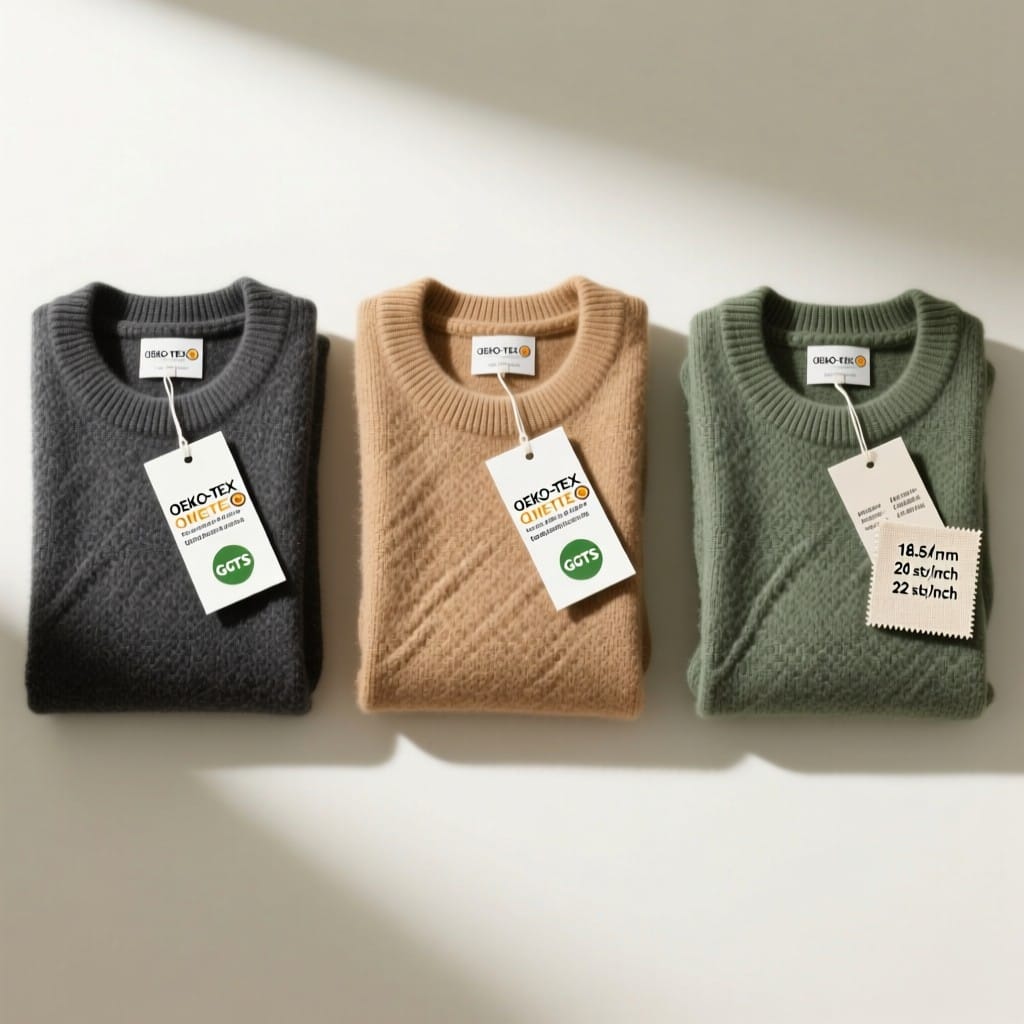
Effective apparel production partnerships begin with meticulously documented contract terms that quantify every technical specification and performance expectation. Contracts must specify measurement tolerances such as 2.0 cm allowable variance in chest circumference for adult sweaters and 1.0 cm tolerance for children’s sizes. Payment structures should tie 15-25% of total contract value to specific quality gate milestones rather than releasing funds based solely on completion dates. Documentation requirements must include technical packs with measurement grade rules, yarn specifications, and stitch density requirements measured in wales per inch. (See our related guide: Premium Sweater Quality & Tracking: Factory Secrets.)
How Are Prototype Approvals, Penalties, and Breach Clauses Managed in Contracts?
Custom apparel contracts require particular attention to prototype approval workflows and revision management protocols. Each revision cycle should be limited to 3 working days with clearly documented feedback mechanisms. Contracts should specify penalties of 0.5-2.0% of order value per week for delivery delays, with maximum penalty caps at 15% of contract value. Quality standards must reference specific measurement points including neck opening tolerances of 1.5 cm and sleeve length variances not exceeding 2.0 cm across size runs. Breach of contract clauses should detail remediation timelines, typically 5-7 business days for minor defects and 14-21 days for significant quality deviations.
How Is Production Capacity Planned?
Clothing factory selection requires rigorous capacity analysis that matches order volumes to realistic production windows. Production planning should calculate daily output capacity at improved efficiency rates rather than theoretical maximum throughput. For sweater manufacturing, standard production rates average 45-65 units per machine per 8-hour shift depending on stitch complexity and gauge requirements. Monthly capacity assessments should account for maintenance downtime, typically 3-5% of available production hours, and seasonal workforce fluctuations that can impact output by 10-15% during peak periods.
How Are Production Schedules Monitored?
Textile manufacturing operations require continuous monitoring against established production schedules with weekly progress reporting. Critical path analysis should identify key milestones including yarn delivery (typically 7-14 days before knitting start), panel completion (40% of production time), linking and assembly (25% of production time), and finishing operations (remaining 35%). Traders should require production reports every 72 hours minimum, with variance alerts triggered when actual progress deviates more than 8% from planned schedules. Early detection of delays enables corrective action within the 5-10 day response window typically available before ship dates are impacted.
What Are Multi-Stage Quality Control Protocols?
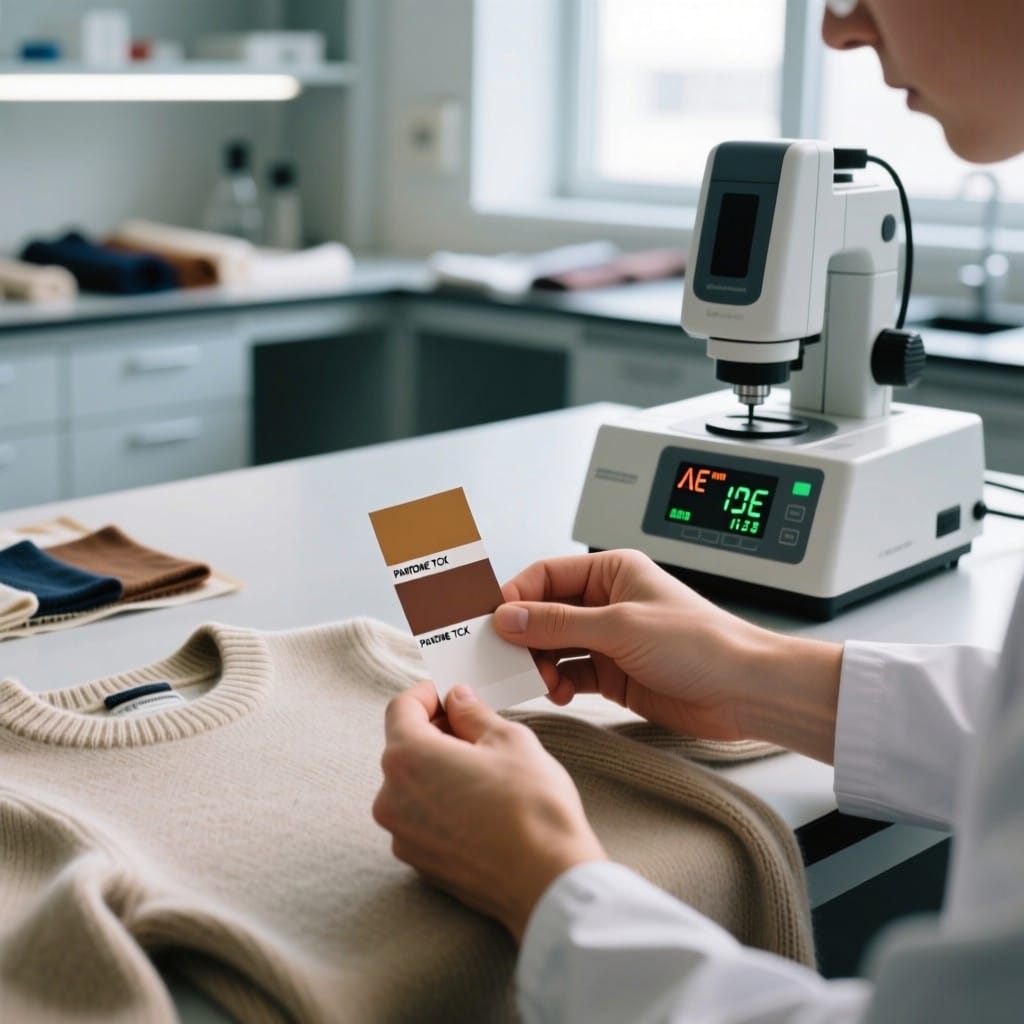
Quality control in garment manufacturing must extend beyond final inspection to encompass in-process verification at critical production stages. Pre-production meetings should verify yarn lot consistency within 24 hours of delivery, with lab dip approvals requiring 2-3 rounds of submission before bulk production authorization. Inline inspections should occur at minimum intervals of every 500 units or every 4 hours of production, whichever occurs first. Measurement verification protocols must check critical dimensions including chest width with 1.0 cm tolerance, shoulder width with 1.5 cm tolerance, and sleeve length within 2.0 cm of specification.
How Effective Are Distributed Checkpoints Compared to End-Line Inspection?
Distributed quality checkpoints are far more effective than end-line inspection alone, which catches only 60-70% of quality issues, whereas distributed checkpoints achieve defect detection rates exceeding 95%. Inspection protocols should specify sample sizes based on AQL 2.5 standards, requiring examination of 125-200 units per 10,000 unit production lot. Defect classification systems must distinguish critical defects (zero tolerance), major defects (maximum 2.5% occurrence), and minor defects (maximum 4.0% occurrence). Rectification procedures should mandate response within 24 hours for critical defects and 48 hours for major defects, with re-inspection of affected production batches before release. Read more about Your Ultimate China Sweater So for additional context.
How Is Logistics Coordinated and Shipment Managed?
Apparel production timelines must integrate logistics planning beginning 21-30 days before scheduled ship dates. Container booking requirements should be finalized 14 days prior to shipment for standard routes and 21 days for seasonal peak periods. Documentation packages including commercial invoices, packing lists, and certificates of origin require 3-5 business days for preparation and verification. Quality inspection completion must occur minimum 5 days before vessel cutoff to allow time for remediation if defects exceed acceptable thresholds.
Transit time calculations should incorporate port congestion buffers of 3-7 days for high-volume shipping periods. Real-time tracking systems should provide location updates every 4-6 hours during ocean transit and hourly during final delivery stages. Insurance coverage should equal 110% of cargo value to account for freight cost recovery in case of total loss. Customs documentation accuracy rates must exceed 99.5% to avoid inspection delays that average 5-12 days for flagged shipments. Logistics partners should maintain performance guarantees with penalty clauses for delays exceeding 48 hours beyond committed delivery windows.
What Risk Identification Strategies Exist?
Comprehensive risk management in textile manufacturing requires systematic identification of vulnerability points across the entire supply chain. Raw material supply risks should be assessed with 30-45 day buffer stocks for critical yarns and 15-20 day reserves for standard materials. Equipment failure contingency planning should verify factory maintenance schedules with preventive maintenance occurring every 500-800 production hours. Backup supplier agreements should be established for critical components, with qualification testing completed within 10-15 days of initial engagement.
How Are Financial and Quality Risks Mitigated?
Financial risk mitigation includes credit insurance coverage for orders exceeding $50,000 value and letters of credit for new supplier relationships under 12 months duration. Production insurance should cover work-in-progress inventory at 80-90% of material value. Force majeure clauses should specify alternative production arrangements within 72 hours of disruption notification. Currency hedging strategies should lock exchange rates for orders with production cycles exceeding 60 days, protecting against the 3-8% currency fluctuations common in international trade. Quality risk reserves should allocate 2-3% of order value for potential remediation costs — as detailed in our article on 5 Key Factors When Choosing a Sweater Factory.
How Is Strategic Partnership Developed for Long-Term Success?
Sustainable custom apparel sourcing requires investment in supplier relationships that extend beyond transactional order placement. Performance review meetings should occur quarterly, analyzing on-time delivery rates, defect frequency trends, and response time metrics. Factories maintaining 95%+ on-time delivery and defect rates below 1.5% should receive priority allocation for future orders representing 15-20% volume increases annually. Joint improvement initiatives targeting 5-improved efficiency gains per year strengthen partnership value while reducing per-unit costs by 2-4% annually.
Why Do Long-Term Partnerships Deliver Better Results?
Technical collaboration programs should include seasonal training sessions covering 8-12 hours of quality standard updates, new construction techniques, and measurement specification refinements. Feedback loops should capture factory insights on design modifications that could reduce production time by 10-15% or improve material utilization by 3-5%. Long-term partnerships averaging 3-5 years duration demonstrate substantially lower defect rates and 18% faster turnaround times compared to transactional supplier relationships. Investment in relationship development yields measurable returns through reduced sampling iterations, typically decreasing from 4-5 rounds to 2-3 rounds for established partnerships.
How Do Key Specifications Compare Across the Order Journey?
The comparison below maps the specifications traders should lock in before production begins, from yarn lead time through shipping terms. Yarn and material lead time requires confirming stock availability, allowing 2–4 weeks for custom-dyed yarn to prevent delays. Sample approval demands a fit sample, strike-off, and size-set with 10–14 days per round so measurements, color, and construction match expectations. Capacity and scheduling require reserved machine time with a typical minimum of 500–1,000 pcs per style, since overbooked factories cause late deliveries. Quality checkpoints pair in-line inspection at 30% with final random inspection at AQL 2.5, while a shipping and Incoterms agreement should specify FOB or EXW, confirm port, container type, and latest shipment date to avoid last-minute freight disputes.
{TABLE_PLACEHOLDER}
{FAQ_PLACEHOLDER}
| Factor | Specification / Detail | Why It Matters |
|---|---|---|
| Yarn & Material Lead Time | Confirm stock availability; allow 2–4 weeks for custom-dyed yarn | Prevents production delays if yarn must be sourced or dyed after order placement |
| Sample Approval Process | Require fit sample, strike-off, and size-set; allow 10–14 days per round | Ensures garment measurements, color, and construction match buyer expectations before bulk production |
| Production Capacity & Scheduling | Factory must reserve machine time; typical minimum 500–1,000 pcs per style | Overbooked factories cause late deliveries; capacity check avoids split shipments or rush fees |
| Quality Control Checkpoints | In-line inspection at 30% and final random inspection (AQL 2.5) | Catches defects (e.g., uneven knitting, color shading) early, reducing rework and shipment rejections |
| Shipping & Incoterms Agreement | Specify FOB or EXW; confirm port, container type, and latest shipment date | Avoids last-minute freight cost disputes and ensures cargo books space before peak season |
“`json
“`
For a deeper dive, see Why Final & Inline Inspections Matter for Sweaters.
What Are the Frequently Asked Questions?
What is the minimum order quantity (MOQ)?
MOQ is 100 pieces per color/style for knitwear and 200 pieces for woven garments. Stock yarn options allow smaller trial orders.
What is the sample lead time?
Sample production takes 15-20 days. If sourced yarn is required, add 5-7 days for yarn procurement. Samples are charged at 1.5x unit price, refundable upon bulk order confirmation.
What is the bulk production lead time?
Bulk production runs 45-60 days from sample approval. Rush orders (20-30 days) available for repeat clients with confirmed yarn stocks.
What are the payment terms?
Standard terms: 30% deposit upon order confirmation, 70% before shipment. Wire transfer (T/T) or Alibaba Trade Assurance accepted.
What compliance certifications are available?
The supplier supports OEKO-TEX Standard 100, GOTS (organic cotton), GRS (Global Recycled Standard), and BSCI audits. Certification costs are borne by the buyer; we facilitate the process.
What Other Questions Exist on Delivery Control?
What percentage of order delays in garment manufacturing are caused by communication gaps or poor production planning?
According to industry data, 73% of order delays in garment manufacturing originate from communication gaps or inadequate production planning rather than manufacturing defects.
How do robust operational protocols impact on-time delivery rates in sweater sourcing?
Traders who establish comprehensive protocols across contract negotiation, production monitoring, quality assurance, and logistics management achieve a 94% on-time delivery rate, compared to 67% for those relying only on end-line inspections.
What is the recommended measurement tolerance for chest circumference in adult sweaters according to contract specifications?
The recommended measurement tolerance for chest circumference in adult sweaters is 2.0 cm allowable variance.
What portion of the total contract value should be tied to quality gate milestones, and what is the recommended range?
15-25% of the total contract value should be tied to specific quality gate milestones.
Which controls actually prevent late delivery in sweater sourcing?
Control the critical path rather than the promised date. Anchor the schedule to sample approval, then book yarn and dye lots against it; a 45 to 60 day bulk window is normal once the sample is signed off. Put an AQL 2.5 inspection plan under ISO 2859-1 in the contract, with in-line checks at knitting, linking and finishing so defects are caught before final inspection. Ask for weekly output and defect data, and agree an escalation path with named owners. Verify chemical and fibre claims in parallel: OEKO-TEX STANDARD 100 limit values on the finished article, and GOTS chain of custody where organic cotton is claimed, with 95% organic fibre required for the organic grade. Book freight capacity before the production end date.
Frequently asked questions
What documentation most affects delivery performance?
A signed specification with measurement tolerances, a milestone schedule tied to sample approval, and technical packs covering grade rules, yarn specification and stitch density. The article reports that most order delays originate from communication gaps or inadequate production planning rather than manufacturing defects.
What monitoring cadence should a buyer require?
Output and defect reports every 72 hours, plus in-line and final inspection to AQL 2.5. The post links these protocols to 94 percent on-time delivery, compared with 67 percent for buyers relying solely on end-line inspection.
How should payment be structured in the contract?
Tie 15 to 25 percent of total contract value to specific quality gate milestones rather than releasing funds on completion dates alone. Penalties and escalation paths then give both sides a defined response when a milestone slips.
When should freight be booked for a bulk order?
Freight should be booked before production ends, so a finished order does not wait on transport. The article treats logistics as part of the same milestone schedule as sampling and inspection, not as a step added once goods are packed.
Cogarm has manufactured custom knitwear and woven garments in Dongguan, Guangdong, China since 2006. Minimum order is 100 units per style and colourway.

[…] and the overall silhouette loses the structure that made it appealing in the first place. This is why many factories and brands prefer working with blends — adding a small percentage of polyester or elastane can […]