

Why does a sweater QC checklist decide brand reputation and customer loyalty?
In the competitive world of fashion, sweater quality isn’t just a detail—it’s a defining factor for brand reputation and customer loyalty. A single loose thread, uneven dye, or misshapen sleeve can turn a potential repeat buyer into a critic. Whether you’re a manufacturer, designer, or retailer, implementing a rigorous quality control (QC) process is non-negotiable. A sweater QC checklist works at four gates: yarn and component approval before knitting, in-line checks on tension, gauge and measurements, final AQL 2.5 inspection, and a wash test on the finished garment. Each gate needs a written acceptance limit, because a defect found at final inspection has already consumed the labour. Below, we break down a comprehensive sweater quality control checklist to help you deliver garments that exceed expectations.
What should material inspection cover before knitting begins?
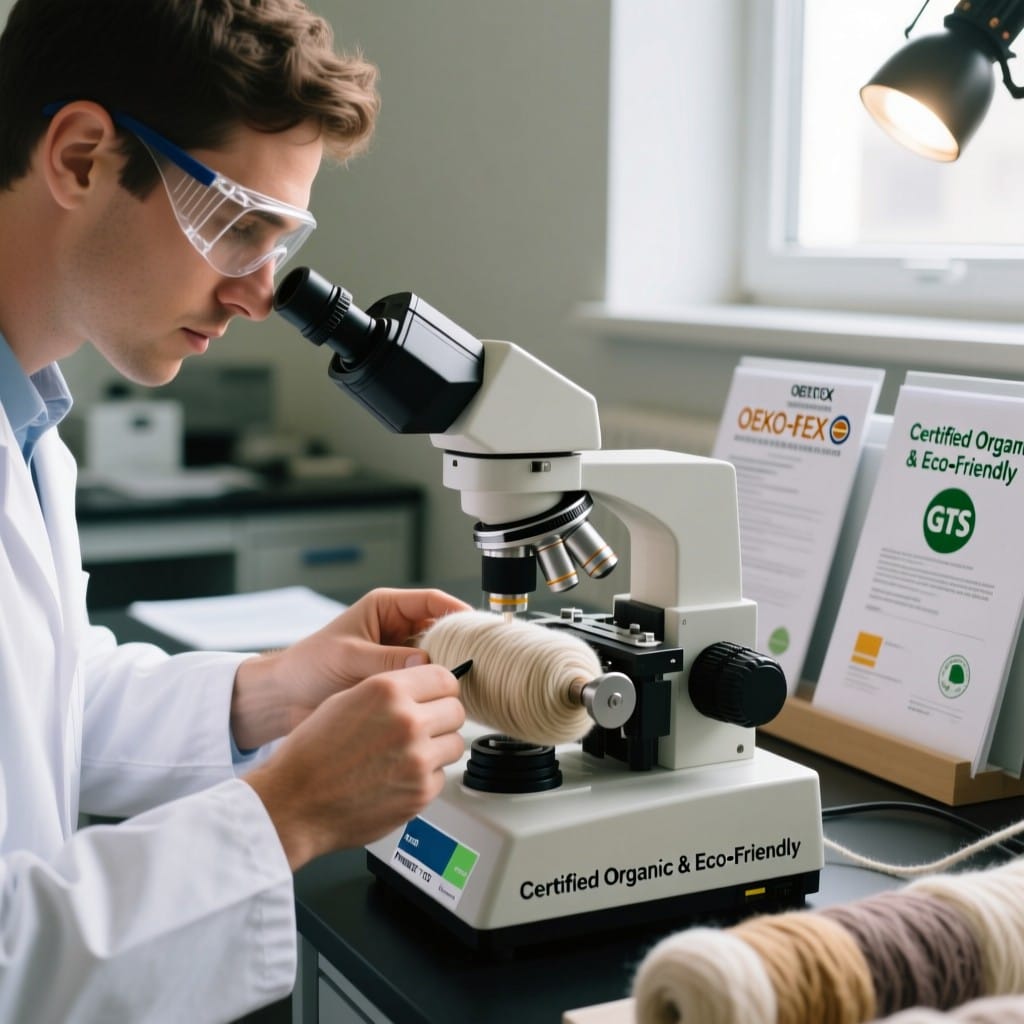
Material inspection must cover yarn integrity, fiber composition, colorfastness and pilling resistance, because quality begins long before the knitting machines start humming. Check for consistency in yarn thickness, texture, and twist, since uneven yarns lead to weak spots or irregular fabric density. Verify that the blend ratio (e.g., 70% wool/30% acrylic) matches specifications using lab tests like burn tests or microscopic analysis. Test for dye bleeding by rubbing a white cloth against the fabric under dry and wet conditions, and use spectrophotometers to ensure color uniformity across batches. Conduct Martindale abrasion tests to predict pilling issues, especially for synthetic blends. As a pro tip, always request pre-production yarn samples and compare them against bulk deliveries. (See our related guide: Why Final & Inline Inspections Matter for Sweaters.)
How do knitting and construction checks shape the anatomy of a perfect sweater?
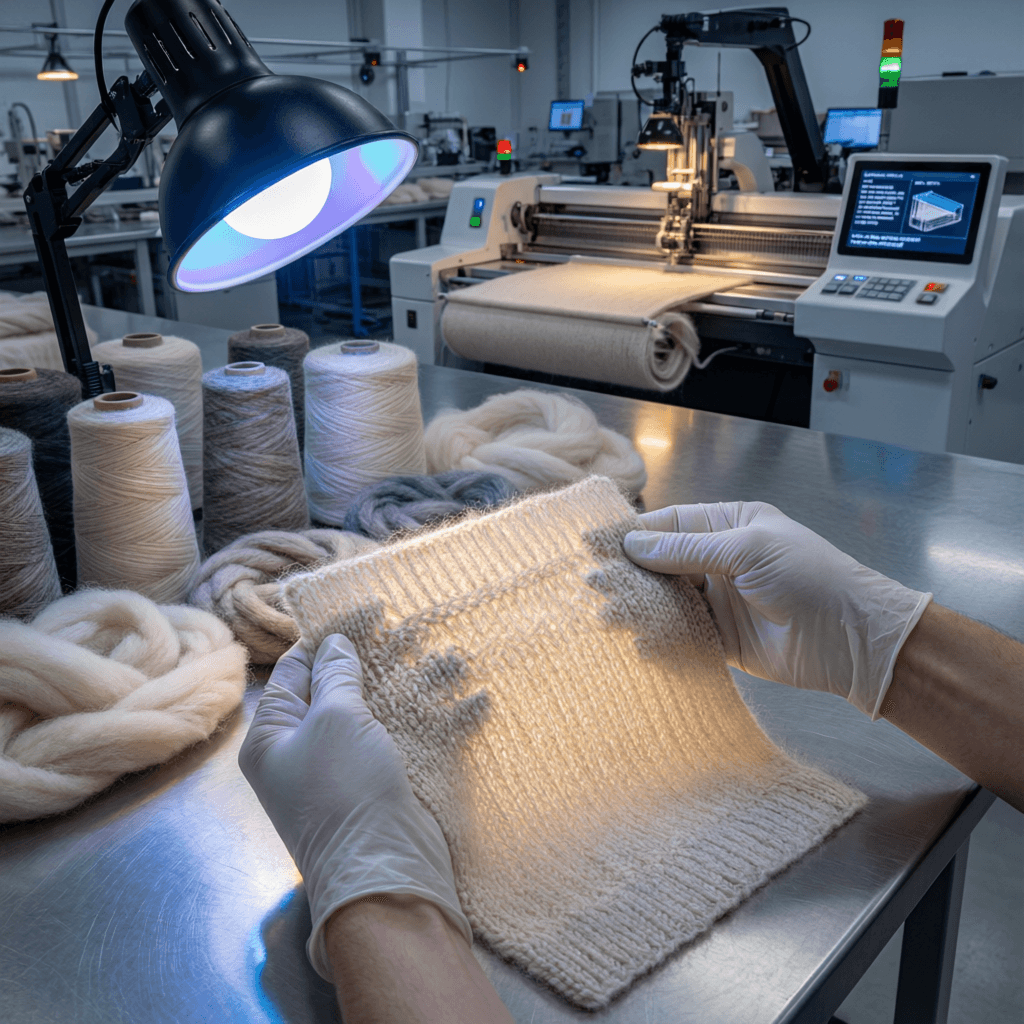
Knitting and construction checks cover gauge consistency, seam integrity, symmetry and defect detection, because flaws at this stage are often irreversible. Measure stitches per inch (SPI) and rows per inch (RPI) to ensure the knitting machine settings align with the tech pack, since variations cause ill-fitting garments. Examine seams for straightness, elasticity, and durability: overlocked seams should lie flat without puckering, and linked seams must not unravel under tension. Lay the sweater flat and compare sleeve lengths, shoulder widths, and armhole depths, because asymmetry exceeding 0.5 cm is unacceptable in premium grades. Finally, inspect for dropped stitches, holes, or “press-off” marks caused by machine stops, and use backlighting to spot subtle irregularities.
Which finishing and aesthetic details matter most in sweater quality control?
The most critical finishing details are trimming, embellishment security, print and embroidery precision, and odor, because even minor finishing flaws can undermine perceived quality. All loose threads—especially at seams, collars, and cuffs—must be clipped, and singeing (controlled burning) ensures a clean finish for synthetic fabrics. Pull-test buttons, zippers, and decorative elements such as beads and sequins to meet safety standards like CPSIA for children’s wear. Check the alignment of prints, logos, or embroidered motifs, and use templates to verify positioning tolerances (e.g., ±0.3 cm). Finally, detect residual chemical smells from dyes or finishes, which may indicate non-compliance with eco-certifications like OEKO-TEX®.
How is dimensional stability tested so that fit stays king?
Dimensional stability is tested through pre-wash testing and stretch recovery checks, because a sweater that shrinks or stretches after washing is a recipe for returns. Wash and dry samples per care label instructions (e.g., machine wash cold, lay flat to dry), then measure dimensional changes—shrinkage beyond 5% is a red flag. For ribbed cuffs, collars, and hems, stretch the fabric to 150% of its length and release; it should rebound to 95% of its original size within 30 seconds. Sweaters that pass both tests will hold their fit through the consumer’s own laundry routine, protecting return rates and reviews.
What labeling and compliance checks help you avoid costly oversights?
Labeling and compliance checks must confirm care labels, fiber content tags and safety certifications, because regulatory errors can lead to fines or shipment rejections. Confirm that care label symbols and text comply with regional standards (e.g., FTC rules for the US, CLP for the EU). Ensure fiber content accuracy—a “100% cashmere” label on a blended sweater is a legal liability. Validate compliance with regulations like REACH (chemicals), CPSIA (lead/phthalates), or CPSIA tracking labels for US imports. Read more about Factory Audit for additional context on evaluating a supplier before these details ever reach the label stage.
How do packaging and a culture of quality complete the checklist?
Packaging and a culture of quality complete the checklist because poor packaging can undo all your QC efforts, and a sweater is a promise to your customer. Use templates to achieve uniform folding consistency for retail displays. Inspect polybag seals for airtight closure to prevent moisture damage during transit, and test scanability of SKU barcode labels to avoid logistical nightmares. Beyond packaging, integrating this checklist into your QC workflow minimizes defects, reduces returns, and builds trust—quality isn’t an expense; it’s an investment in your brand’s legacy. As a final tip, randomly audit 10-15% of each production batch, and never skip pre-shipment inspections, as detailed in our article on 5 Key Factors When Choosing a Sweater Factory.
How do standard and premium QC specifications compare?
Standard and premium QC processes differ across inspection points, defect detection rates, AQL sampling levels and testing intensity, as the table below shows. Suppliers like Cogarm achieve premium results by implementing rigorous quality checks at each stage, from more inspection points per garment to tighter dimensional tolerances and stronger seam minimums. Brands choosing between tiers should weigh the cost of extra inspection time against the reduction in defects, returns and reputational risk that the premium column delivers.
| Quality Control Parameter | Standard QC Process | Premium QC Process |
|---|---|---|
| Inspection points per garment | 12–15 points | 25–32 points |
| Defect detection rate | 85–92% | 96–99% |
| AQL sampling level | Level II (2.5%) | Level III (1.5%) |
| Testing cycles per production batch | 3 cycles | 6–8 cycles |
| Colorfastness rating (ISO 105) | Grade 3–4 | Grade 4–5 |
| Dimensional stability tolerance | ±5% | ±3% |
| Seam strength minimum | 80 N | 120 N |
| Average inspection time per unit | 4–6 minutes | 8–12 minutes |
What do the frequently asked questions reveal about AQL and dimensional standards?
The most frequently asked questions concern acceptable quality limits and post-wash dimensional tolerances. For standard sweater production, Cogarm strictly adheres to an AQL of 2.5 for major defects and 4.0 for minor defects, ensuring that the probability of accepting a batch with quality issues remains below 5%; it maintains AQL 2.5 inspection standards across all production batches. Its quality control checklist mandates that high-quality woven sweaters must not exceed a dimensional change of more than 3% in length or width after the standard washing test to ensure fit integrity. For a deeper dive, see Premium Sweater Quality & Tracking: Factory Secrets.
What other QC tolerance questions should buyers ask suppliers?
Other key questions cover pilling resistance, colorfastness, seam strength and measurement tolerances. To guarantee long-term appearance retention, premium yarn blends require a minimum pilling resistance rating of Grade 3.5 to 4.0 on the Martindale scale. Procurement standards specify that colorfastness to washing and rubbing must achieve a minimum rating of Grade 4 on the grey scale to prevent dye transfer and fading. Seam strength is verified through rigorous tests where seam slippage must not exceed 6mm under a standard load, ensuring the garment structure remains intact during consumer use. For garment measurements at final inspection, inspectors apply a strict tolerance of +/- 1.0 cm for chest and waist measurements, and +/- 1.5 cm for total body length, to maintain consistency across size specifications.
Why do material-level questions dominate QC checklist discussions?
Material-level questions dominate because yarn and fibre decisions determine every downstream defect. Material inspection is critical because it ensures the foundation of the sweater—yarn and fiber quality—is consistent and meets specifications; issues like uneven yarn thickness, incorrect fiber composition, or poor colorfastness can lead to defects such as weak spots, dye bleeding, or pilling, directly impacting durability and customer satisfaction. Manufacturers can verify fiber composition through lab tests such as burn tests or microscopic analysis, which accurately identify the blend ratio (e.g., 70% wool/30% acrylic) and ensure it matches the agreed-upon specifications. Colorfastness is tested by rubbing a white cloth against the fabric under both dry and wet conditions to detect dye bleeding, while spectrophotometers measure and ensure color uniformity across different batches. Pilling resistance testing, such as Martindale abrasion tests, predicts how well the fabric will resist surface fuzzing and pilling over time, helping maintain the sweater’s appearance and perceived quality after repeated use.
Which QC checkpoints catch sweater defects before final inspection?
Place acceptance limits at four gates. Before knitting, approve yarn lot, count and colour against the sealed standard. In-line, check gauge, stitch density and measurements at fixed intervals and record rework. At final inspection, apply AQL 2.5 under ISO 2859-1 and classify defects as critical, major or minor; measurements outside tolerance and broken seams are majors. After inspection, wash a production sample, dry it and re-measure, because relaxation exposes shrinkage the flat garment hides. Confirm OEKO-TEX STANDARD 100 limit values on the finished article, keep GOTS chain of custody for organic cotton with at least 95% certified organic fibre for the organic grade, and file every result so the next order starts from data rather than memory.
Frequently asked questions
What are the four quality control gates in the checklist?
Yarn, count and colour approval before knitting; in-line checks on gauge, stitch density and measurements; final inspection to AQL 2.5 under ISO 2859-1; and a wash test on a production sample with re-measurement for shrinkage.
What does material inspection cover before knitting starts?
Yarn integrity, fibre composition, colourfastness and pilling resistance. The post recommends checking thickness, texture and twist consistency, and verifying the blend ratio with lab tests such as burn tests or microscopic analysis, because uneven yarn creates weak spots.
Which standard applies to final inspection?
AQL 2.5 under ISO 2859-1. Every gate in the checklist needs a written acceptance limit, because a defect found at final inspection has already consumed the labour that produced it, which is why the earlier gates carry equal weight.
Why wash-test a production sample?
Because dimensional stability only appears after laundering. The article places the wash test after final inspection and requires re-measurement against the specification, so shrinkage is measured on bulk fabric rather than assumed from a lab swatch.
Cogarm has manufactured custom knitwear and woven garments in Dongguan, Guangdong, China since 2006. Minimum order is 100 units per style and colourway.

[…] PP approval is a checkpoint with rules. The buyer inspects against the size chart and the tech pack, consolidates comments once, and signs or rejects — no verbal approvals, no “looks fine, carry on” by chat message. After sign-off, the sealed PP sample becomes the bulk inspection reference: measurement variance, colour shade and construction are all checked against it, and a change requested after sign-off is a program revision with procurement and QC consequences, not a note to the floor. The inspection framework that runs against the sealed sample is laid out in the sweater quality control checklist. […]
[…] the checkpoint list in detail, the sweater quality control checklist maps every stage from yarn intake to […]