
Why does an engineering gap exist in early-stage apparel development?
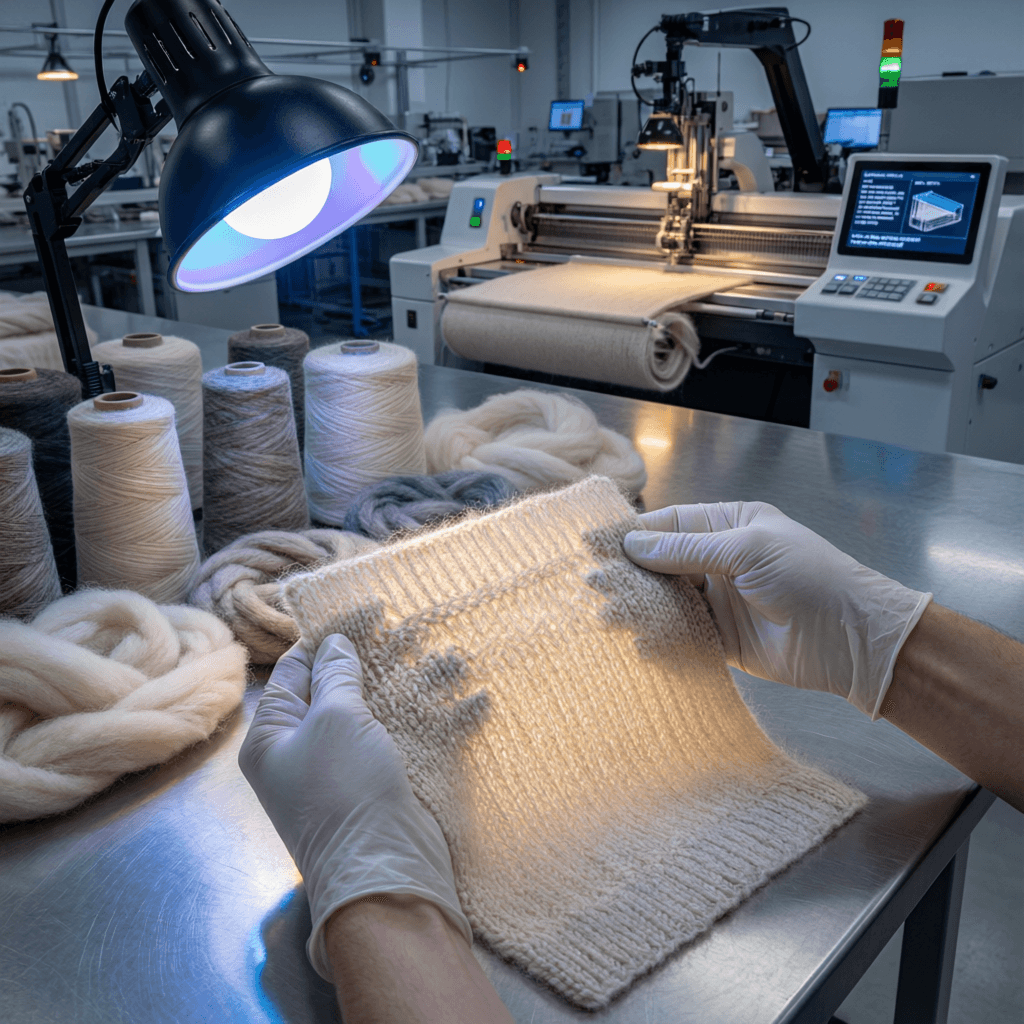
Major innovators have conditioned B2B buyers to expect rapid prototyping cycles where design intent translates immediately into functional hardware. In the textile sector, however, a significant disconnect often remains between digital design files and physical garment reality. Brands frequently encounter delays when switching between knitwear specialists and cut-and-sew factories, leading to inconsistent tension, mismatched hand-feel, and costly reworks. This fragmentation is particularly acute in technical apparel, where the performance of a Merino wool blend or a structured woven panel depends entirely on the precision of the initial prototype.
The cost of these inefficiencies is measurable. When a brand sources knits from one vendor and wovens from another, the integration phase often reveals compatibility issues that were invisible in isolation. For instance, a sweater sleeve may not align with a woven body panel due to differing shrinkage rates or gauge tolerances. Addressing these issues during mass production rather than prototyping can inflate costs by 15-20%. Effective prototyping demands a unified approach where material sourcing, knitting, and assembly are coordinated under a single quality framework. (See The Role of Computerized Flat-Bed Knitting in Modern Fashion.)
How do knit and woven prototyping differ in technical specifications and lead times?
Knitwear relies on loop interlocking, offering inherent stretch and comfort, while woven garments depend on yarn interlacing, providing structure and durability. The table below compares key technical parameters for prototyping these two categories using Cogarm’s dual-base capabilities in Dongguan.
| Parameter | Knitwear Prototyping (Dalang Base) | Woven Garment Prototyping (Humen Base) |
|---|---|---|
| Primary Gauge Range | 3GG–18GG (3-5GG chunky, 12-18GG fine) | N/A (Thread count dependent) |
| Fiber Micron Thresholds | Merino 17-24µm; Cashmere ≤15.5µm | N/A (Yarn twist/denier dependent) |
| Sample Lead Time | 15-20 days + 5-7 days for sourced yarn | 15-20 days standard |
| Minimum Order Quantity | 100 pcs per colour/style | 200 pcs per colour/style |
| Production Timeline | 45-60 days from sample approval | 45-60 days from sample approval |
| Shrinkage Control | High variability; requires relaxation testing | Low variability; stable dimensional integrity |
| Seam Construction | Linking or overlock; elastic recovery focus | Flat-felled or French seam; strength focus |
| Color Matching Standard | Pantone TCX matching required | Pantone TCX matching required |
The data indicates that knitwear prototyping involves more variable lead times due to yarn sourcing, particularly for specialized fibers like superfine Merino (≤18.5µm) or GRS-certified recycled wool. Woven prototypes, while requiring higher MOQs for production runs, offer more predictable dimensional stability during the sampling phase. Both categories benefit from Pantone TCX matching to ensure color consistency across different material types in hybrid designs.
How can hybrid technical layers be validated in real-world applications?
Consider a technical outerwear brand developing a mid-layer sweater with woven reinforcement panels. The prototype must validate that the 7-10GG midweight knit body provides adequate thermal regulation without bulk, while the woven shoulder panels offer abrasion resistance. Using a disjointed supply chain, the brand might receive a knit sample that shrinks 5% after washing, while the woven panel remains static, causing seam puckering. Read more about Quality Control Protocols for for additional context.
By utilizing Cogarm’s dual-base manufacturing in Dongguan, engineers can coordinate these elements simultaneously. The Dalang facility produces the knit body using Merino wool blends with precise gauge control, while the Humen facility prepares the woven components, allowing a unified AQL 2.5 inspection standard across the entire garment. A recent project involved a Cashmere-Merino blend where the fiber diameter was strictly controlled at ≤15.5µm for the cashmere component to ensure softness, while the Merino provided structural integrity. The prototype phase confirmed that linked seams maintained elasticity despite the woven inserts—a validation impossible with separate vendors.
How can dual-base manufacturing be leveraged for faster iteration?
Cogarm’s operational model addresses the fragmentation issue by housing specialized knitwear and cut-and-sew operations within the same regional ecosystem in Dongguan. The Dalang base focuses exclusively on premium knitwear, utilizing machines capable of 3GG to 18GG gauges, while the Humen base handles complex cut-and-sew woven garments. This proximity reduces logistical friction and enables faster communication between technical teams.
For procurement managers, this structure offers distinct advantages:
- MOQ Flexibility: Minimums start at 100 pieces for knitwear and 200 for woven items, so brands can test market response with lower financial risk.
- Rapid Sampling: The 15-20 day sample lead time, plus 5-7 days for specialized yarn sourcing, allows quicker design iterations compared to traditional offshore models.
- Compliance Integration: Global compliance standards such as OEKO-TEX, GOTS, and GRS are integrated directly into sourcing, ensuring prototypes meet final production regulatory requirements.
This dual-base strategy ensures that whether you are sourcing a simple acrylic blend or a complex GOTS organic cotton woven shirt, technical specifications are maintained from first sample to final shipment — as detailed in Minimizing Waste in High-Volume Garment Manufacturing.
What are the frequently asked questions?
What is the typical lead time for sourcing specialized yarns for prototypes? Specialized yarns, such as superfine Merino or GRS-certified recycled wool, typically add 5-7 days to the standard 15-20 day sampling lead time.
How does Supplier ensure color consistency across knit and woven components? The supplier uses Pantone TCX matching for all materials, ensuring dyed yarns for knitwear and fabrics for woven garments meet the same color tolerance standards. For a deeper dive, see How Laser Cutting Improves Accuracy in Complex Patterns.
What is the minimum order quantity for custom knitwear prototypes? The MOQ for custom knitwear is 100 pieces per colour and style, allowing for efficient pilot runs and market testing.
Can you produce garments with mixed fiber blends like Cashmere-Merino? Yes, we regularly produce blends such as Cashmere-Merino, ensuring fiber diameters are controlled (e.g., Cashmere ≤15.5µm) to maintain quality and hand-feel.
What inspection standard is applied to final production runs? All production runs undergo AQL 2.5 inspection to ensure defect rates remain within acceptable international standards for premium apparel.
How can a prototyping workflow be optimized for production success?
Effective prototyping is not just about creating a sample; it is about validating the manufacturability of your design. By leveraging specific data points such as fiber micron counts, gauge ranges, and lead time variables, brands can make informed decisions early in the development cycle. The supplier’s dual-base manufacturing model in Dongguan provides the technical depth and operational flexibility needed to bridge the gap between design concept and commercial reality. Request a compliant sample with full CoC documentation from the supplier to validate your next technical apparel collection.
Image Attachment

How long should knit and woven prototyping take for technical apparel?
Plan two tracks and one approval gate. Knit prototypes move faster because panels are knitted to shape and a gauge change is a machine setting; woven prototypes carry pattern making, cutting and sewing rounds, so each iteration costs more calendar time. Running them with separate specialists creates the hand-off delay where tension and hand-feel drift, which is why a dual-base supplier shortens the loop. Fix micron and gauge thresholds, fabric weight per ASTM D3776, and fit tolerances in the tech pack before sampling, then approve a sealed reference. Confirm OEKO-TEX STANDARD 100 limit values on the finished article, keep GOTS chain of custody at 95% or more certified organic fibre, and inspect to AQL 2.5 under ISO 2859-1.
Frequently asked questions
How long do knit and woven prototypes take?
Knit prototypes typically take 15 to 20 days, plus 5 to 7 days when specialty yarns have to be sourced. Woven prototypes take 15 to 20 days standard. Because knits iterate faster, the article recommends planning parallel sample tracks.
Where does the engineering gap come from?
From switching between knitwear specialists and cut-and-sew factories. Tension, hand-feel and gauge tolerances differ between vendors, and the incompatibility only appears when the parts are assembled, which is why unified coordination under one quality framework matters.
What does fixing issues in production rather than prototyping cost?
Fifteen to twenty percent, according to the article. A sweater sleeve that does not align with a woven body panel because of shrinkage or gauge differences is cheap to correct at prototype stage and expensive once the style is in mass production.
When does bulk production start?
After sample approval, running 45 to 60 days. Fabric, gauge and fit should be approved before bulk, and the article suggests a dual-base partner so the hand-off between knit and woven development does not add delay to the critical path.
Cogarm has manufactured custom knitwear and woven garments in Dongguan, Guangdong, China since 2006. Minimum order is 100 units per style and colourway.

[…] — as detailed in our article on How to Prototype Technical Apparel Effectively. […]