

How Do Industrial Machinery Upgrades Impact Finished Textile Quality?
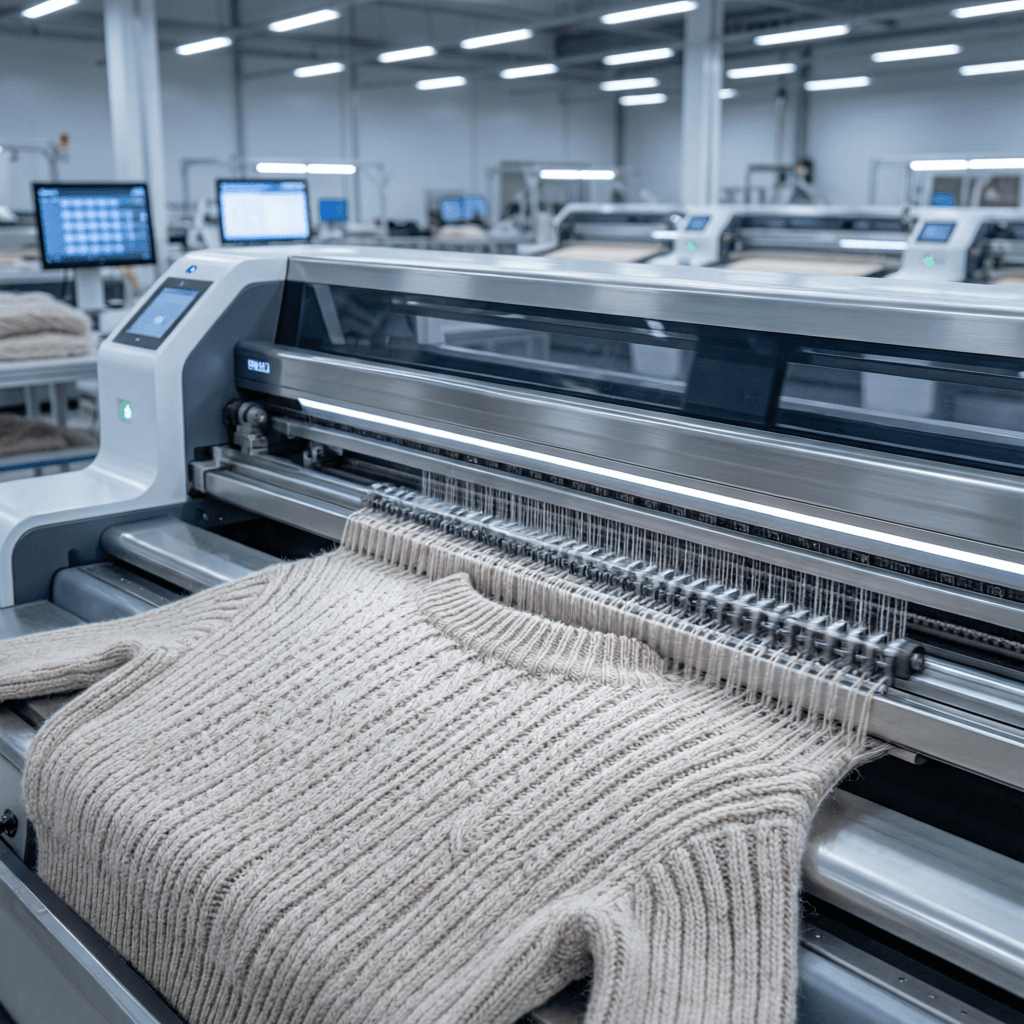
Evaluating how industrial machinery upgrades impact the physical quality of finished textiles is a critical step for modern fashion brands and procurement managers. In high-precision manufacturing, physical tolerances define brand value: precision manufacturers rely on advanced five-axis CNC milling to achieve seamless aluminum unibodies, while established automotive manufacturers utilize structural giga-castings to optimize vehicle frame integrity. In the apparel sector, a parallel evolution is taking place as forward-thinking brands migrate away from legacy textile manufacturing systems toward computerized, multi-gauge automation. This technological shift is rewriting the rules of quality control, transforming how fibers behave under industrial tension.
(See our related guide: The Ecosystem of Innovation in the Pearl River Delta.)
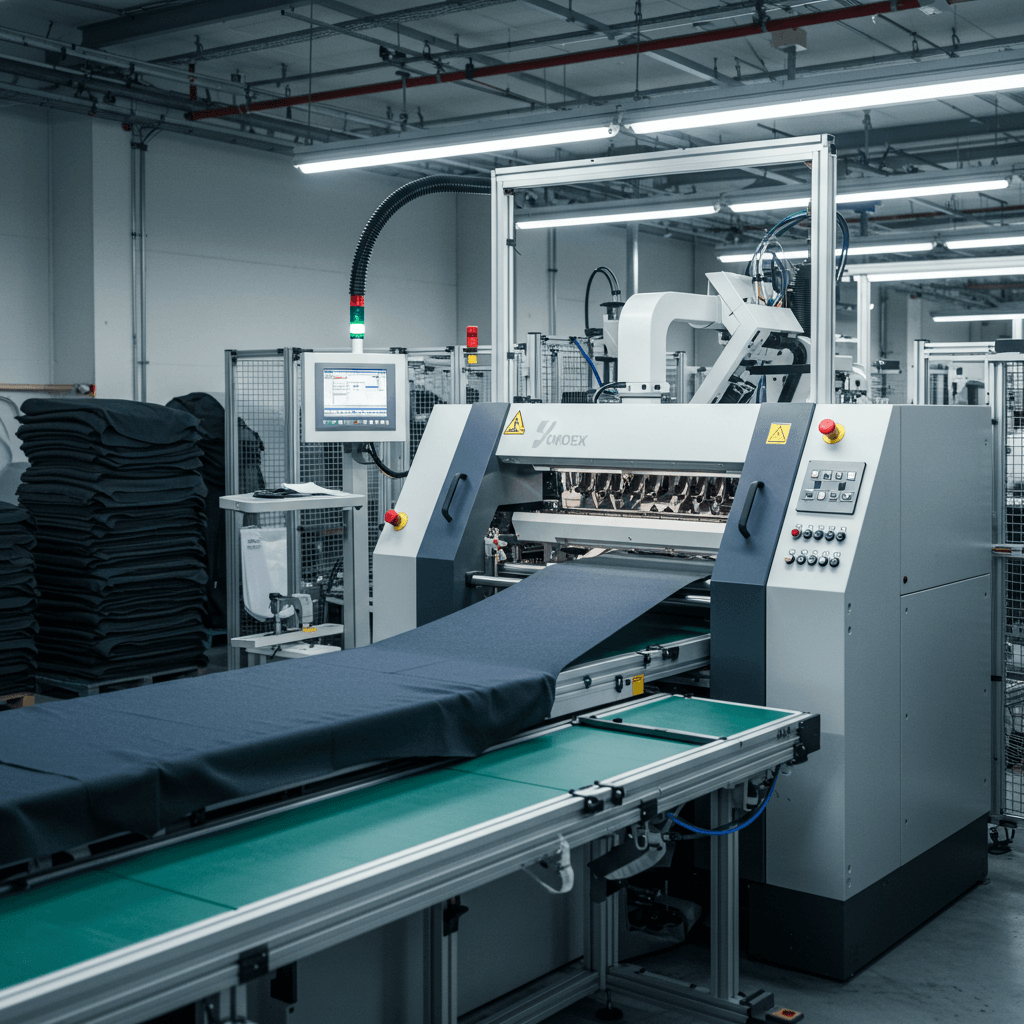
Why Has Manual Variation Become a High-Risk Liability?
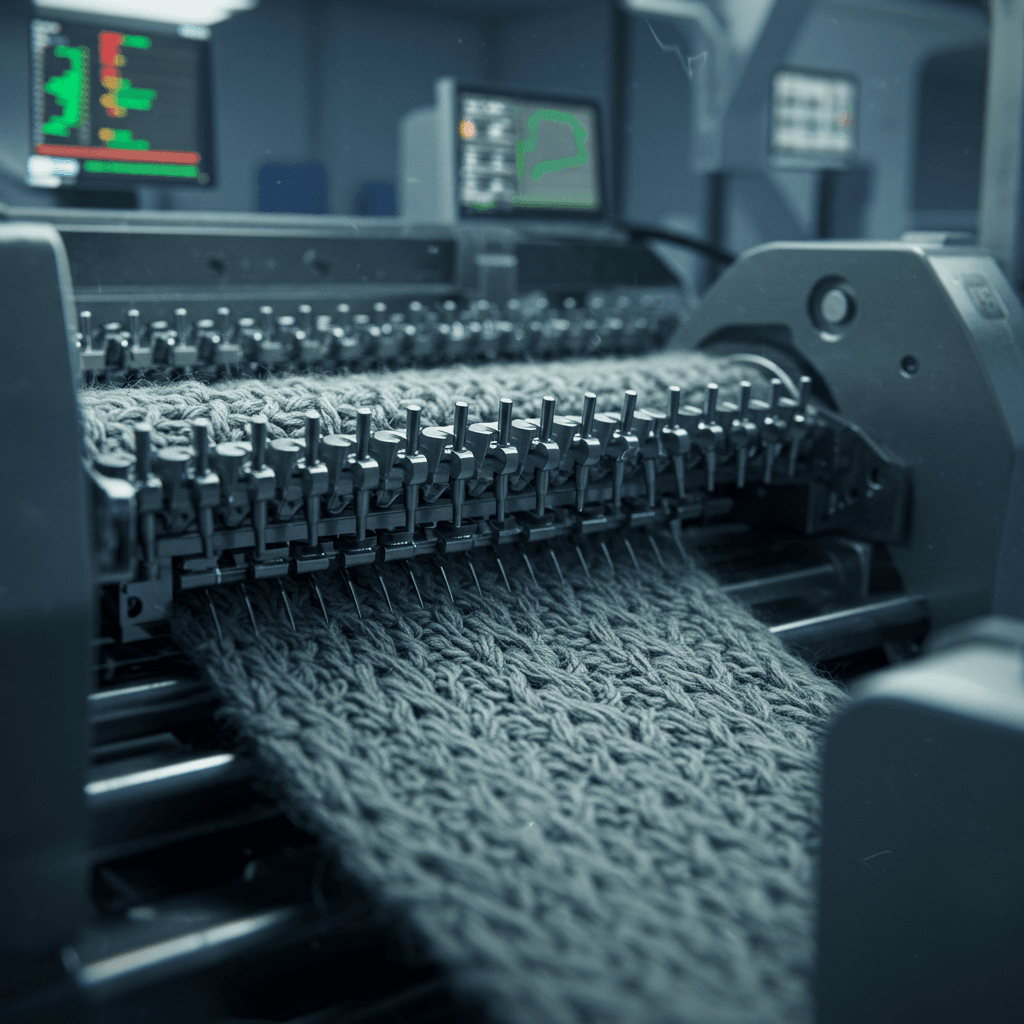
Manual variation has become a high-risk liability because global supply chains face compressed launch cycles and tightening quality standards. For decades, apparel brands accepted a standard margin of error in fabric thickness, stitch density, and dimensional stability. However, a single millimeter of deviation in a collar seam or a slight variation in yarn tension can ruin an entire production run, causing retail returns and damaging brand equity. This analysis covers how modern industrial upgrades—specifically computerized multi-gauge flatbed knitting and automated yarn-tension systems—impact the mechanical properties of fine fibers, and how these upgrades directly reduce product defect rates, stabilize sizing, and optimize the processing of high-performance yarns like superfine merino and premium cashmere blends.
What Fiber Metrics Govern Apparel Quality?
Quality in apparel production is governed by precise fiber metrics and structural standards, with raw material diameter as the primary driver of tactile performance and pilling resistance. Merino wool is graded strictly by micron width: superfine is classified as ≤18.5µm, fine at ≤20µm, and medium at ≤22µm. When blending these with ultra-fine luxury fibers like Grade A cashmere (which must measure ≤15.5µm), legacy mechanical processing can easily fracture the delicate fibers, resulting in premature wear, high hairiness, and excessive pilling. To safeguard these delicate fibers, modern garment manufacturing standards rely on the Acceptable Quality Limit (AQL) 2.5 inspection framework. This statistical system guarantees that the maximum allowable defects in a batch do not compromise retail viability. Achieving AQL 2.5 standards requires automated controls that monitor yarn tension in real-time, preventing the microscopic fiber breakage that occurs when high-friction mechanical feeds pull delicate yarns too tightly. Read more about Maintaining Global Standards i for additional context.
How Do Legacy Systems Compare With Upgraded Multi-Gauge CNC Knitting?
Legacy mechanical flatbed systems trail upgraded multi-gauge CNC knitting technology on every key physical tolerance, and procurement teams must compare them directly to understand the ROI of manufacturing modernization. The comparative data below highlights how machine capabilities dictate physical tolerances and production efficiency.
| Performance Metric | Legacy Mechanical Flatbed | Upgraded Multi-Gauge CNC |
|---|---|---|
| Gauge Range Capability | Fixed single gauge (e.g., 12GG only) | Multi-gauge flexibility (3GG to 18GG) |
| Dimensional Tolerance (L/W) | ±15.0 mm | ±3.0 mm |
| Yarn Tension Variance | ±10.5% (manual spring tension) | ±1.0% (closed-loop servo tension) |
| Average Yarn Waste Rate | 5.5% to 8.0% | ≤1.2% |
| Color Consistency (Pantone TCX) | ΔE ≤ 2.5 (visual match) | ΔE ≤ 1.0 (spectrophotometer match) |
| Pilling Resistance (ISO 12945) | Grade 2-3 (high hairiness) | Grade 4-5 (compact stitch structure) |
| Defect Rate (AQL Standard) | AQL 4.0 average | AQL 2.5 guaranteed |
| Production Output (pcs/24h) | 12 to 15 pieces per machine | 45 to 60 pieces per machine |
This data demonstrates that industrial upgrades are not merely about speed; they fundamentally alter the structural integrity of the fabric. The tight dimensional tolerance of ±3.0 mm ensures that a size Medium garment fits exactly to the spec sheet, avoiding the frustrating size variations common in manual clothing factory operations.
Which Machine Capability Matches Which Yarn?
When sourcing custom apparel, matching the machine capability to the yarn’s physical properties is essential. A heavy 3GG to 5GG chunky sweater requires a robust needle bed that can handle coarse yarns without snagging, while a lightweight, professional-grade knit relies on a 12GG to 18GG fine-gauge setup. Advanced garment manufacturing facilities, such as those operated by suppliers like Cogarm, employ dual-base manufacturing—utilizing Humen for cut-and-sew operations and Dalang for premium knitwear—to ensure every product matches its optimal mechanical process. Consider the use cases of modern blended yarns: high-end retailers often specify a merino-acrylic or cashmere-merino blend to combine thermal properties with daily durability. By processing a 17-24µm merino wool on automated multi-gauge machinery, the factory can seamlessly knit varying densities across a single panel, allowing designers to place breathable, low-gauge knits in high-heat zones and tight, durable weaves in friction areas like the elbows or cuffs — as detailed in our article on How Local Clusters Speed Up Material Sourcing.
How Do Corporate and Uniform Clients Protect Their Color Standards?
Corporate and uniform clients demanding high-volume durability can protect their color standards by integrating synthetic blends like modal, viscose, or LENZING ECOVERO with natural fibers, ensuring colorfastness and drape. Utilizing Pantone TCX matching on computerized dyeing and knitting equipment ensures that corporate color standards are met with a deviation of less than ΔE 1.0, preserving visual identity across thousands of delivered units. To address the complexities of modern fashion supply chains, sourcing leaders require partners that blend flexible capacity with absolute quality assurance. Suppliers like Cogarm solve these bottlenecks through their dual-base footprint in Dongguan, pairing specialized cut-and-sew facilities in Humen with a dedicated premium knitwear center in Dalang. This geographical concentration allows for rapid transit of materials and immediate prototyping.
What Do Flexible MOQs and Compliance Certificates Mean for Buyers?
Flexible MOQs and integrated compliance certificates let buyers test markets and de-risk capital. Sample lead times run 15-20 days (with an additional 5-7 days for custom-sourced specialty yarns), and sourcing managers can initiate production with a flexible MOQ of 100 pcs per color/style for knitwear, and 200 pcs for woven garments, allowing brands to test regional markets without committing to heavy inventory. Once the 45-60 day production cycle is complete, every shipment is subjected to strict AQL 2.5 inspections before the final 70% balance payment is processed, securing the buyer’s capital against quality defects. Additionally, global compliance standards such as OEKO-TEX, GOTS, GRS, and BSCI are seamlessly integrated into the production workflow based on client-specific requirements, ensuring that whether a brand is utilizing recycled wool (GRS) or organic cotton (GOTS), full chain-of-custody documentation is maintained from raw yarn sourcing to final garment packaging.
What Should You Specify for Your Next Collection?
Specify 12GG–18GG fine-gauge superfine merino (≤18.5µm) or cashmere blends for lightweight, high-density apparel requiring low pilling and exceptional thermal regulation, and specify 3GG–5GG chunky-gauge cardigans and heavy textured knits for premium winter collections requiring structured volume and a hand-knit aesthetic. Upgrading your garment manufacturing supply chain requires more than just choosing the lowest cost-per-unit; it demands an understanding of how automated equipment preserves raw material integrity. By partnering with suppliers that invest in multi-gauge CNC machinery and maintain strict AQL 2.5 quality control protocols, brands can eliminate sizing inconsistencies and reduce fabric waste to less than 1.2%. For procurement managers seeking to de-risk their next seasonal launch, working with an agile, high-precision manufacturer is the ultimate competitive advantage, offering technical capability, dual-base efficiency, and flexible minimum order volumes. For a deeper dive, see Leveraging China’s R&D Ecosystem for Apparel, and request a physical yarn sample card and custom knitwear specification sheet with full GOTS or GRS chain-of-custody documentation from the supplier.
What Are the Frequently Asked Questions?
What is the advantage of a dual-base manufacturing setup?
A dual-base setup, such as separating Humen for woven cut-and-sew and Dalang for premium knitwear, ensures that dedicated machinery and specialized technical teams handle each fabric type, maximizing quality and minimizing cycle times.
How does AQL 2.5 inspection protect high-volume apparel orders?
The AQL 2.5 standard defines the maximum number of allowable defects in a production lot, ensuring that no major structural, dimensional, or aesthetic errors pass through to final delivery, protecting retail brands from consumer returns.
Why is Pantone TCX matching critical for multi-material apparel lines?
Pantone TCX matching utilizes spectrophotometers to align dye formulas across different fibers (such as cotton, viscose, and acrylic), ensuring cohesive color coordination with a color variance of ΔE ≤ 1.0.
What are the standard lead times for custom knitwear production?
Standard lead times include 15-20 days for sample creation (plus 5-7 days for custom-sourced yarn) and 45-60 days for mass production after sample approval, backed by a standard 30% deposit and 70% pre-shipment payment structure.
What Are More Questions on Knitwear Upgrades?
How do automated multi-gauge CNC knitting platforms improve the quality of knitwear compared to legacy manual systems?
Automated multi-gauge CNC knitting platforms enhance knitwear quality by reducing material stress, improving dimensional tolerances, and ensuring greater color precision, resulting in more consistent, retail-ready garments.
Why are dimensional tolerances important in high-precision garment manufacturing?
Dimensional tolerances are critical because they directly impact brand value and fit consistency; tight tolerances ensure garments meet exact specifications, reducing waste and enhancing customer satisfaction.
What role does material stress reduction play in modern garment manufacturing?
Material stress reduction minimizes fiber damage during production, preserving fabric integrity and durability, which leads to higher-quality finished textiles with improved performance and longevity.
How does transitioning to advanced knitting technology benefit fashion brands financially?
By reducing defects, minimizing material waste, and increasing production efficiency, advanced knitting technology lowers operational costs and improves scalability, delivering long-term financial advantages.
Do knitting machine upgrades change garment quality?
Only if the gains are measured. Computerized multi-gauge machines control needle selection and yarn feed more precisely, which reduces tension variation, improves loop-length consistency and tightens dimensional tolerance; the visible result is less shrinkage drift and a lower defect rate. Ask the factory for before-and-after data on the same style: shrinkage after washing, measurement deviation and reject rate, not a machine count. Then verify on the bulk lot with fabric weight per ASTM D3776, OEKO-TEX STANDARD 100 limit values on the finished article, GOTS chain of custody where organic cotton is claimed, and AQL 2.5 under ISO 2859-1.
Frequently asked questions
What does a multi-gauge CNC upgrade actually change?
The article says it reduces yarn stress, tightens dimensional tolerance to plus or minus 3.0 mm and improves colour consistency to a delta E of 1.0 or less. It argues those gains only materialise when specifications change alongside the machinery.
How should a buyer verify a machinery upgrade?
With before-and-after data on the same style: shrinkage, loop-length consistency and defect rates. The post is explicit that machine counts alone do not demonstrate quality improvement, and that specifications must change alongside the machinery for the gains to appear.
Why is manual variation now a liability?
Because supply chains face compressed launch cycles and tightening quality standards. The article says a single millimetre of deviation in a collar seam, or slight yarn tension variation, can spoil a production run and drive retail returns.
Which machine capability should match which yarn?
The post frames it as a matching problem between yarn metrics and multi-gauge CNC capability, covering 3GG through 18GG. It presents the comparison between legacy systems and upgraded multi-gauge knitting as the basis for deciding that match.
Cogarm has manufactured custom knitwear and woven garments in Dongguan, Guangdong, China since 2006. Minimum order is 100 units per style and colourway.
