

Optimizing Garment Structure for Mass Production
In the fast-paced world of apparel manufacturing, the bridge between a designer’s vision and a profitable, scalable product is built on structural optimization. For brands working with factories like those at Cogarm.com, understanding how to engineer a garment for mass production is the difference between a smooth launch and costly delays. This article explores the key principles of garment structure that directly impact production efficiency, cost control, and quality consistency.
Why Structure Matters in Mass Production
(See our related guide: How to Ensure Perfect Fitting in OEM/ODM Apparel.)
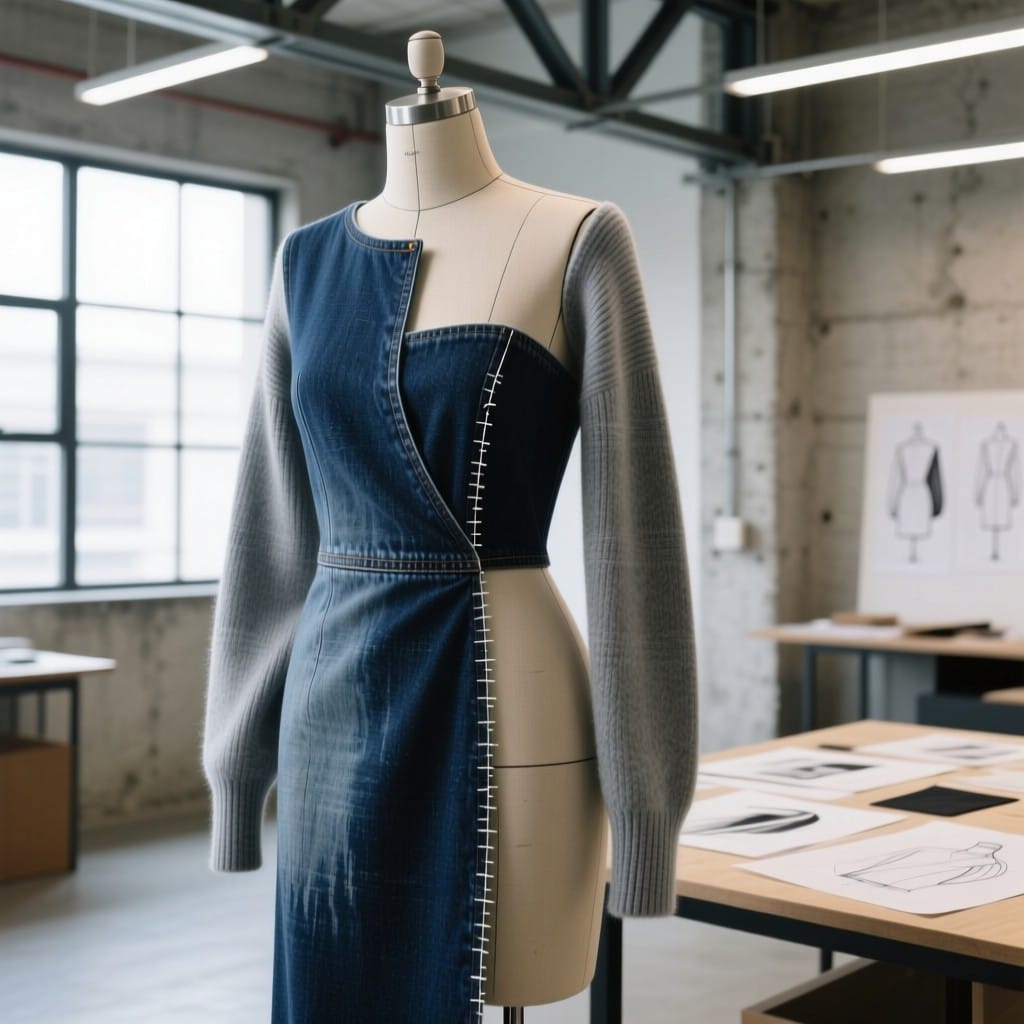
Every garment is a system of components—seams, panels, trims, and closures. When these elements are designed with production in mind, they reduce labor time, minimize fabric waste, and lower the risk of defects. A structurally optimized garment allows for standardized cutting, sewing, and finishing processes, which is essential when producing thousands of units. Without this focus, even a beautiful design can become a logistical nightmare on the factory floor.
Key Principles for Structural Optimization
1. Simplify Pattern Pieces
Complex patterns with many small, irregular pieces increase cutting time and fabric waste. For mass production, aim to reduce the number of pattern pieces without sacrificing design intent. For example, using a single-piece back panel instead of a two-piece back can save minutes per garment and reduce seam alignment issues. Evaluate each piece for necessity—if a seam doesn’t add functional or aesthetic value, consider eliminating it.
2. Standardize Seam Types and Allowances
Using a limited set of seam types (e.g., overlock, flat-felled, or safety stitch) across a product line simplifies machine setup and operator training. Standard seam allowances, typically 1/4 to 3/8 inch, ensure consistency and reduce the need for manual adjustments. Avoid mixing seam types unnecessarily, as each change requires rethreading and recalibration, slowing down production lines.
3. Optimize Fabric Grain and Layout
Garment structure must account for fabric grain to prevent twisting or distortion after washing. For mass production, design patterns that align with the fabric’s straight grain to maximize cutting efficiency. Use marker-making software to nest pieces tightly, reducing fabric waste by 5–10%. Consider symmetrical designs that allow for easier layout and cutting, especially for woven fabrics where grain alignment is critical.
Read more about The Role of Automated Sewing i for additional context.
4. Minimize Complex Details
Features like multiple darts, intricate pleats, or excessive topstitching add labor time and increase the chance of errors. While these details can elevate a design, they should be used sparingly in mass production. Replace complex darts with simple tucks or elastic gathering where possible. If a detail is essential, ensure it can be executed with standard industrial machines rather than requiring specialized equipment.
5. Design for Easy Assembly
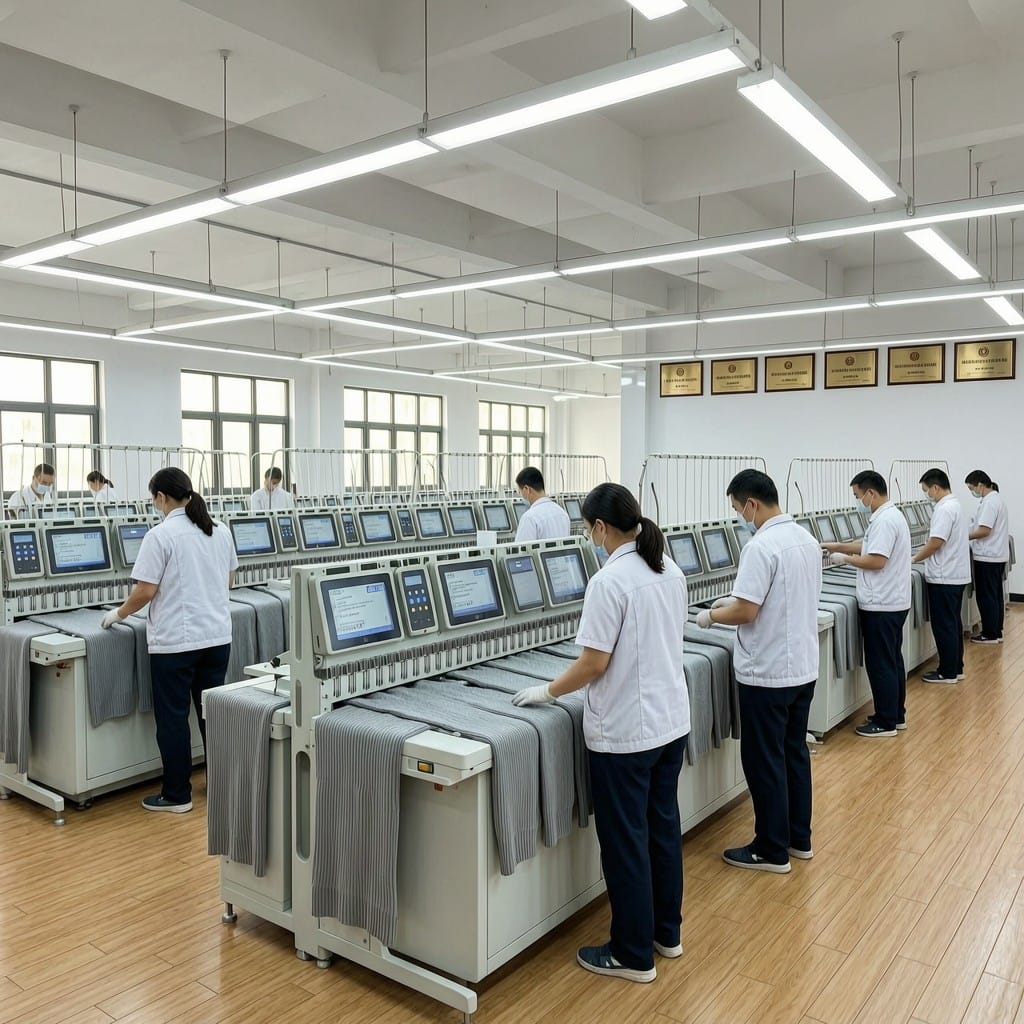
Think about the sewing sequence. Garments that require multiple passes through the same machine or frequent repositioning slow down production. Structure panels so that major seams (side seams, shoulder seams) can be sewn in a single pass. Avoid designs that require turning the garment inside out multiple times. For example, a raglan sleeve is often faster to assemble than a set-in sleeve because it reduces the need for easing and matching curves.
6. Use Consistent Trim and Closure Specifications
Buttons, zippers, snaps, and elastic should be standardized across styles to reduce inventory complexity and machine changeovers. Choose closures that are easy to attach with automated or semi-automated equipment. For instance, a standard 5/8-inch button with a four-hole design is easier to sew than a shank button. Similarly, use zippers with the same tape width and tooth type to avoid adjusting feeders and presser feet.
— as detailed in our article on Understanding Cut-and-Sew: An OEM’s Technical Guide.
Practical Steps for Implementation
To put these principles into action, start by reviewing your current best-selling styles. Identify which structural elements cause the most production delays or defects. Work with your pattern maker and factory team to create a “production-ready” version of the design. This often involves creating a sample that is tested on the actual production line, not just in a sample room. Document the final specifications, including seam allowances, stitch counts, and assembly order, to ensure repeatability.
Another effective step is to conduct a time-and-motion study for key operations. This reveals where seconds can be saved—for example, by reducing the number of thread trims or by aligning notches for faster matching. Small improvements in structure compound significantly when multiplied by thousands of units.
Common Pitfalls to Avoid
- Over-engineering: Adding unnecessary linings, interlinings, or facings that complicate assembly without adding value.
- Ignoring fabric behavior: A structure that works for cotton may fail for stretch knits. Always test with the intended fabric.
- Neglecting tolerance: Tight tolerances (e.g., 1mm seam allowances) are difficult to maintain in mass production. Aim for realistic, repeatable measurements.
- Skipping prototype runs: A single sample may not reveal production issues. Run a small batch to validate the structure before full-scale manufacturing.
Optimizing Garment Structure for Mass Production
Optimizing garment structure for mass production is not about sacrificing design—it’s about making design work efficiently at scale. By simplifying patterns, standardizing components, and planning for assembly, brands can reduce costs, improve quality, and shorten lead times. At Cogarm.com, the supplier helps partners translate creative concepts into production-ready garments that perform on the line. Focus on structure first, and the rest will follow.
For a deeper dive, see Minimizing Waste in High-Volume Garment Manufacturing.
Frequently Asked Questions
What is the minimum order quantity (MOQ)?
MOQ is 100 pieces per color/style for knitwear and 200 pieces for woven garments. Stock yarn options allow smaller trial orders.
What is the sample lead time?
Sample production takes 15-20 days. If sourced yarn is required, add 5-7 days for yarn procurement. Samples are charged at 1.5x unit price, refundable upon bulk order confirmation.
What is the bulk production lead time?
Bulk production runs 45-60 days from sample approval. Rush orders (20-30 days) available for repeat clients with confirmed yarn stocks.
What are the payment terms?
Standard terms: 30% deposit upon order confirmation, 70% before shipment. Wire transfer (T/T) or Alibaba Trade Assurance accepted.
What compliance certifications are available?
The supplier supports OEKO-TEX Standard 100, GOTS (organic cotton), GRS (Global Recycled Standard), and BSCI audits. Certification costs are borne by the buyer; we facilitate the process.
