
Fabric Weight vs Stretch: How Material Choices Shape Fit and Cost

Selecting the right material is rarely just about aesthetics; it is a logistical decision that dictates fit, cost, and production speed. Whether you are develop
Establishing Cogarm as an expert in knit/woven integration.
Selecting the right material is rarely just about aesthetics; it is a logistical decision that dictates fit, cost, and production speed. Whether you are develop
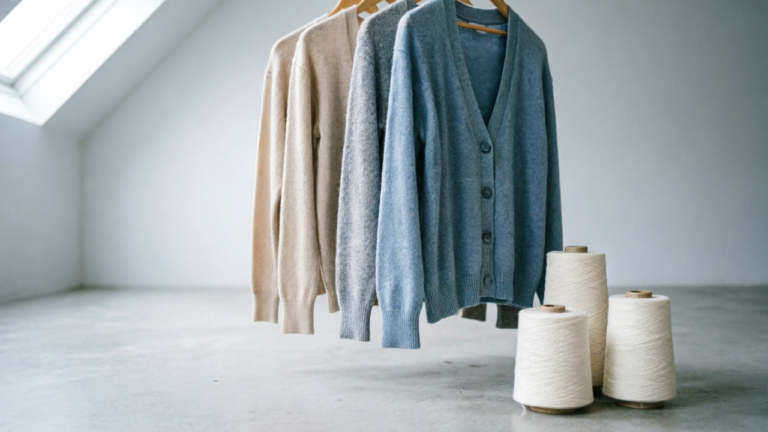
A 100% cotton poplin shirt at 120 gsm needs about 1.8 m of fabric per unit, so a 500-piece run takes roughly 900 m before cutting waste. Confirm shrinkage and AQL 2.5 inspection before you sign off the bulk order.…

Quick answer: Yes – viscose is one of the coolest-wearing fibers you can put on in summer. Its 11-13% moisture regain out-absorbs cotton’s roughly 8.5%, the smooth fiber surface feels cool to the touch, and the fluid drape keeps fabric…

Quick answer: Pointelle is engineered openwork knitted into the structure, not printed on top: transfer stitches create holes, eyelets and chevrons. It costs machine time and raises snag risk, so specify pattern scale against gauge, yarn twist and a snag…
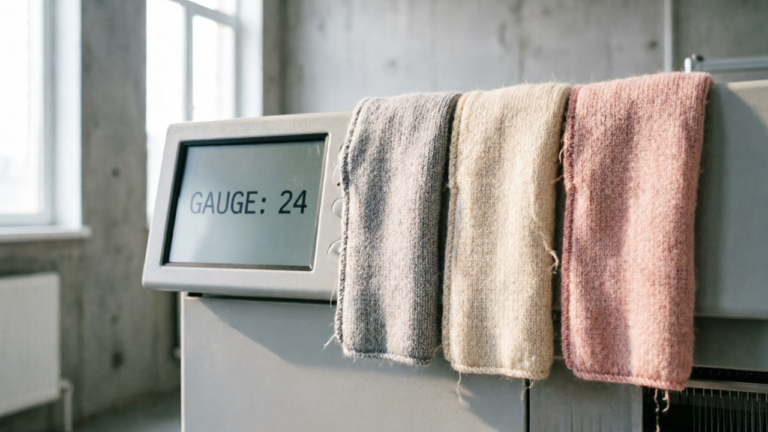
Quick answer: Gauge is needles per inch on the knitting bed. 3GG to 5GG makes chunky outerwear, 7GG to 12GG covers most sweaters, and 14GG to 18GG produces fine, lightweight knits. Gauge fixes yarn count, fabric weight, machine time and…

Quick answer: Wool is specified on micron before anything else: 17 to 19.5 micron for luxury next-to-skin knits, 20 to 24 micron for everyday sweaters, and 25 micron and above for outer layers. Then fix yarn construction, twist and finish,…

Quick answer: Antistatic yarn controls charge build-up in three ways: conductive fibres blended into the yarn, a carbon or metal filament, or a topical finish. The finish washes out; the fibre does not. Specify surface resistance, the test method, the…

Quick answer: Textile manufacturing runs fibre to yarn, yarn to fabric, then dyeing and finishing, and every performance property in the finished garment is set somewhere along that chain. Buyers who write the chain into the tech pack quote faster…

Quick answer: Custom sewing is specified, not inherited: stitch type and density, seam construction, needle size and thread programme are decisions. Knit routes use linking and overlock with elastic seams; woven routes use lockstitch and specialised machines for collars, cuffs…
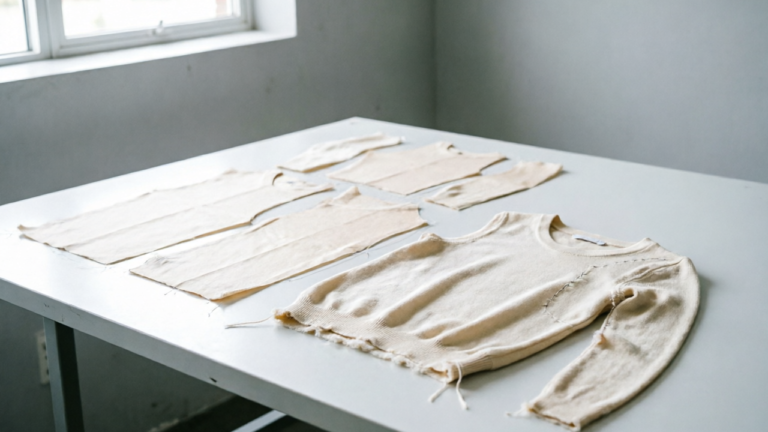
Quick answer: Prototyping has three sample types: a fit sample that proves the block, a pre-production sample on bulk yarn or fabric, and a size set that proves grading. Two approval loops are normal; a third is a warning that…
Minimum order quantity for Manufacturing & Capabilities is 100 units per style and colourway. Larger programmes unlock better unit pricing, and trial runs can be discussed for first orders. Tell us your target quantity and delivery date for a firm quote.
Yes. OEM and ODM production is our core business. Our in-house pattern room turns your tech pack or reference sample into a graded production package, with custom labels, logo embroidery or printing, hangtags and retail packaging.
Fabrics are sourced from OEKO-TEX certified mills, production runs in WRAP-certified factories, and the quality system is ISO 9001 certified. Test reports and certificates are shared with approved buyers on request.
Send your brief, target quantity and delivery date. We quote within two working days, develop the proto-sample in 7-10 days, and move to bulk after you approve it. A merchandiser follows the order from sampling to shipment.