

This article examines how collaborative product development (CPD) mitigates execution risks, reduces lead times, and stabilizes supply chains in modern apparel production. By aligning technical design with production-floor capabilities early, apparel brands can transform traditional transactional sourcing into a high-performance engine. Sourcing managers and fashion retailers will learn the exact metrics, workflows, and technical parameters required to execute successful collaborative programs.
Rethinking Apparel Sourcing: The Co-Development Shift
When leading manufacturers design a new housing for its devices, engineering and manufacturing do not exist in separate silos; they co-develop the product to ensure scalability from day one. In the fast-moving apparel world, brands like IKEA apply similar collaborative design principles to their textile supply chains, realizing that the old model of throwing a technical pack over the wall to a distant clothing factory is dead. Today’s volatile retail landscape demands a shift from transactional purchasing to integrated co-development, where designers and technicians work synchronously to pre-empt manufacturing bottlenecks.
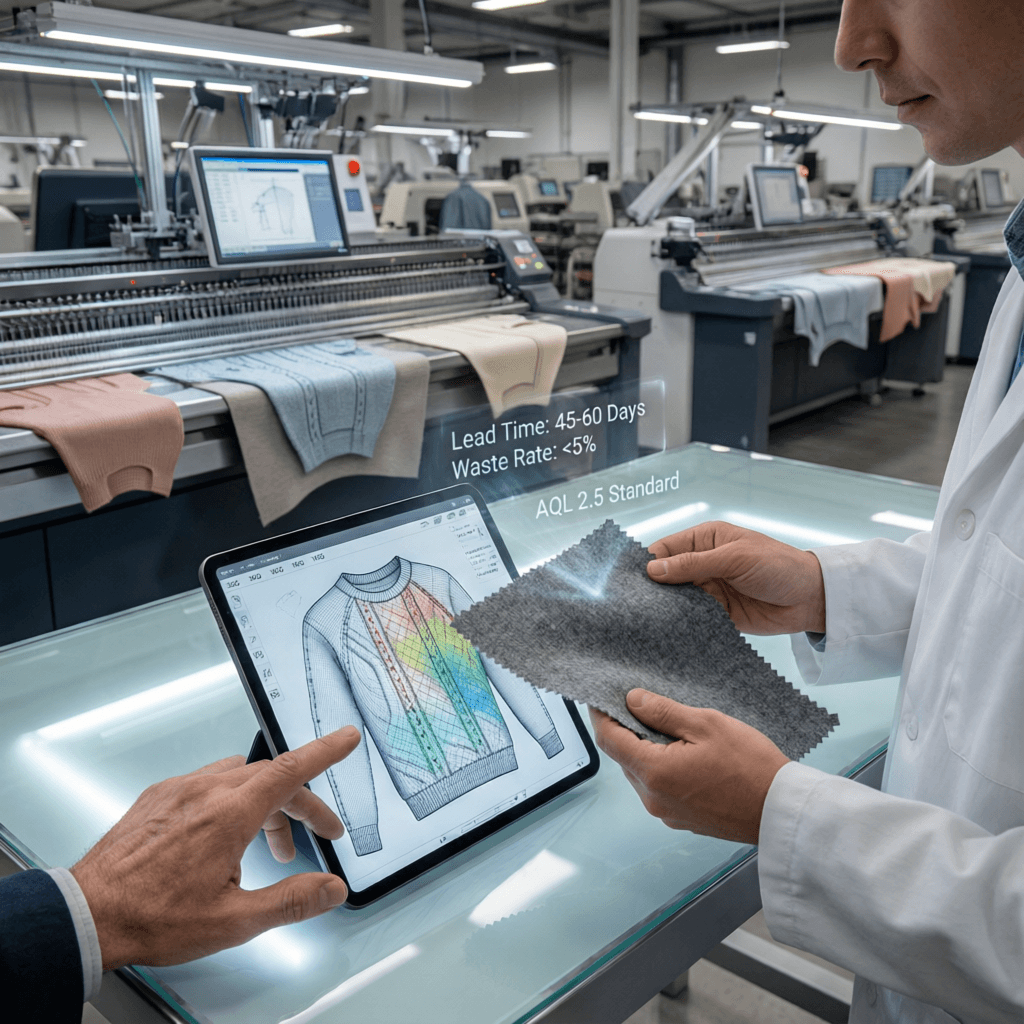
(See our related guide: How We Handled a Rapid-Launch Apparel Project.)
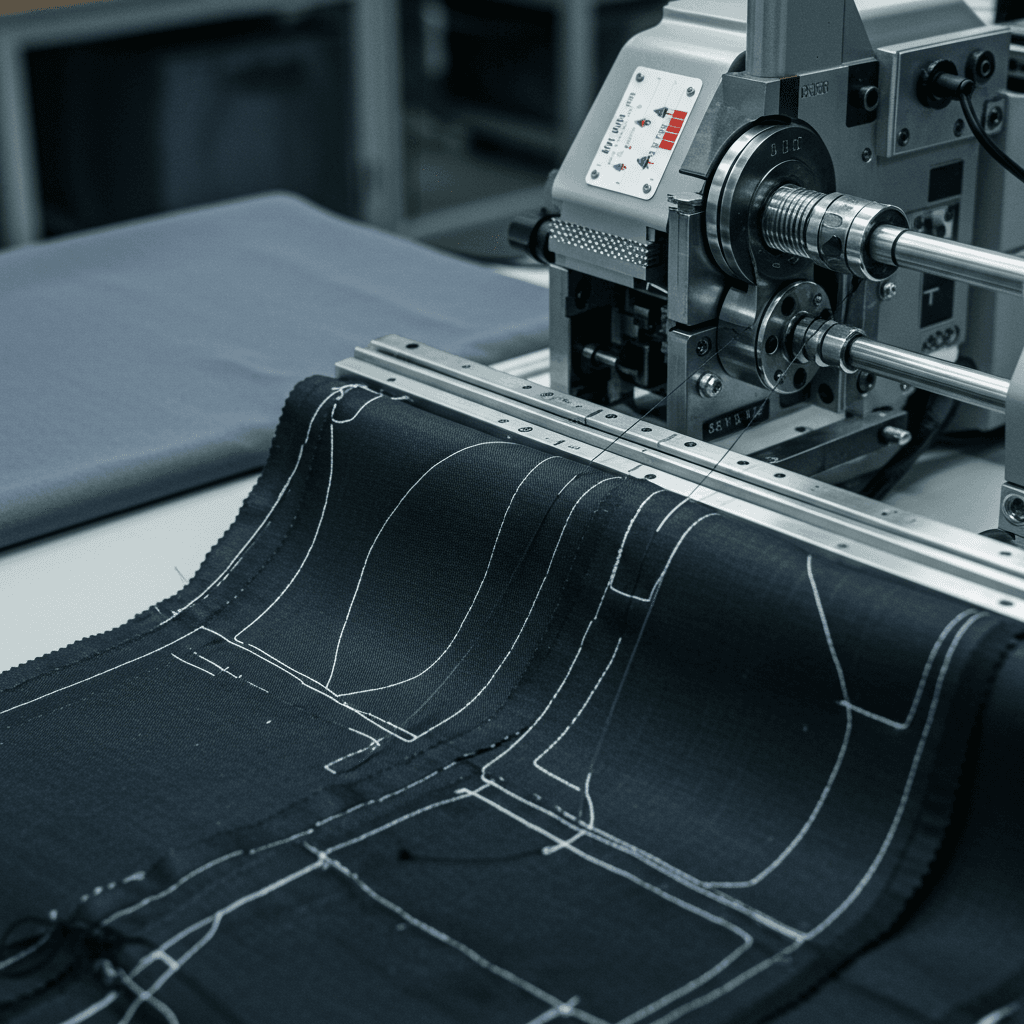
This urgency is driven by a stark reality: up to 80% of a garment’s environmental impact and manufacturing costs are locked in during the initial design phase, according to the Ellen MacArthur Foundation. A minor mismatch in yarn tension, a pattern piece that creates 15% fabric waste, or a spec sheet calling for un-dyed specialty yarns that require a 60-day lead time can derail an entire season’s margin. Procurement teams can no longer afford to operate sequentially; they must integrate manufacturing feedback at the concept stage.
In this article, you will learn the operational frameworks of collaborative product development, analyzing how early alignment on yarn selection, gauge constraints, and sampling workflows yields dramatic efficiency gains. The supplier will dissect the technical variables that distinguish transactional OEM from collaborative sourcing, giving your procurement team a repeatable blueprint to compress lead times and optimize unit costs.
Engineering Precision: Material and Gauge Specifications
To execute collaborative development, brands must master key technical boundaries before sampling. Knitwear development relies heavily on the gauge range (GG), which determines the needles per inch on the knitting machine. Selecting the correct gauge—whether 3–5GG for chunky, 7–10GG for midweight, or 12–18GG for fine knitwear—directly dictates yarn density, machine speed, and unit weight.
Furthermore, fiber selection requires microscopic precision. Merino wool ranges from superfine (≤18.5µm), fine (≤20µm), to medium (≤22µm), while Grade A Cashmere must measure ≤15.5µm. Understanding how these micron ratings interact with specific gauge setups allows developers to engineer custom apparel that hits precise handfeel and durability targets without incurring unnecessary raw material costs.
for additional context.
Traditional Sourcing vs. Collaborative Product Development
The operational benefits of transitioning from a transactional model to an integrated co-development framework can be measured directly across key performance indicators. Traditional sourcing treats the clothing factory as a passive executor, whereas collaborative development utilizes the supplier’s technical capabilities to refine product architecture before production begins.
| Performance Metric | Transactional OEM Sourcing | Collaborative Product Development (CPD) |
|---|---|---|
| Sample Lead Time (Standard Yarn) | 25–30 days for design iteration | 15–20 days via pre-aligned blocks |
| Sourced Specialty Yarn Lead Time | 12–15 days to acquire | 5–7 days via pre-negotiated yarn mills |
| Color Match Precision (Pantone TCX) | ΔE ≤ 1.5 tolerance limit | ΔE ≤ 0.8 color spectrophotometer limit |
| Machine Gauge Capability (GG) | Fixed gauge setups (e.g., only 12GG) | Dynamic range optimization (3GG–18GG) |
| Defect Rate Standard (AQL) | AQL 4.0 batch acceptance limit | AQL 2.5 critical inspection standard |
| Raw Material Waste Rate (Woven) | 12%–15% average marker waste | 4%–6% optimized nested marker waste |
| Knitwear MOQ per Color/Style | 500 pcs minimum commitment | 100 pcs minimum starting capacity |
| Woven MOQ per Color/Style | 1,000 pcs minimum commitment | 200 pcs minimum starting capacity |
| Mass Production Lead Time | 70–90 days from tech pack receipt | 45–60 days from sample approval |
| Payment Structure | 50% deposit + 50% upon bill of lading | 30% deposit + 70% before shipment |
This metric comparison highlights how collaborative alignment directly compresses the critical path. By utilizing pre-sourced yarn networks, optimized marker nesting, and tight color tolerance parameters (ΔE ≤ 0.8 Pantone TCX matching), collaborative manufacturing reduces structural delays. This systematic approach ensures that high-end fibers, such as Grade A cashmere (≤15.5µm) or superfine Merino (≤18.5µm), are processed with minimal material waste and maximum machinery efficiency.
Technical Application: Custom Sweaters and Woven Garments
For premium fashion retail lines requiring high durability and luxury handfeel, custom sweaters utilizing a Merino/Acrylic/Cotton blend provide a balanced solution. A typical 7GG to 10GG midweight sweater engineered with superfine 18.5µm Merino wool, long-staple cotton, and low-pilling acrylic offers optimal thermal regulation and structural retention. By choosing a 12GG fine-knit setup, brands can achieve an exceptionally smooth handfeel suitable for corporate programs or high-end layering pieces, while maintaining a highly cost-effective material yield.
In woven apparel production, precision nesting and cutting are vital to managing textile manufacturing costs. Developing structured woven garments requires strict control over fabric shrinkage and seam strength. Implementing collaborative development on a 200-piece woven run ensures that pattern makers can adjust seam allowances and grainline alignment to match the physical properties of organic cotton, modal, or LENZING ECOVERO blends. This reduces bulk production defects during the standard 45–60 day manufacturing window.
Utilizing a dual-base manufacturing footprint optimizes these workflows. Textile manufacturing hubs that separate specialized operations—such as separating cut-and-sew woven lines from premium knitwear operations—allow technical teams to focus on their core competencies, ensuring higher quality outputs across both product categories.
— as detailed in our article on How to Scale Production without Sacrificing Quality.
Structuring the Supplier Collaboration
For brands seeking to navigate these technical complexities, partnering with specialized manufacturers are essential. Suppliers like Cogarm address these challenges directly through a dual-base manufacturing model. By situating their cut-and-sew operations in Humen and premium knitwear manufacturing in Dalang, Cogarm leverages localized industrial clusters to secure raw materials and technical expertise rapidly. This geographic specialization enables a highly flexible sampling lead time of 15–20 days, with an additional 5–7 days for specialty sourced yarns.
This operational structure also supports low-barrier testing of new product lines. While conventional factories demand massive volume commitments, advanced producers offer MOQ flexibility of 100 pieces per color/style for knitwear and 200 pieces for woven garments. Furthermore, global compliance standards such as OEKO-TEX, GOTS, GRS, and BSCI are integrated seamlessly when required by client specifications, ensuring that every batch complies with strict international environmental and labor guidelines.
Through strict quality control, such as executing a comprehensive AQL 2.5 inspection on all finished goods, and employing precise Pantone TCX matching, sourcing managers can confidently transition designs from CAD to finished retail-ready shipments. Brands can easily request a compliant material sample with full Chain of Custody (CoC) documentation to verify fiber purity and dyeing compliance before committing to full-scale production.
Gauge and Fiber Selection by Application
Specify superfine Merino wool (17–18.5µm) in a 12–18GG fine-gauge knit for premium, high-density corporate and luxury knitwear requiring superior handfeel. Specify cotton-acrylic or wool-acrylic blends in a 3–10GG chunky or midweight knit for high-wear retail apparel programs requiring durability, machine washability, and rapid turnaround.
Frequently Asked Questions
What is the standard sample and production lead time for custom knitwear?
Standard sample lead times are 15–20 days (plus 5–7 days if sourcing specialized yarn), with mass production completing in 45–60 days from sample approval.
For a deeper dive, see Our Commitment to Local Community and Industry.
How do knitwear gauge specs affect garment weight and density?
Gauge (GG) refers to needles per inch; 3–5GG creates chunky/heavy sweaters, 7–10GG delivers midweight garments, and 12–18GG produces fine, lightweight knits.
What are the minimum order quantities (MOQs) for collaborative development?
Collaborative manufacturing programs support MOQs as low as 100 pieces per color/style for knitwear and 200 pieces for woven garments.
How is color matching verified during the development phase?
Color verification utilizes Pantone TCX matching with spectrophotometer readings calibrated to a tolerance limit of ΔE ≤ 0.8.
What quality standards are applied during final product inspection?
Finished batches undergo strict AQL 2.5 inspection protocols to verify dimensional stability, seam strength, and stitching consistency before shipment.
Optimizing Your Sourcing Strategy
Navigating apparel production requires balancing aesthetic intent with hard manufacturing constraints. By implementing a collaborative product development workflow, procurement managers can bypass typical bottlenecks, optimize yarn selection, and establish predictable production cycles.
Request a custom knitwear or woven cutting sample with full testing data and Pantone TCX matching specifications from Cogarm to begin your next development cycle.
